What this workbook helps you practice
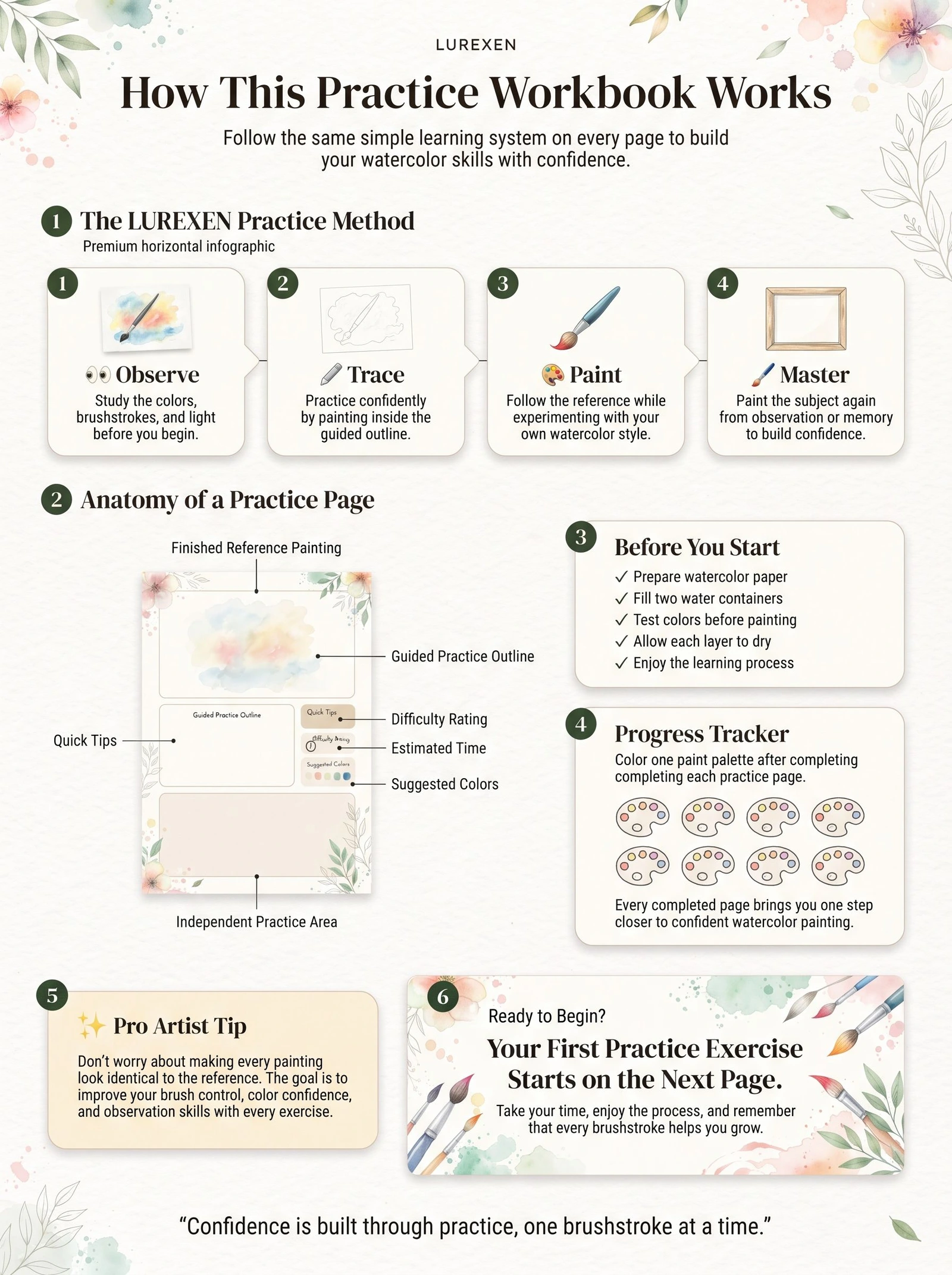
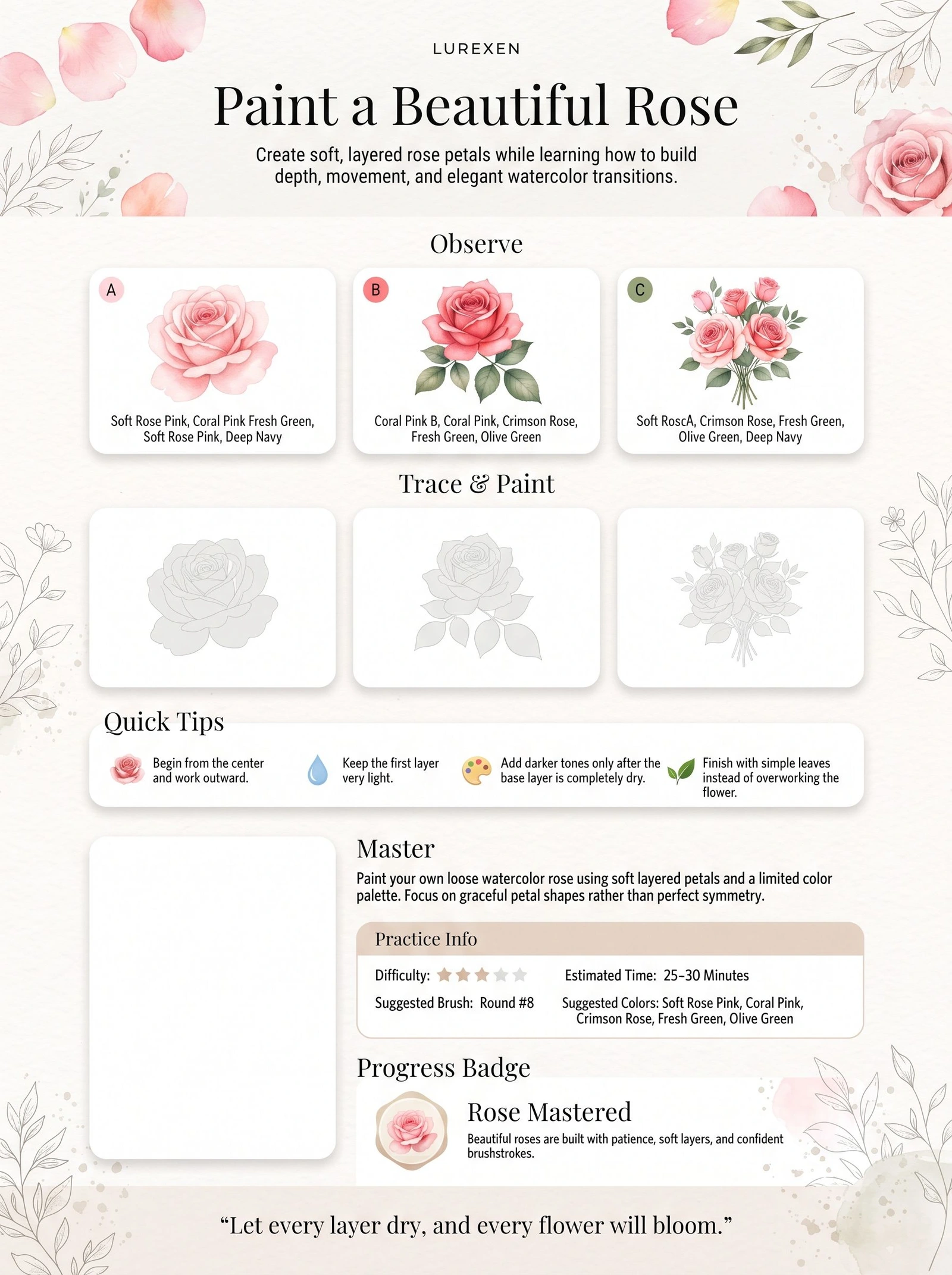
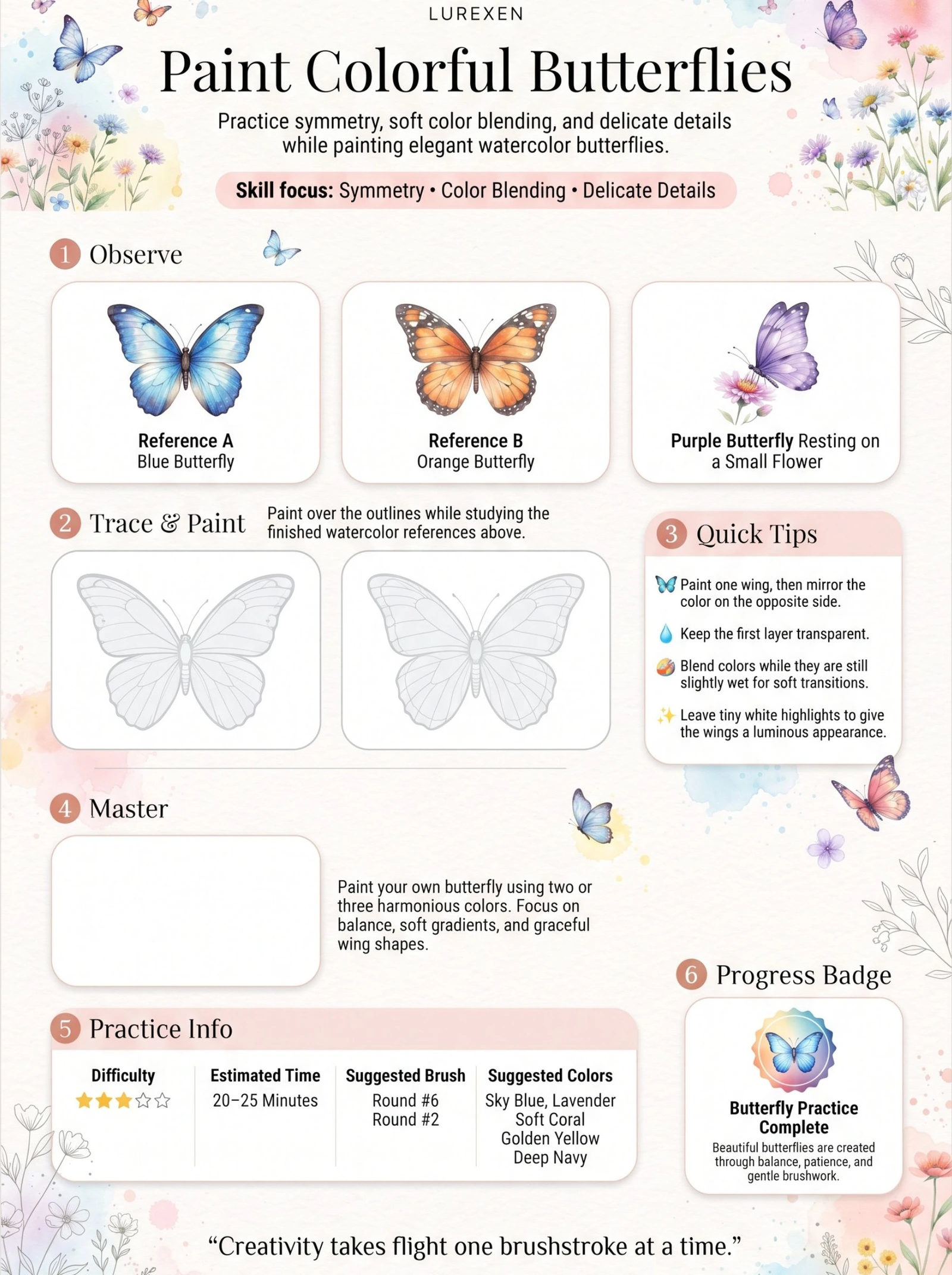
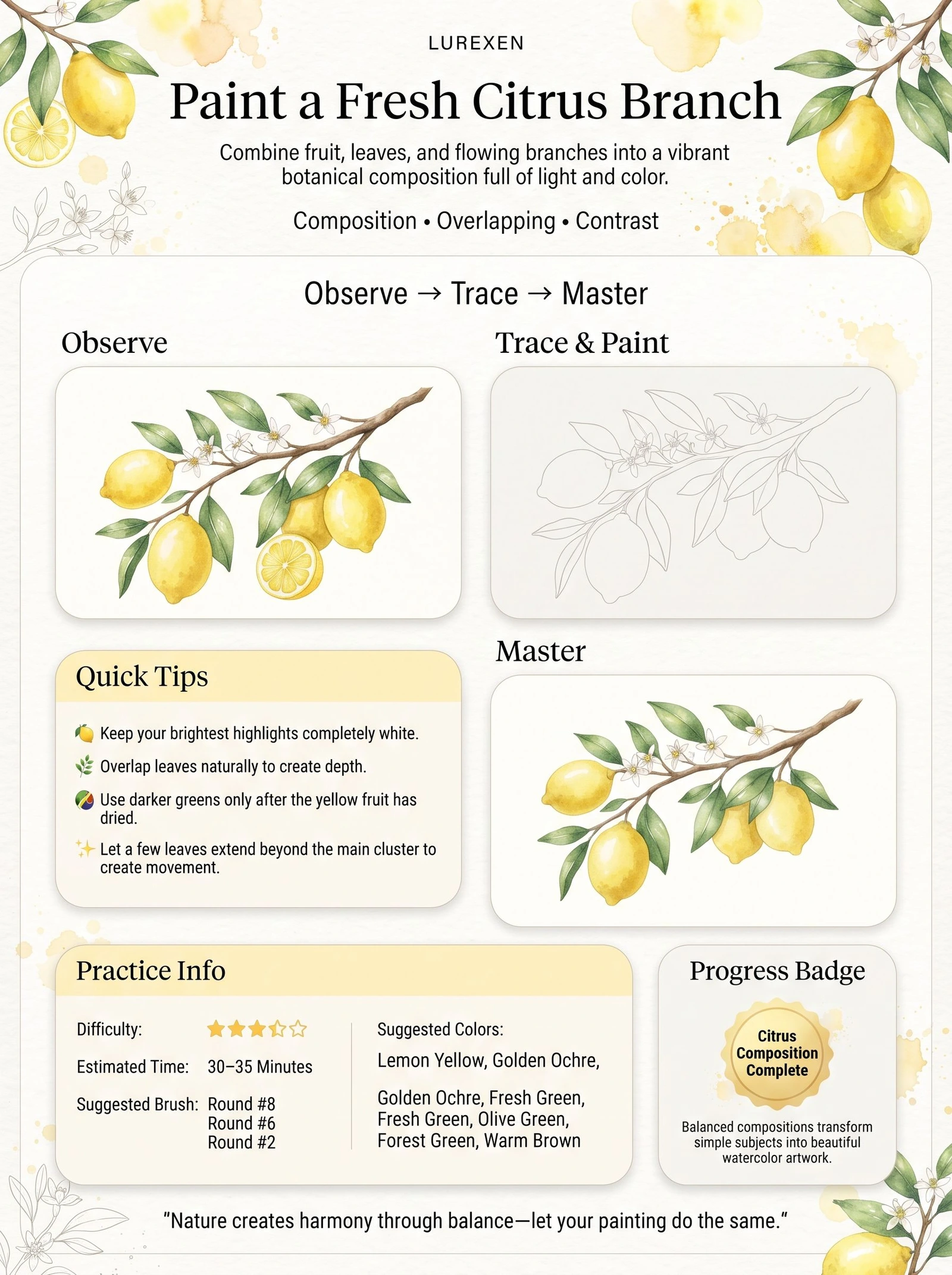
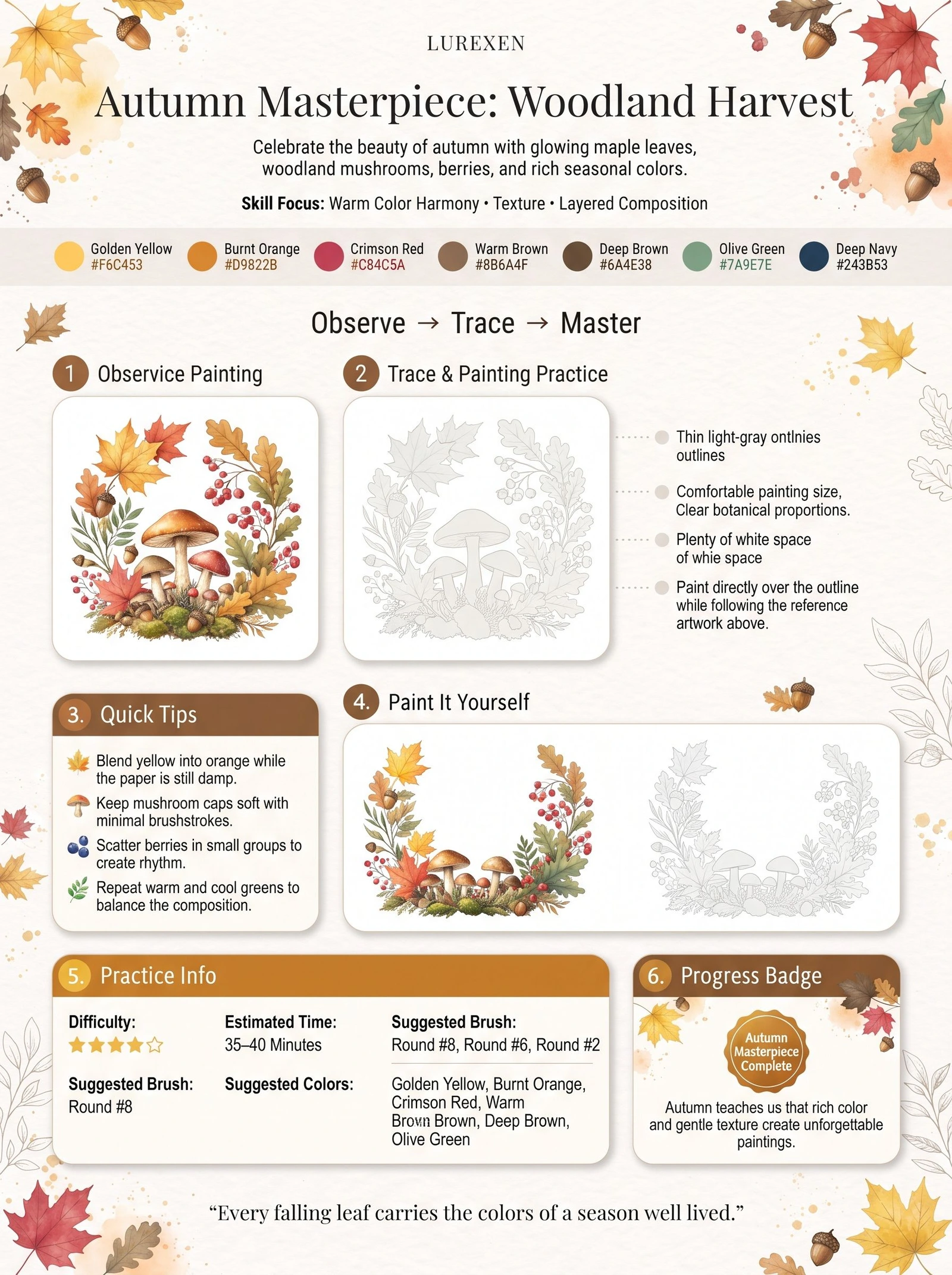
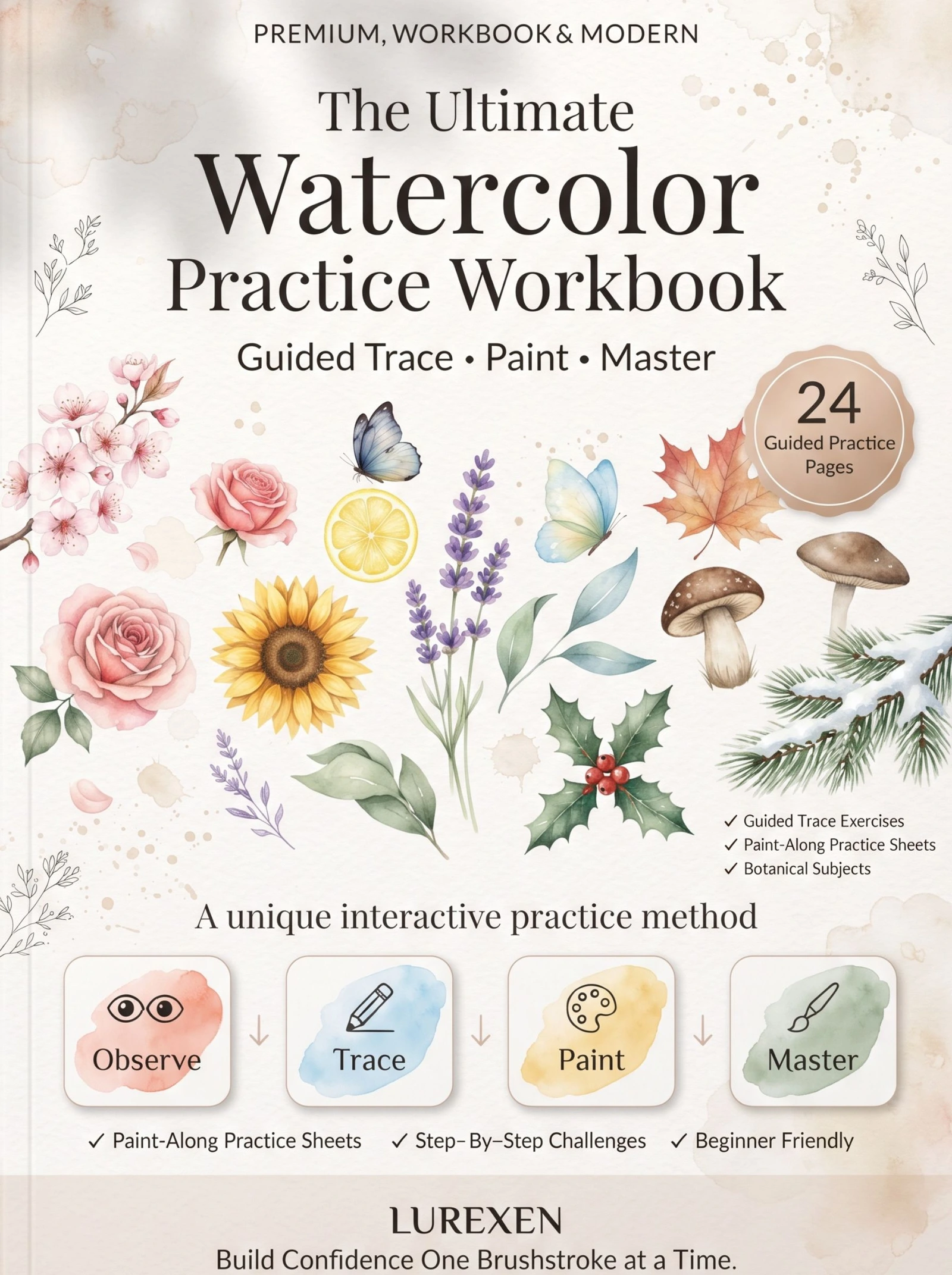
This edition uses a repeated four-part method: observe a reference, trace or sketch its structure, paint a guided study, and attempt a more independent version. The botanical subjects give that practice a specific focus without requiring you to design a whole composition first.
How the pages are organized
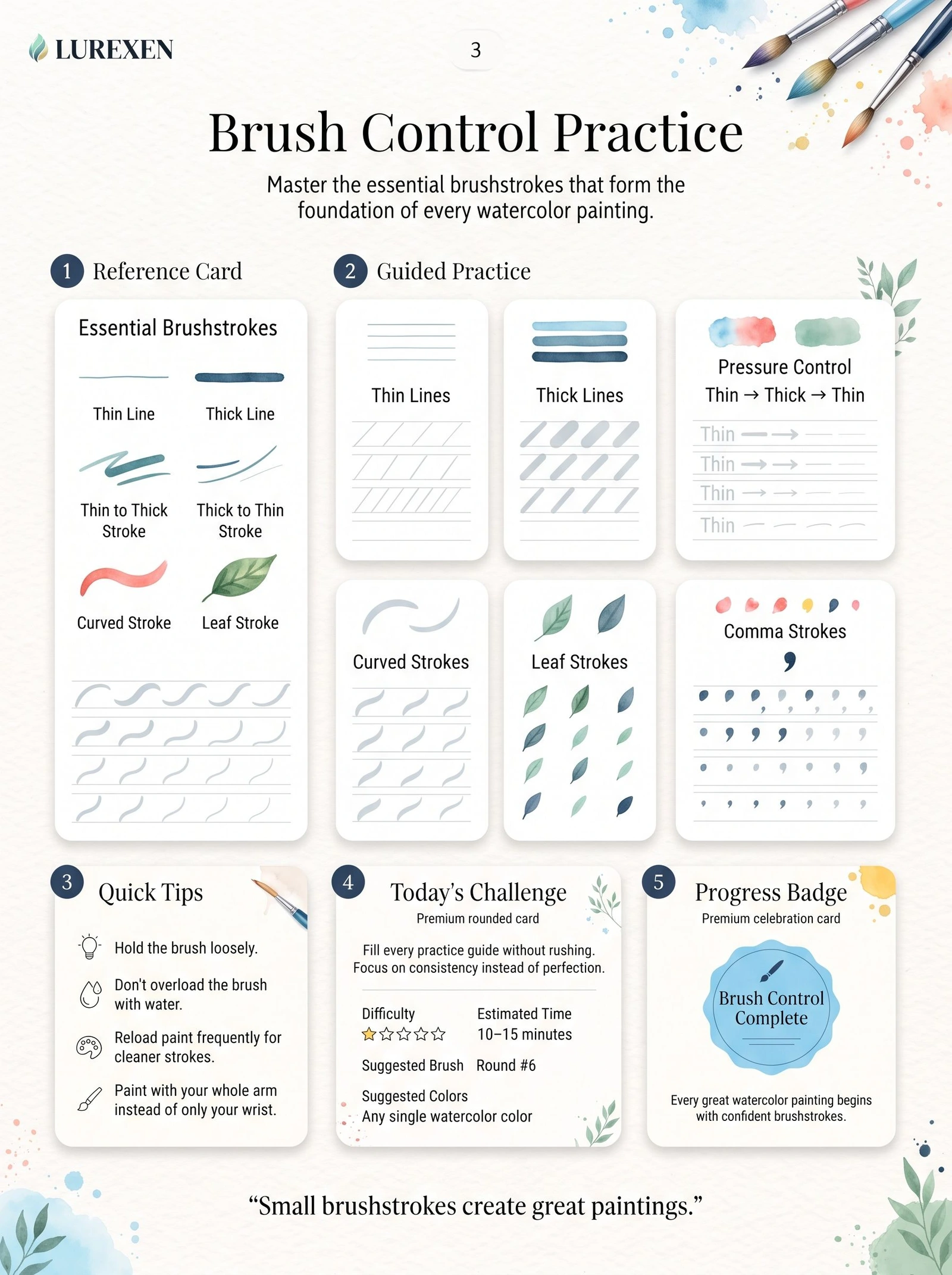
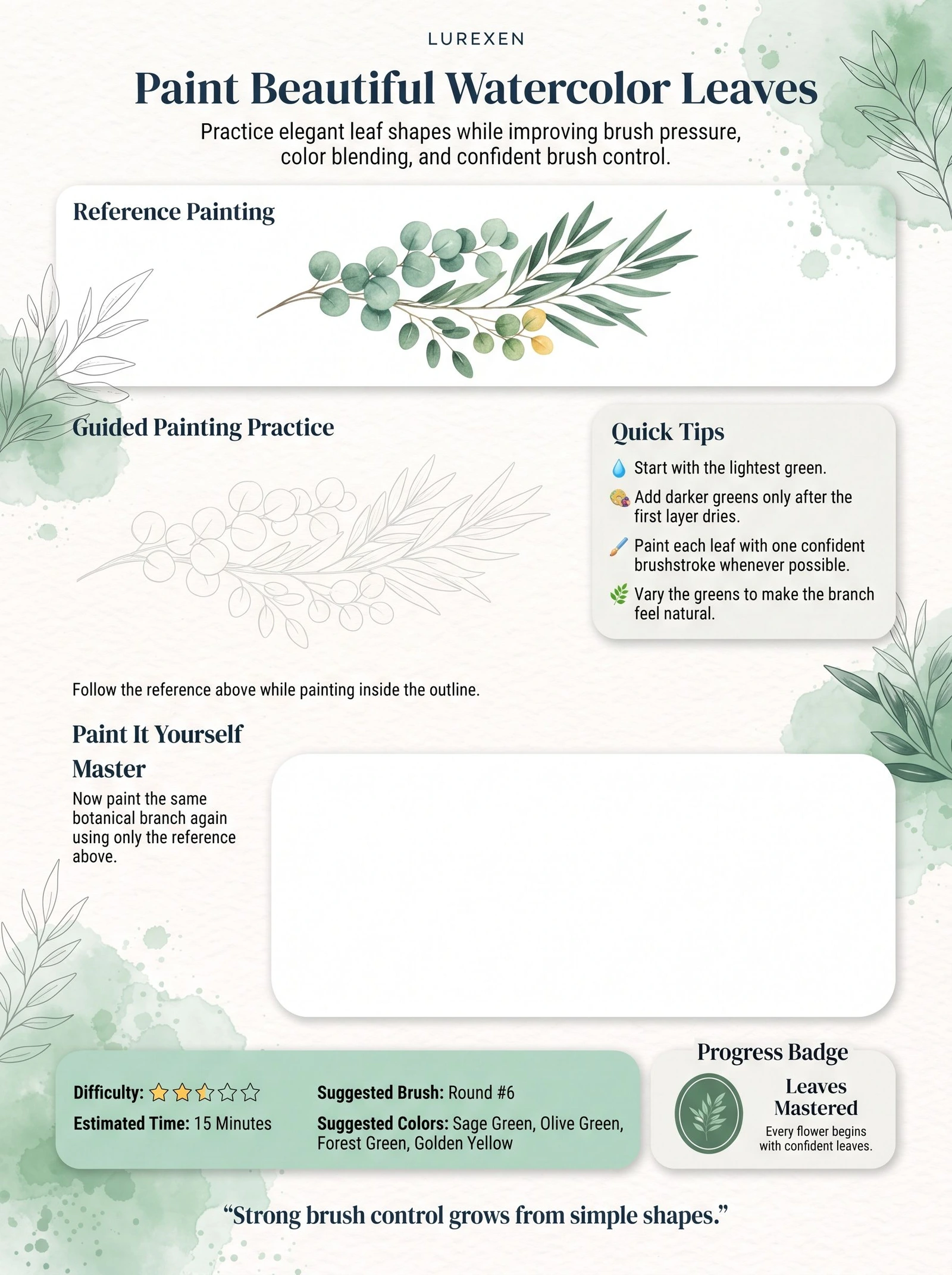
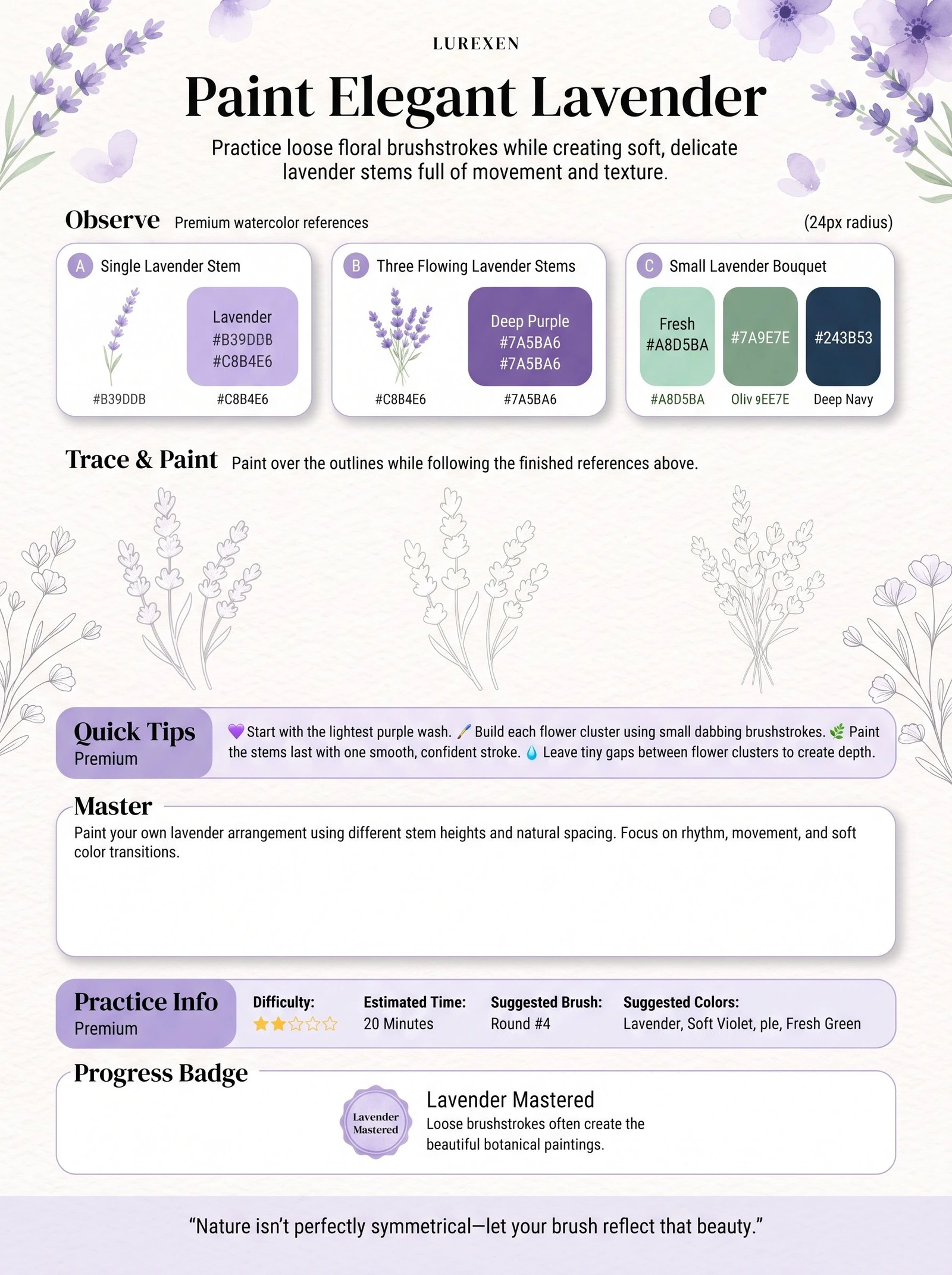
The original pages below show the practice method, brush control, a leafy branch, lavender, roses, butterflies, a citrus branch, and an autumn woodland composition. Each subject includes reference artwork and a lighter outline, with practice space and short suggestions. The supplied PDF contains 29 pages; the cover describes 24 guided practice pages, which is a different count from the complete file.
Is it right for your next session?
Choose this edition if you prefer repeating a clear practice format across botanical and nature subjects. Tracing is available as support, but you can sketch the shapes yourself. It is not a botanical identification reference, and its illustrations should not be used to identify plants for eating or any safety-sensitive purpose.
A practical way to begin
Begin with the brush-control page and a small leaf study. Compare a traced version with a second freehand attempt. Use the reference to check shape and light, not as a promise that your first painting will match it. Make one change to brush pressure or water load before repeating the study.
Study the page on screen, then paint on suitable watercolor paper. If printing, use Actual Size and paper that is compatible with your printer. Ordinary office paper is suitable for reading and notes, but it is not a reliable surface for wet watercolor practice. You can also trace a light outline onto your painting paper; tracing is optional, not a requirement.