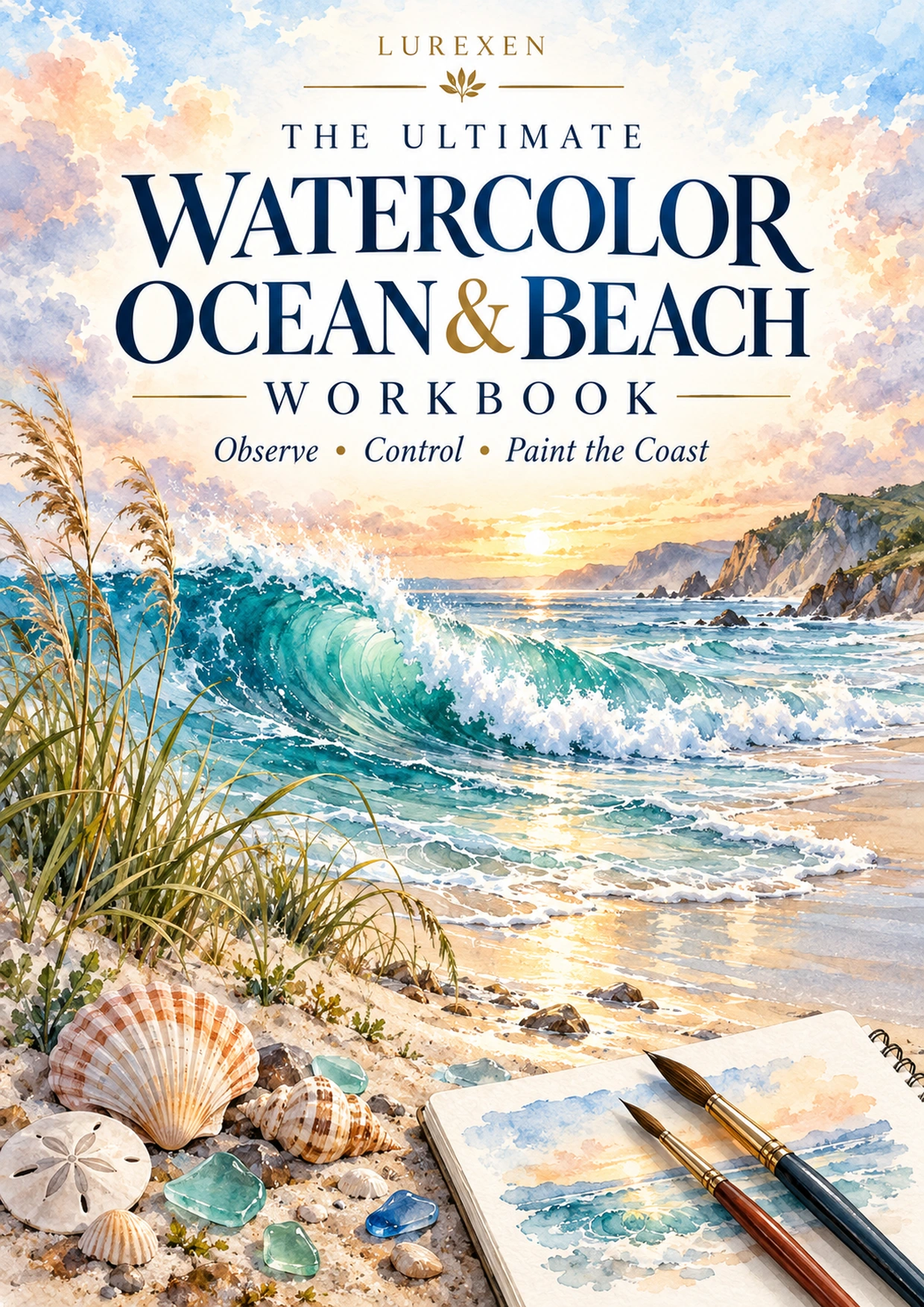
What this workbook helps you practice
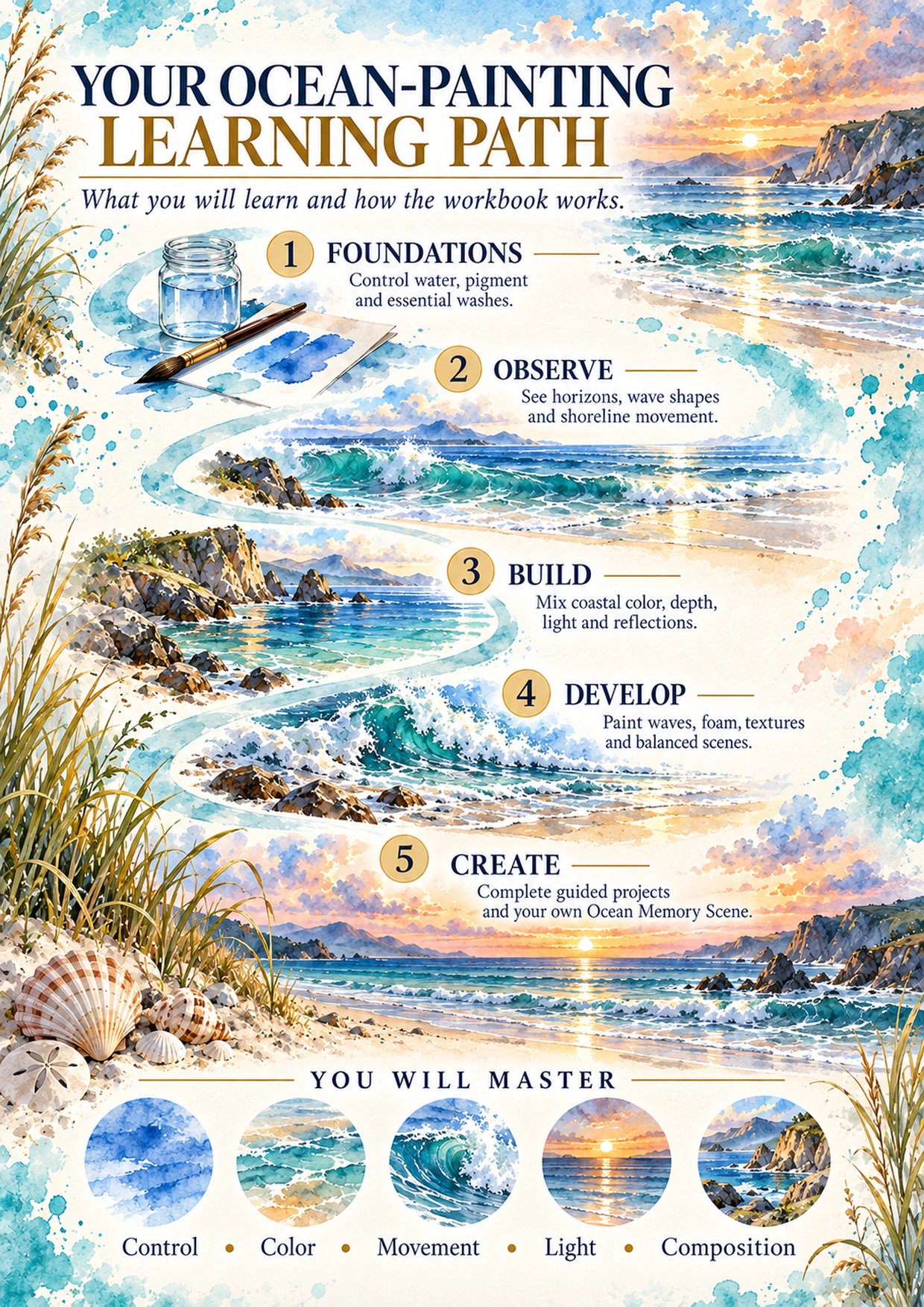
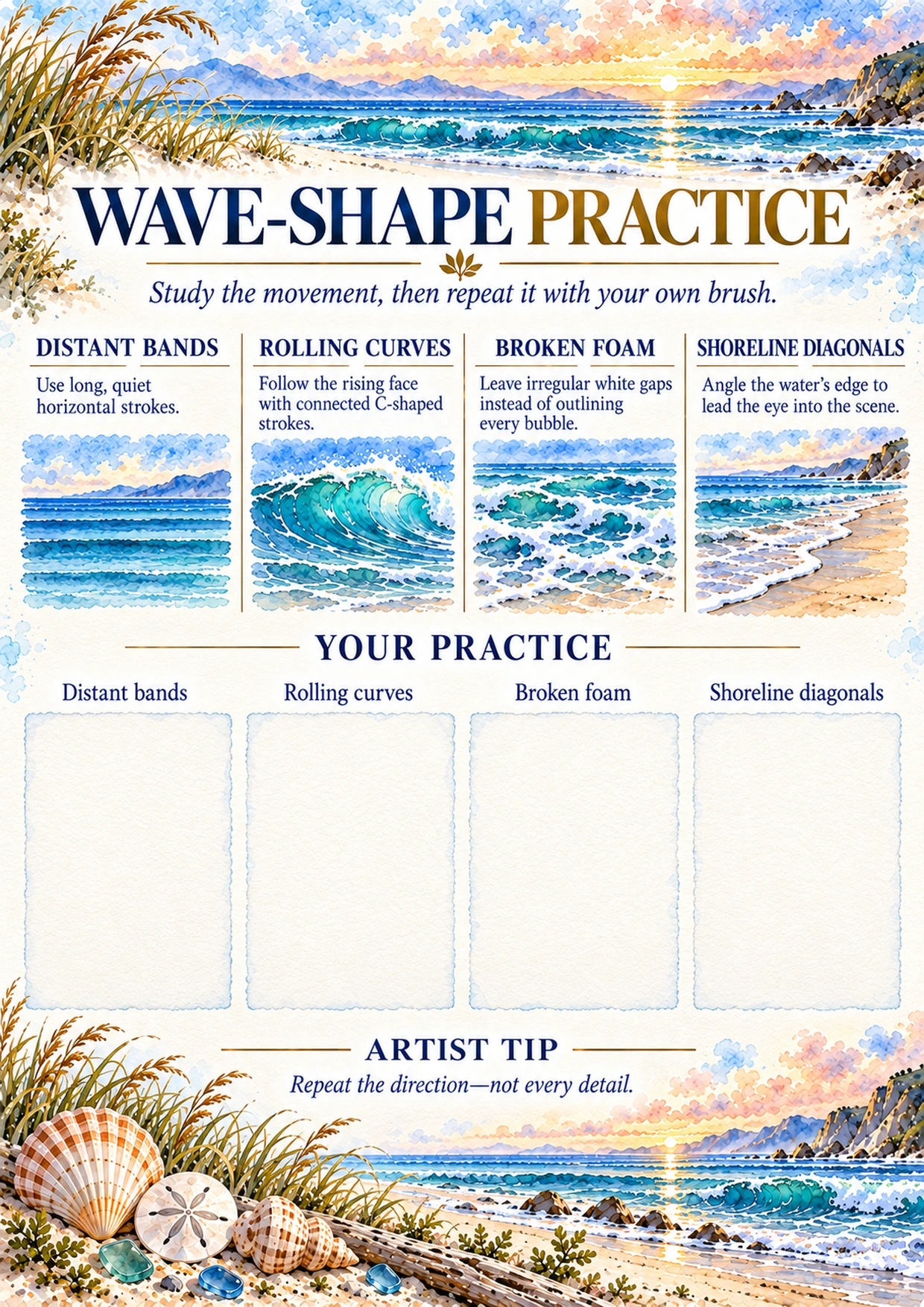
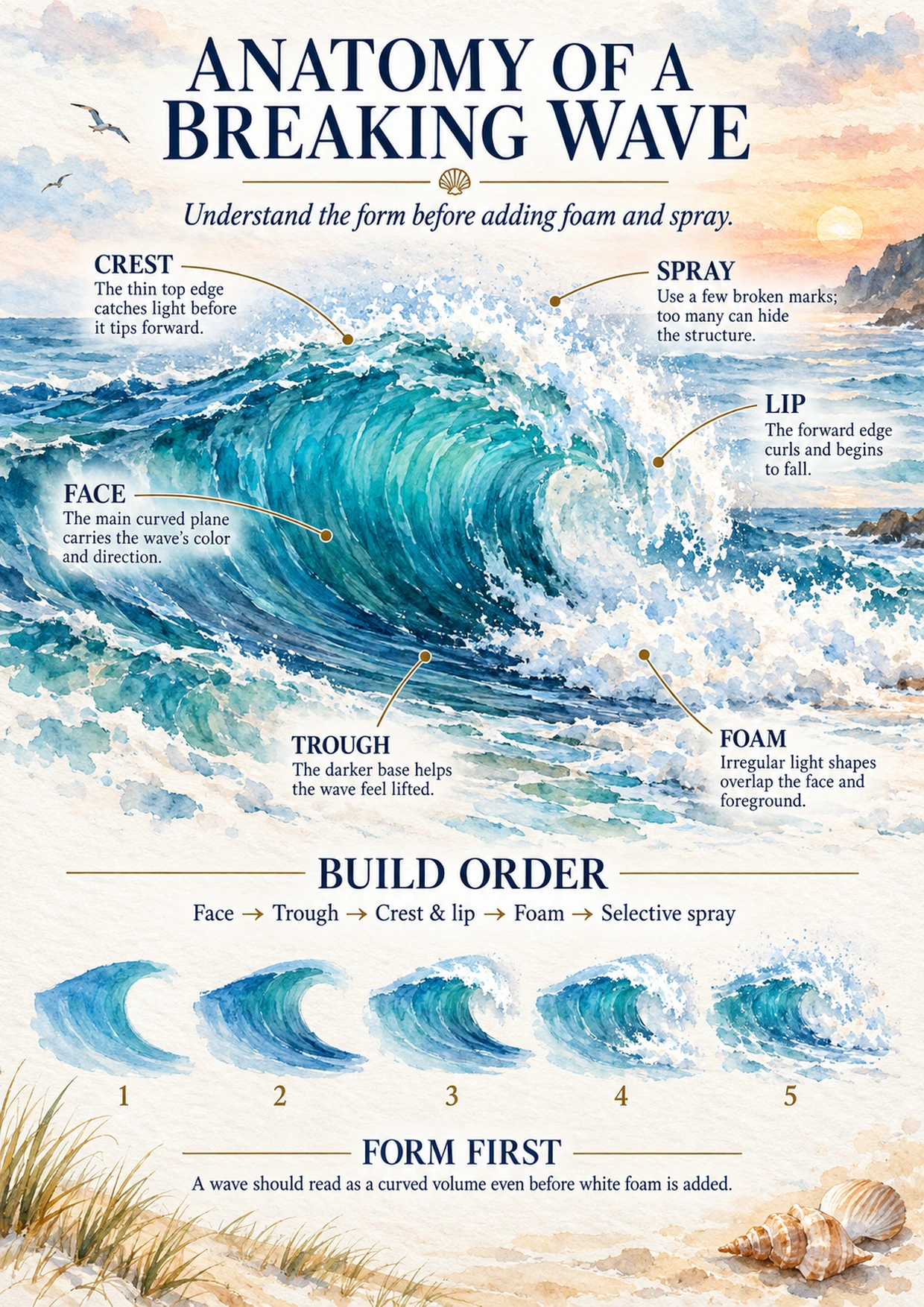
A wave is easier to understand as a group of larger shapes before it becomes a collection of foam marks. This workbook separates water control, color, movement, light, and composition into coastal practice stages.
How the pages are organized
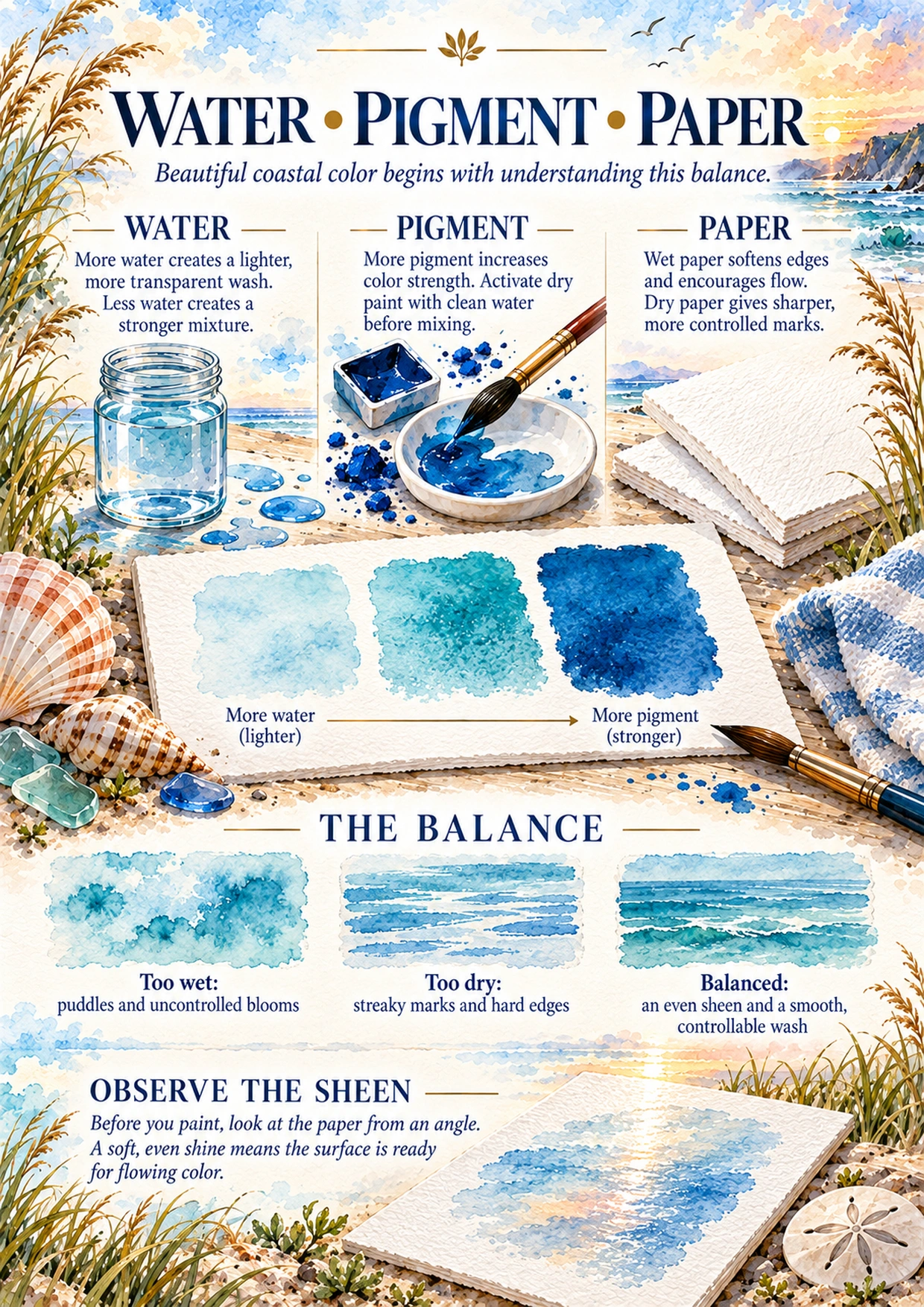
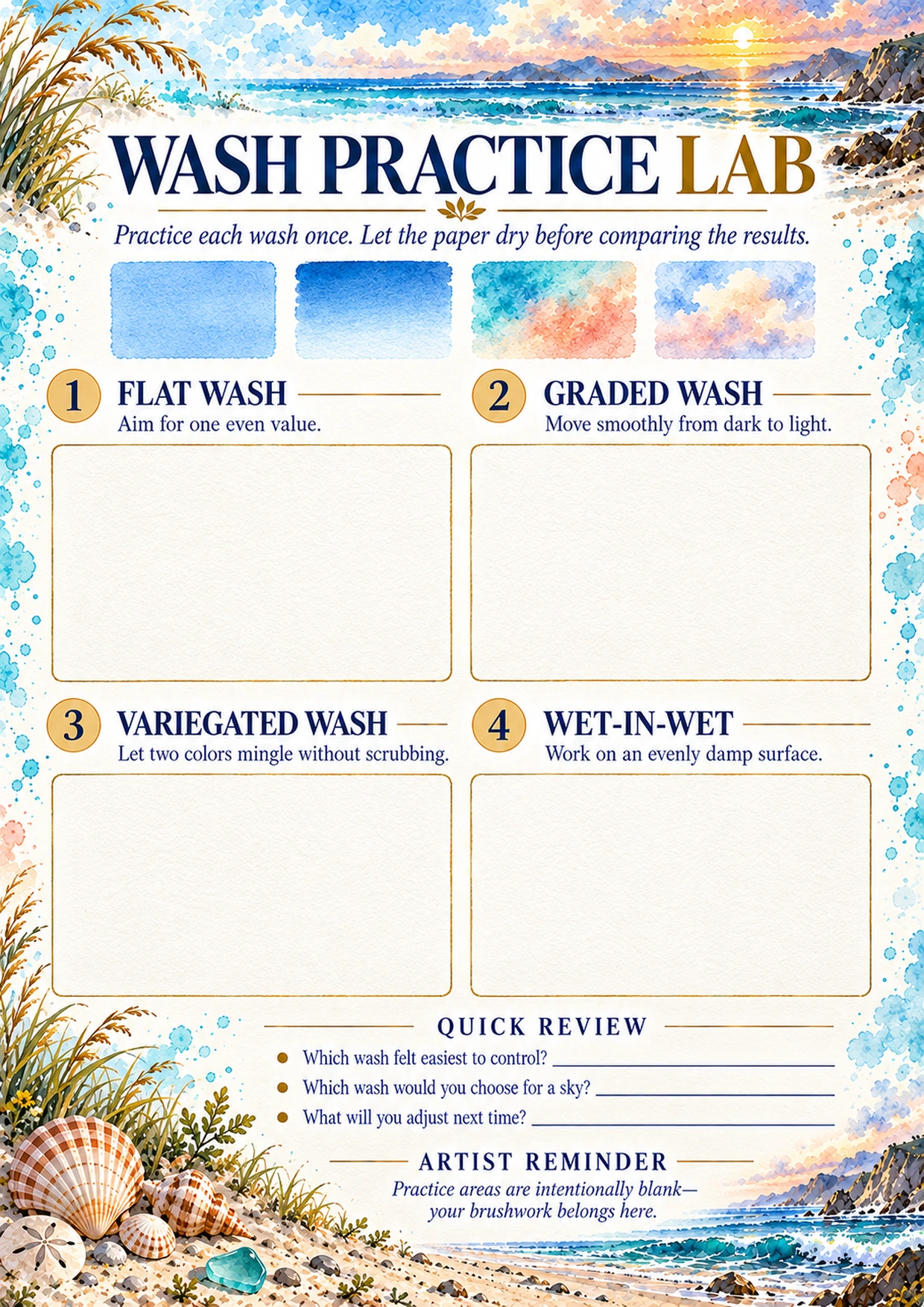
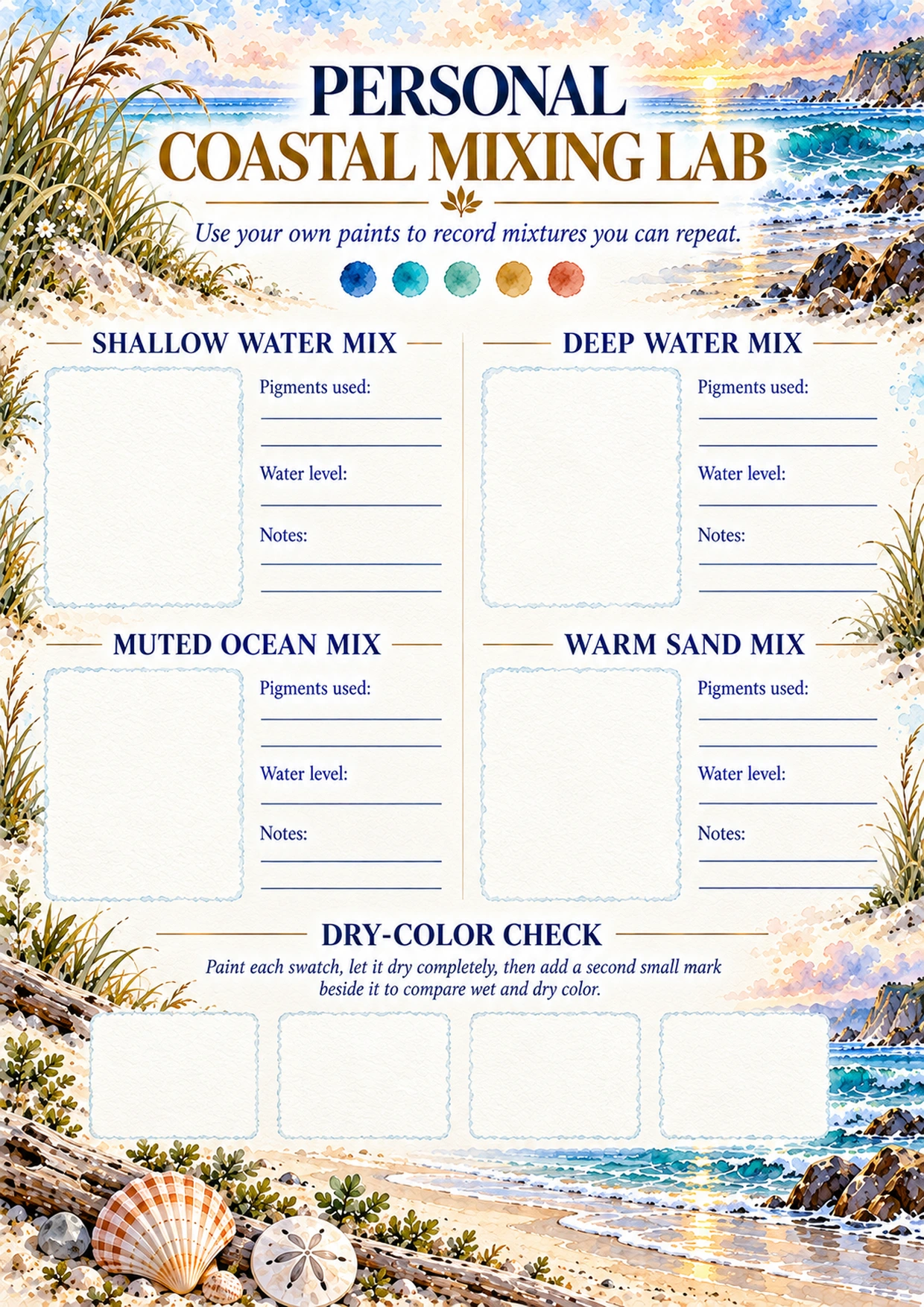
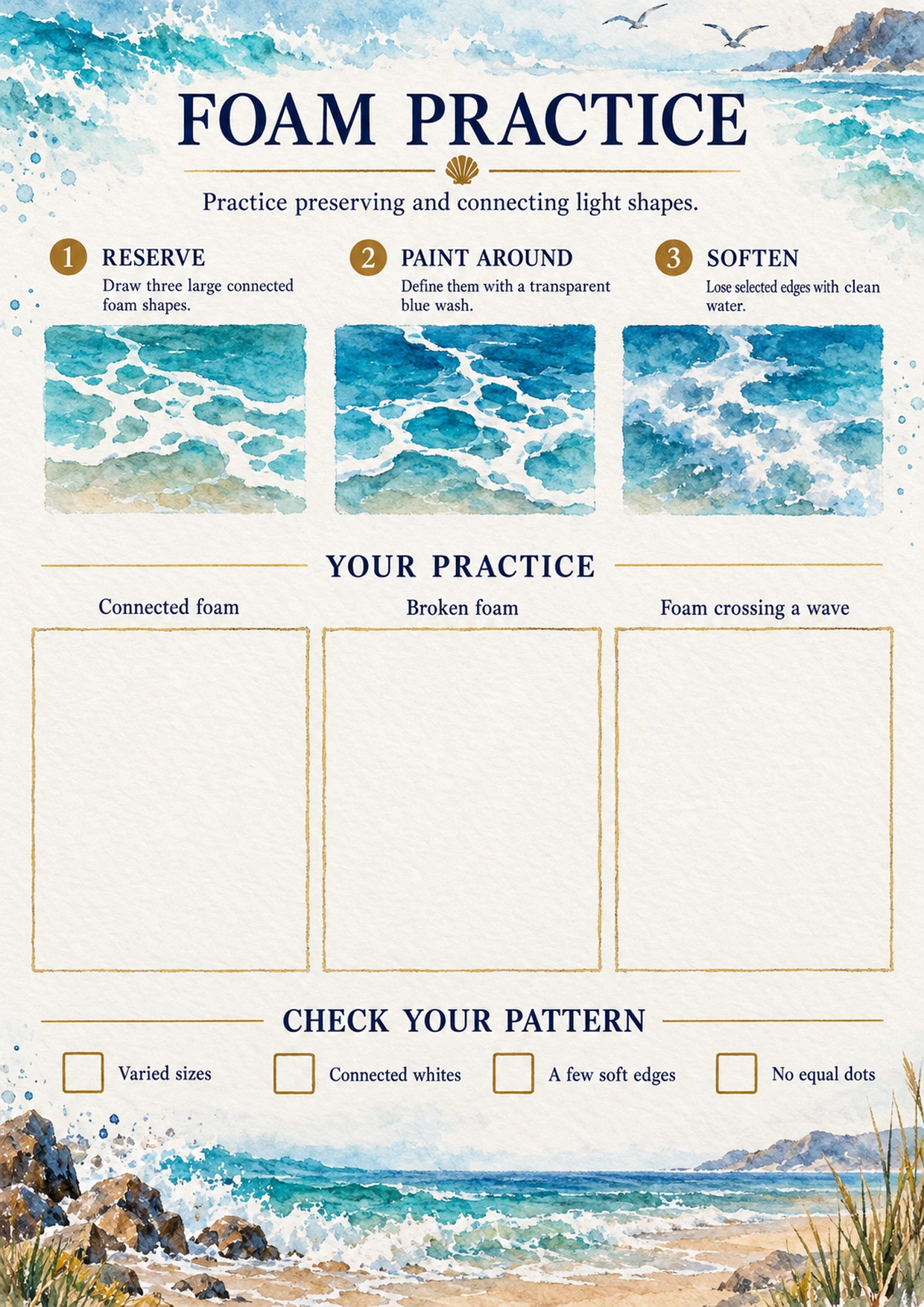
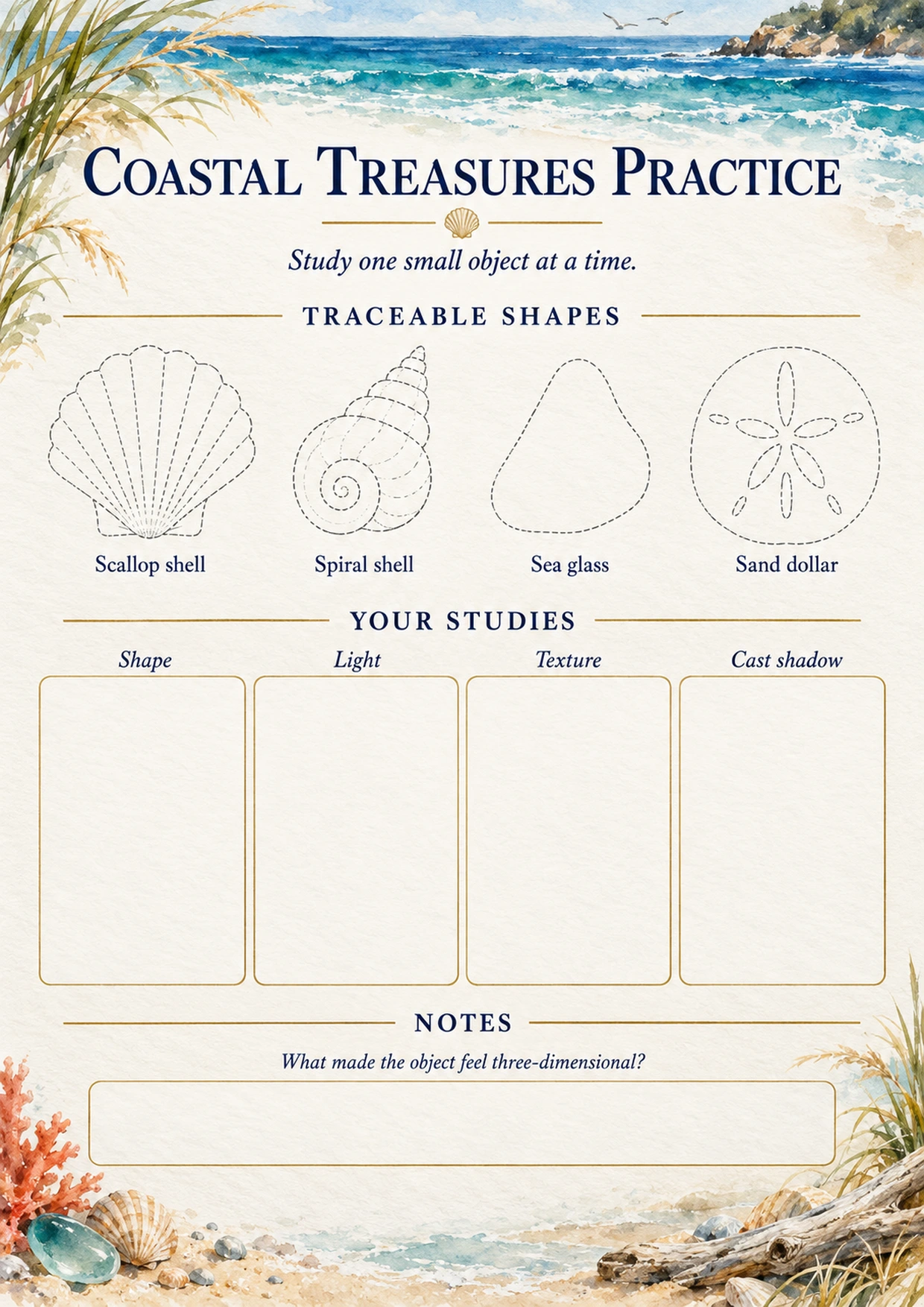
The previews show a learning path, water-pigment-paper balance, wash practice, wave-shape studies, and a personal coastal mixing lab. Later pages explore a breaking wave, foam patterns, and coastal objects. The full supplied package includes standard and Ink-Saver editions in both A4 and US Letter.
Is it right for your next session?
Choose this edition if ocean and beach scenes motivate your practice. It is a visual learning companion, not a guarantee that a beginner will reproduce a detailed seascape immediately. The printed palette is a suggestion: actual mixtures depend on the paints, paper, and water you use.
A practical way to begin
Begin with two small water washes rather than a complete breaking wave. Record your pigments and compare the dry colors. Then reserve a simple light foam shape while painting around it. Move to a fuller wave study when its broad light and dark groups are understandable.
Study the page on screen, then paint on suitable watercolor paper. If printing, use Actual Size and paper that is compatible with your printer. Ordinary office paper is suitable for reading and notes, but it is not a reliable surface for wet watercolor practice. You can also trace a light outline onto your painting paper; tracing is optional, not a requirement.