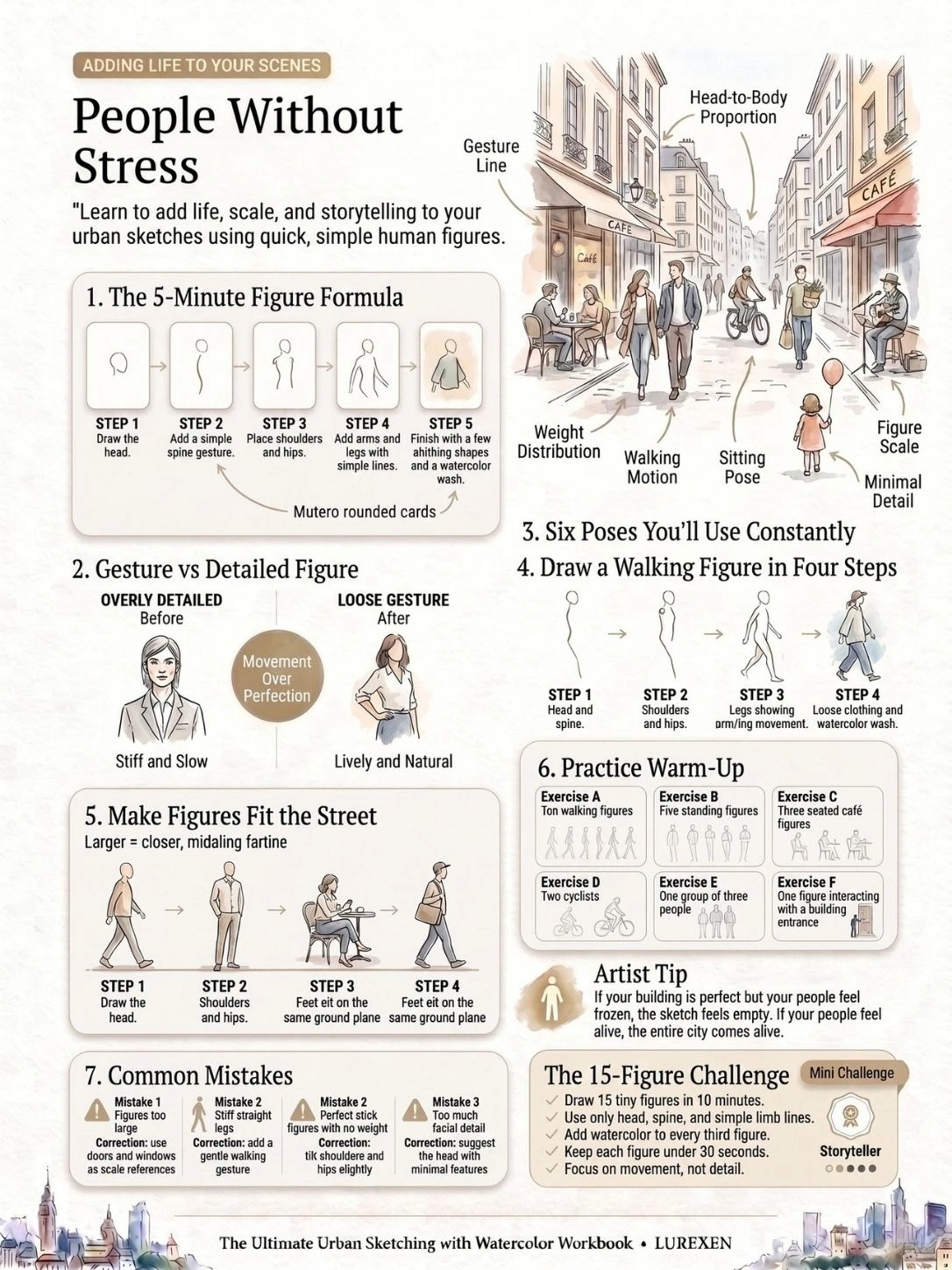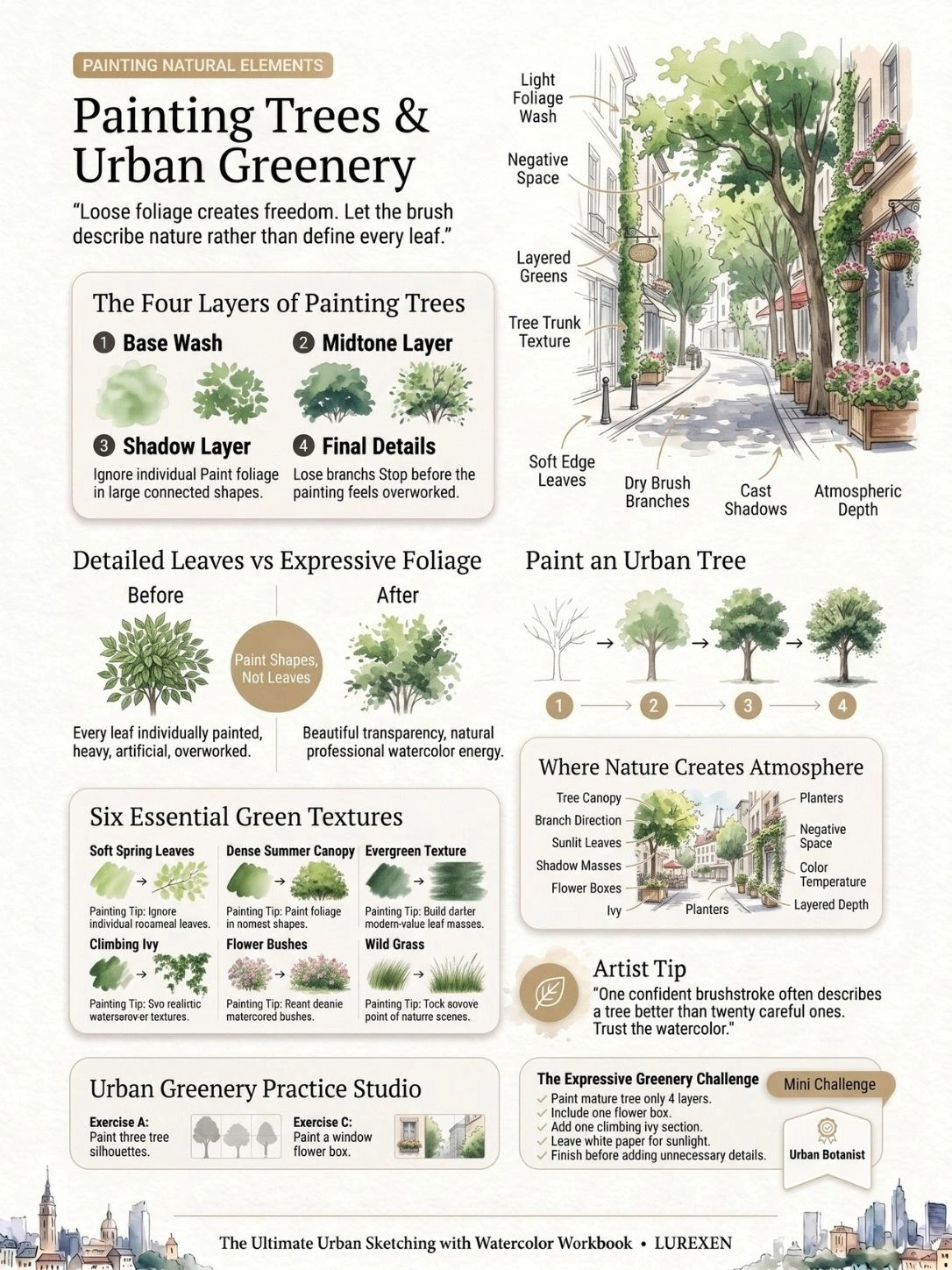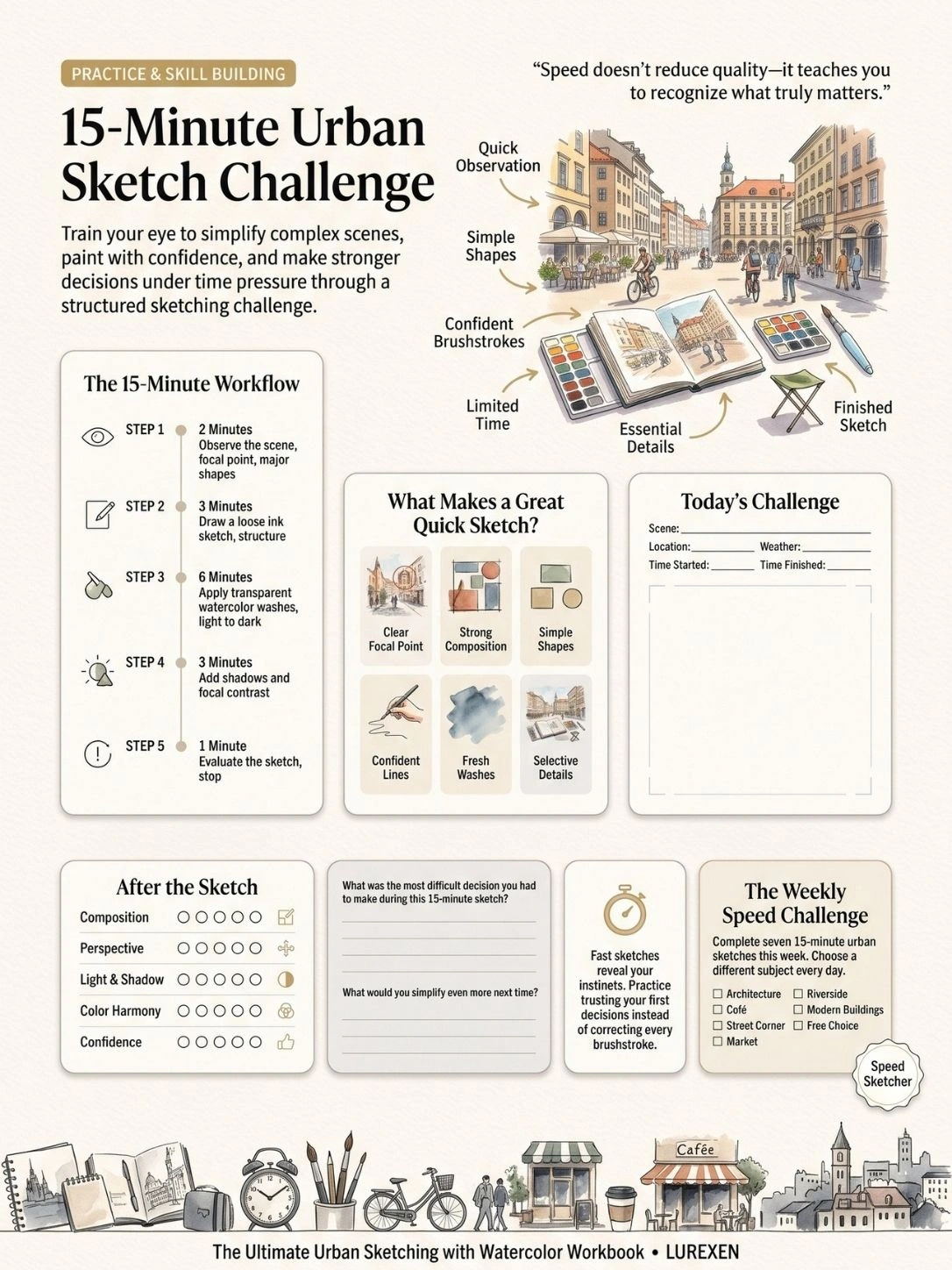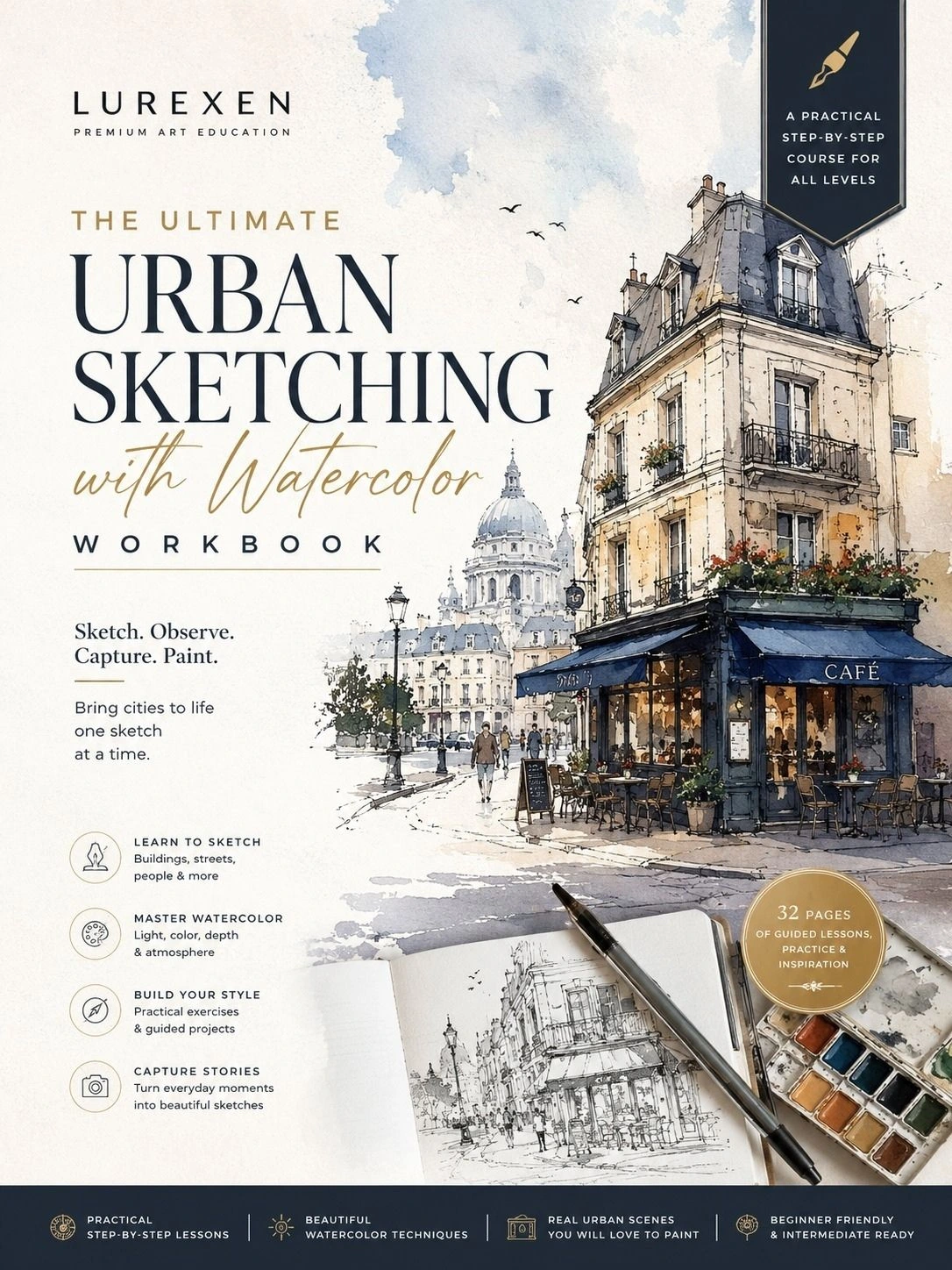
What this workbook helps you practice
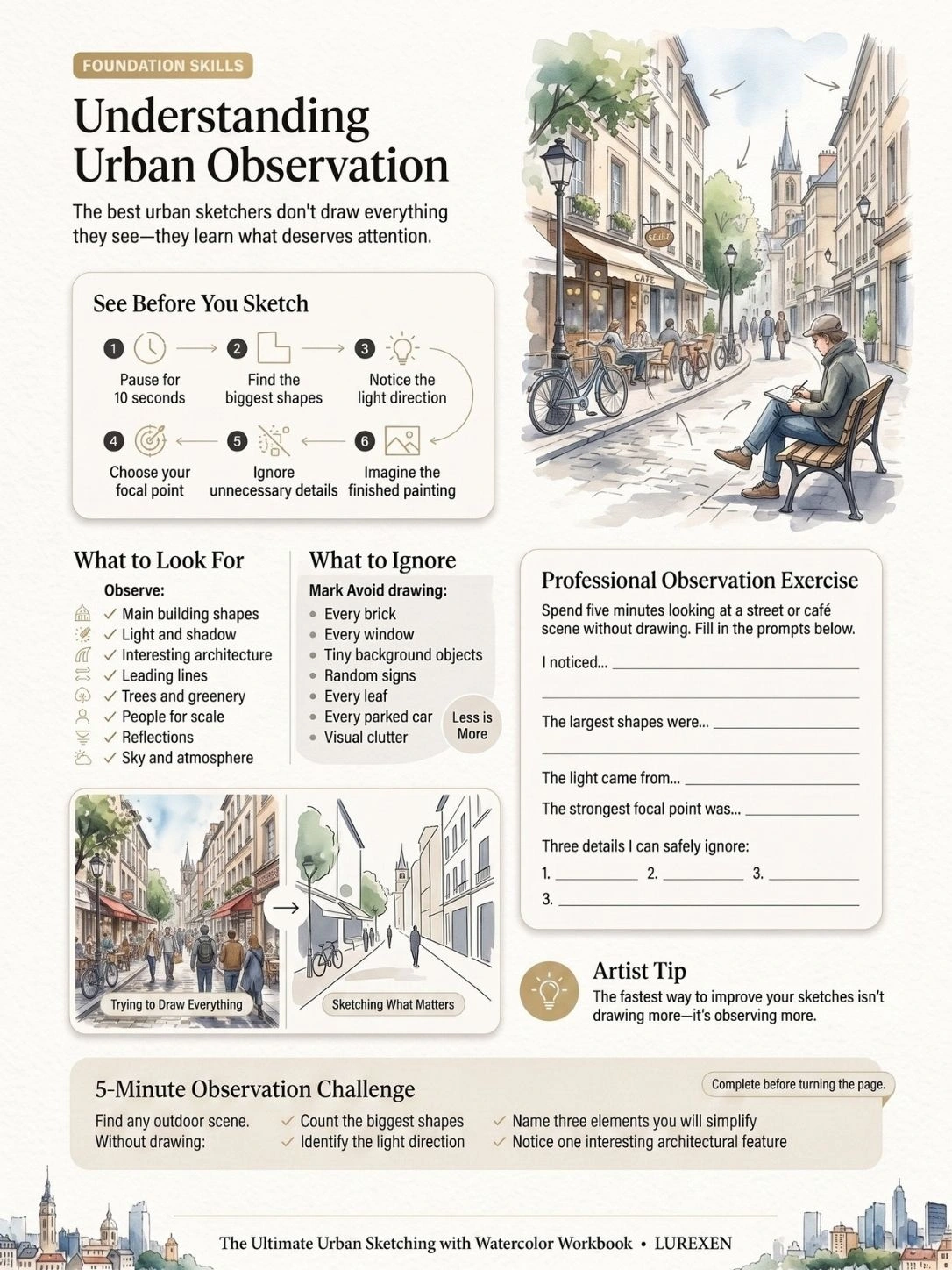
Urban sketching begins with deciding what matters in a scene. This workbook combines that observation habit with line drawing and watercolor, helping you simplify a street or building before adding detail.
How the pages are organized
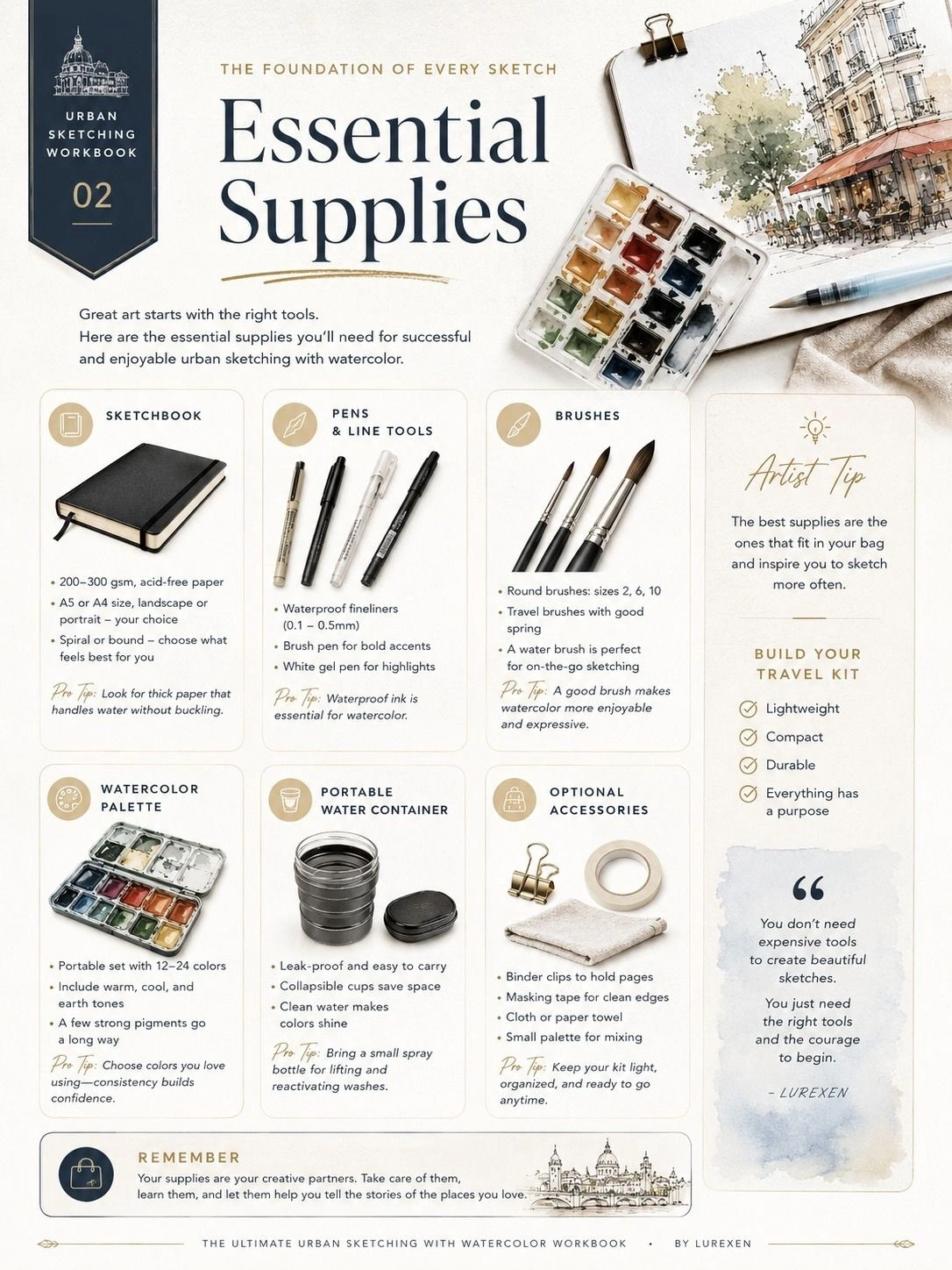
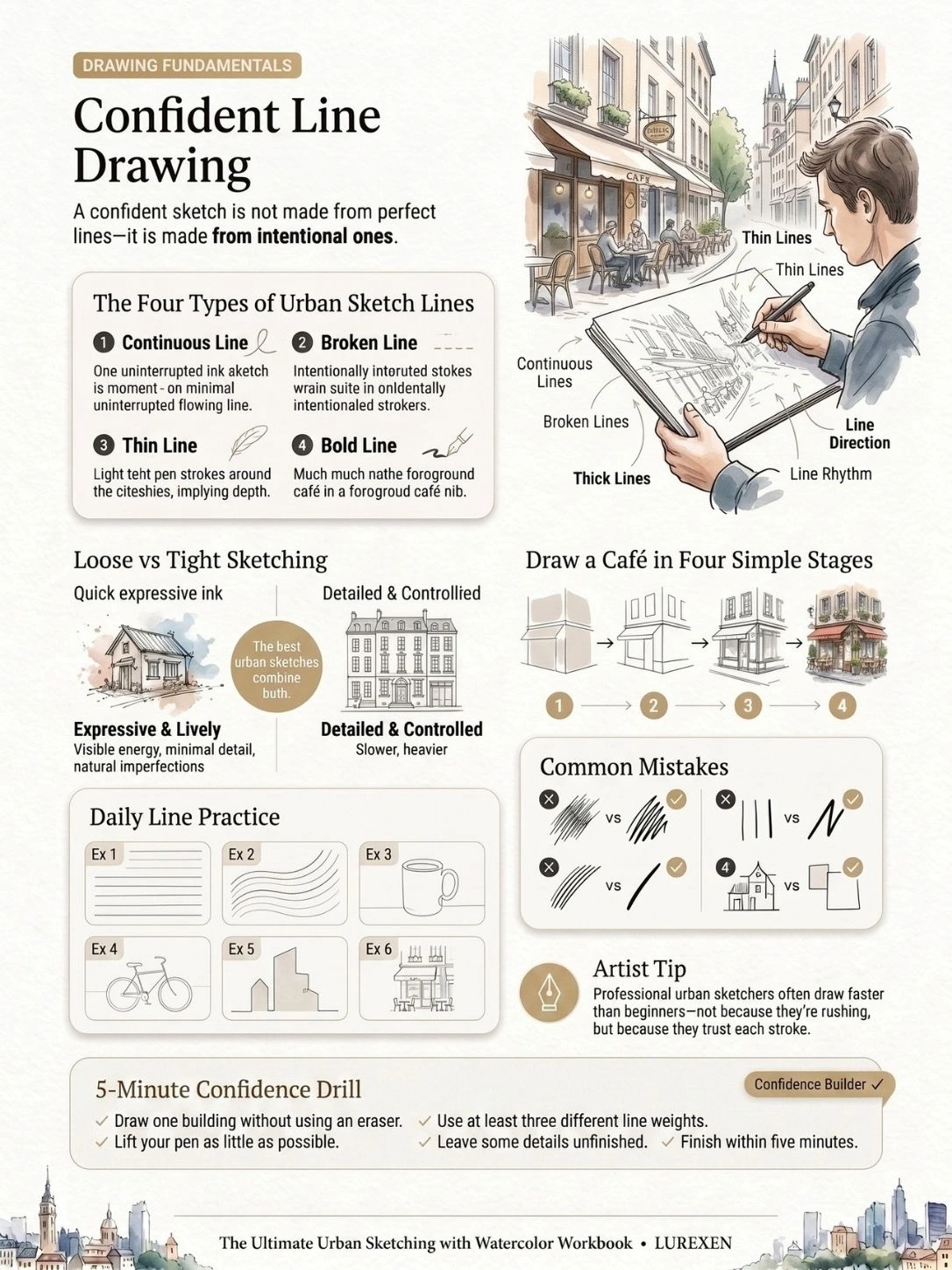
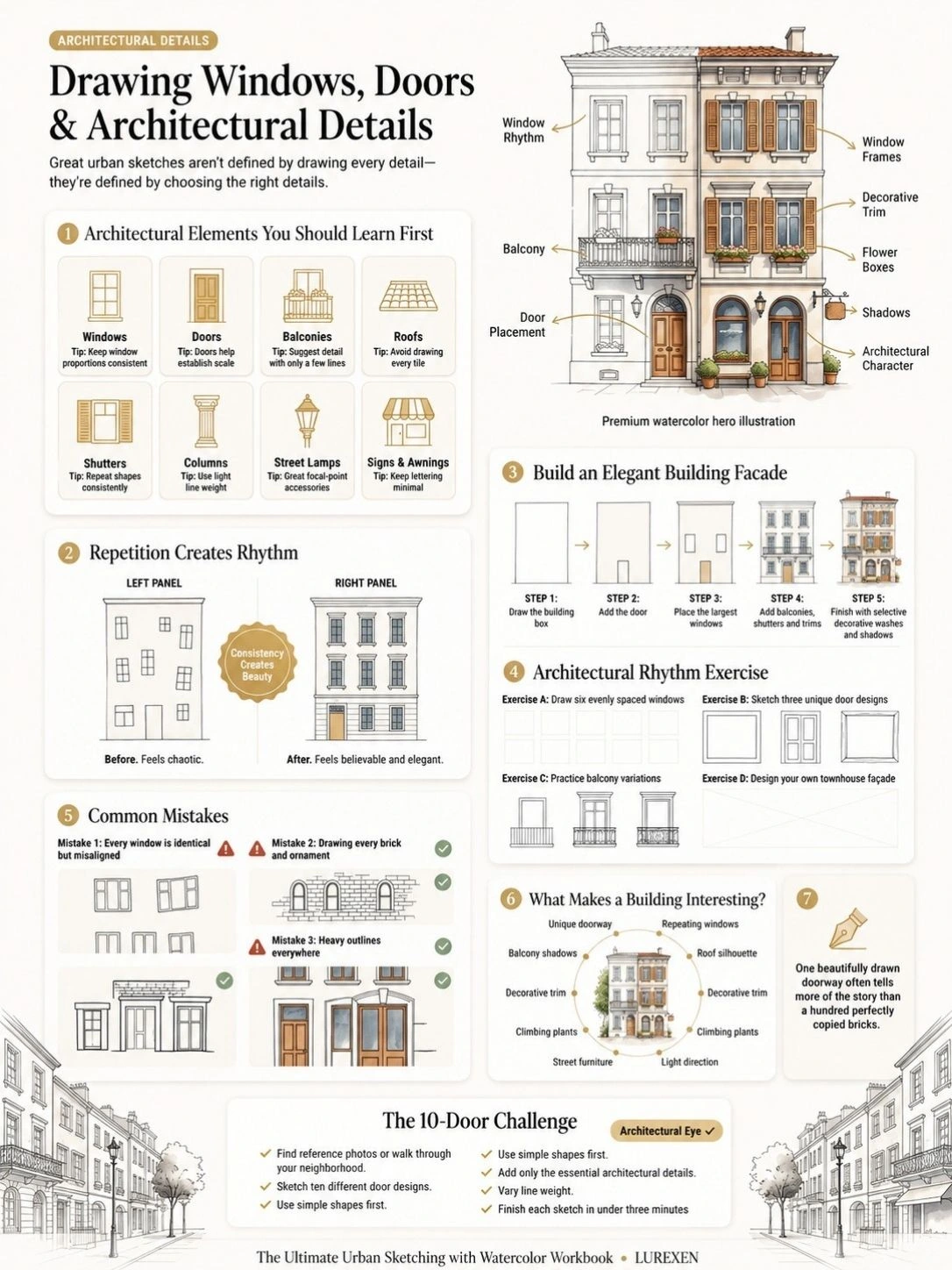
The preview sequence includes materials, an observation exercise, line types, architectural details, simplified people, and greenery. A historic street project brings those choices together. A short sketch challenge suggests a manageable way to work, but its time estimate is optional rather than a deadline.
Is it right for your next session?
It suits learners who enjoy buildings and everyday places and want to combine pencil or pen with paint. The workbook is not a substitute for a comprehensive technical perspective manual. Perspective, proportion, and observation still need checking against your own scene. The supplied PDF contains 33 pages, while the cover uses a 32-page label. Those counts are not presented here as a number of separate lessons; check the live listing for the delivery details.
A practical way to begin
Choose one doorway or window rather than an entire street. Mark its height, width, and main divisions, then draw only the important lines. Add a small wash after the structure reads clearly. If using ink, test that it is waterproof before painting over it.
Study the page on screen, then paint on suitable watercolor paper. If printing, use Actual Size and paper that is compatible with your printer. Ordinary office paper is suitable for reading and notes, but it is not a reliable surface for wet watercolor practice. You can also trace a light outline onto your painting paper; tracing is optional, not a requirement.