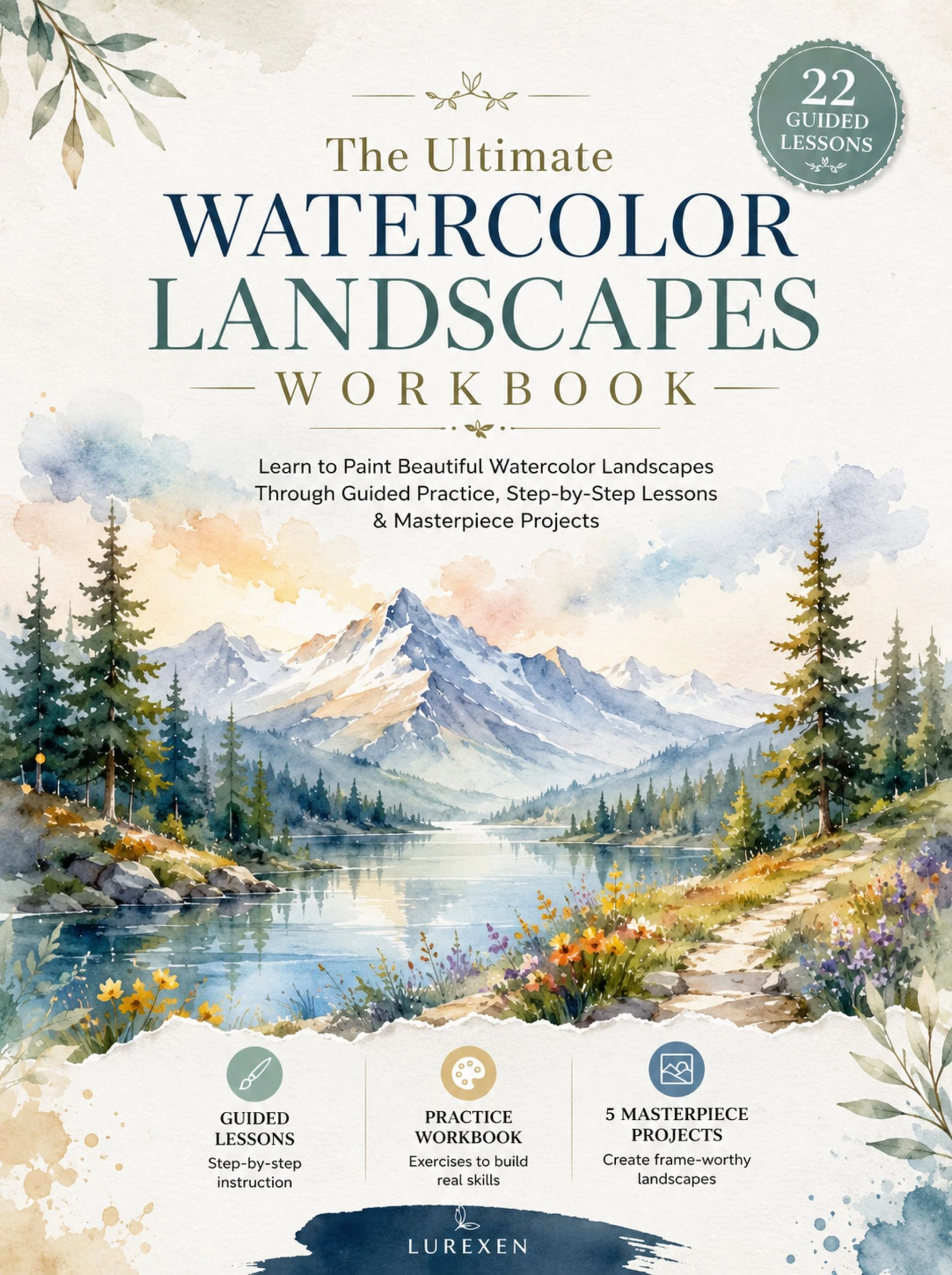
What this workbook helps you practice
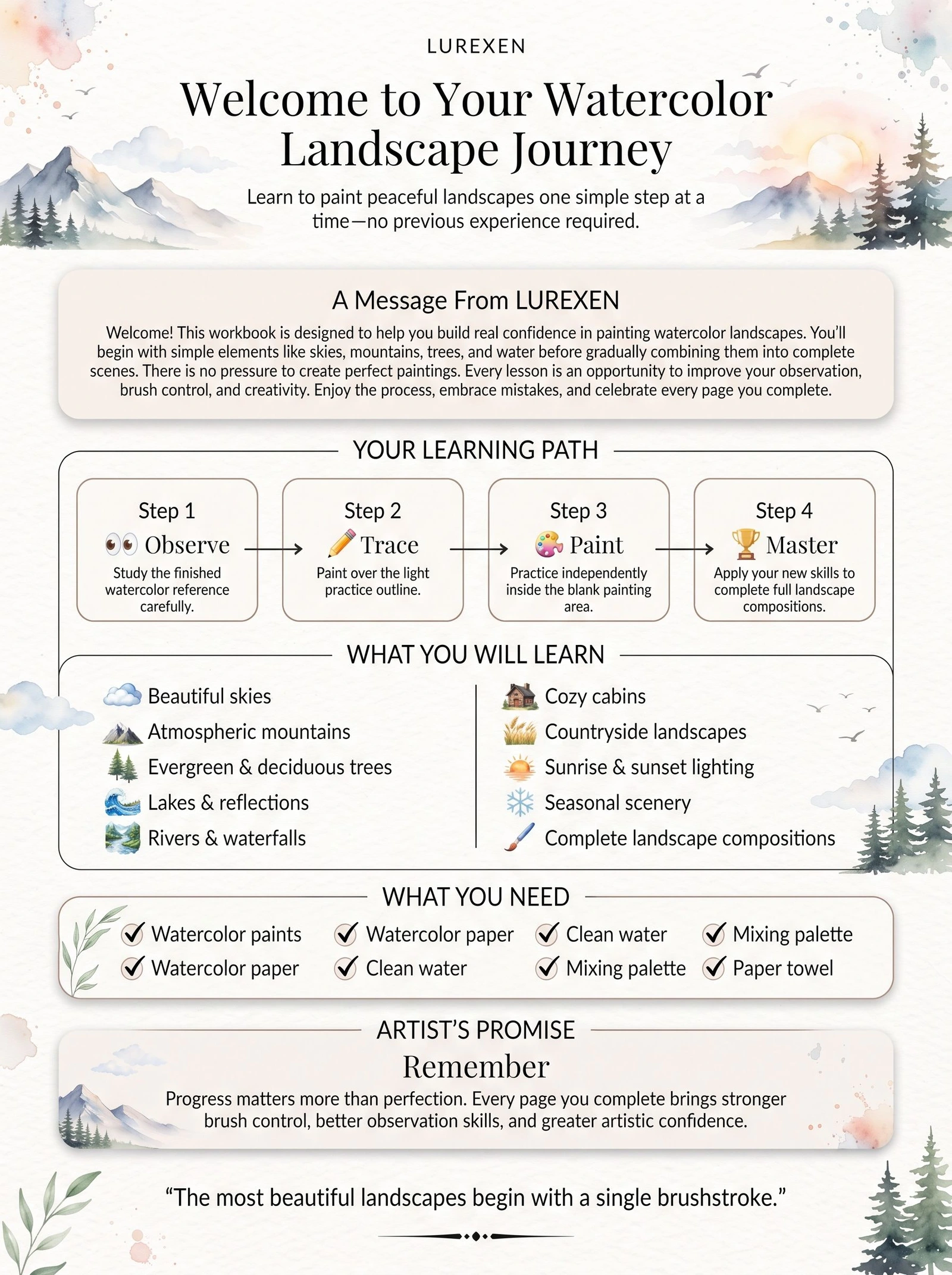
A landscape becomes easier to approach when you separate it into sky, distant forms, middle-ground shapes, and foreground accents. This workbook organizes those subjects into focused studies rather than asking you to paint a complicated view immediately.
How the pages are organized
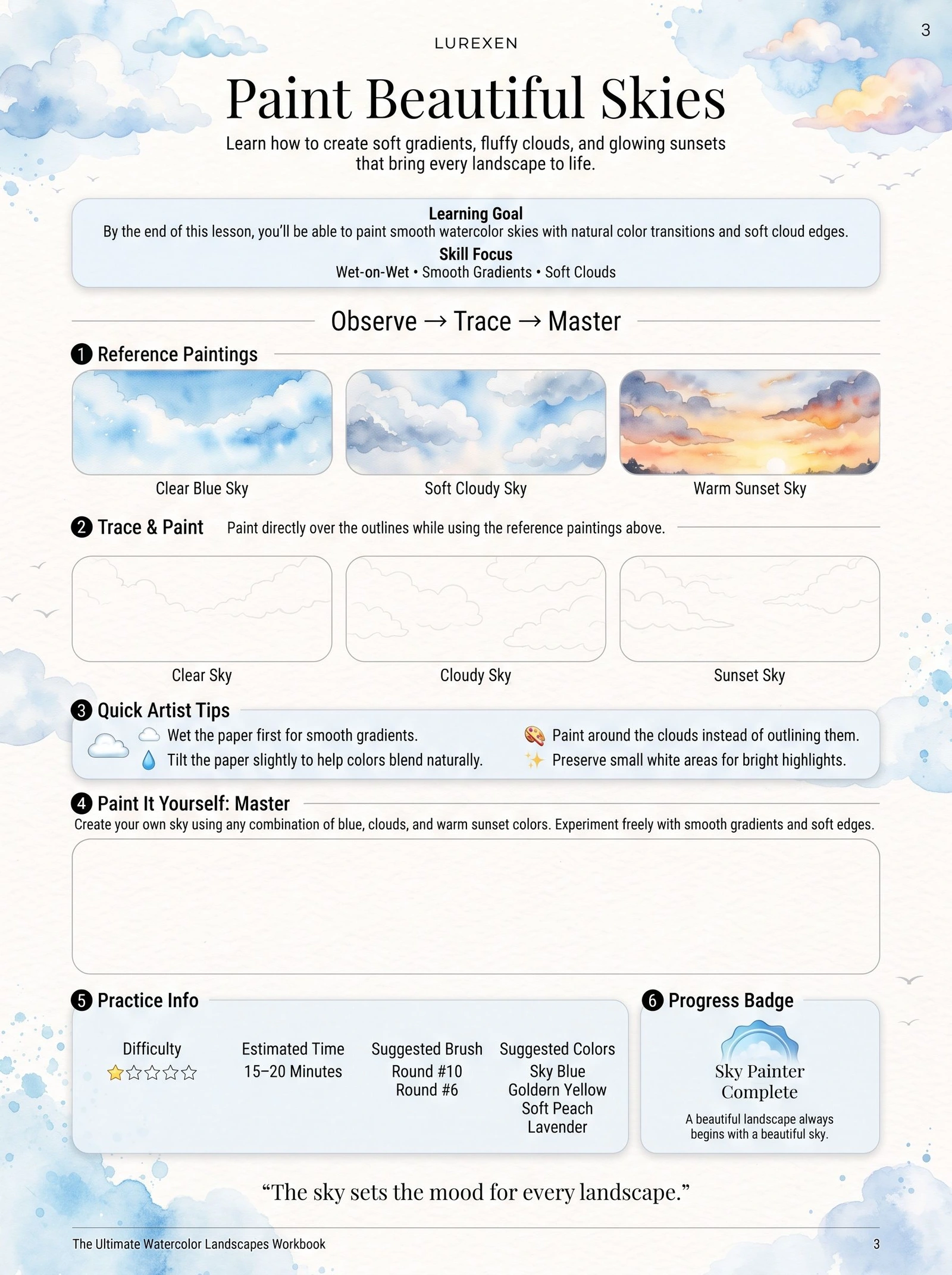
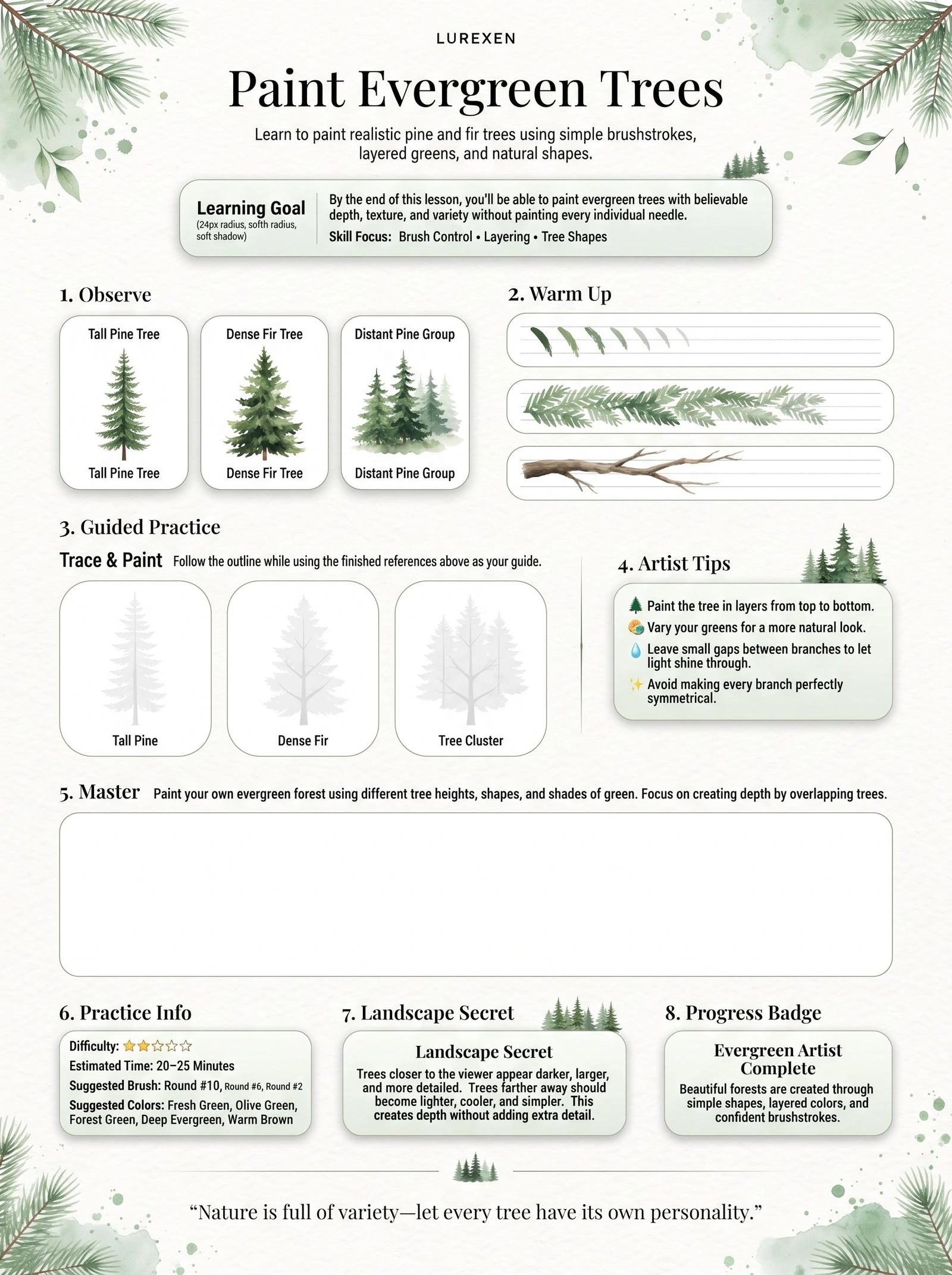
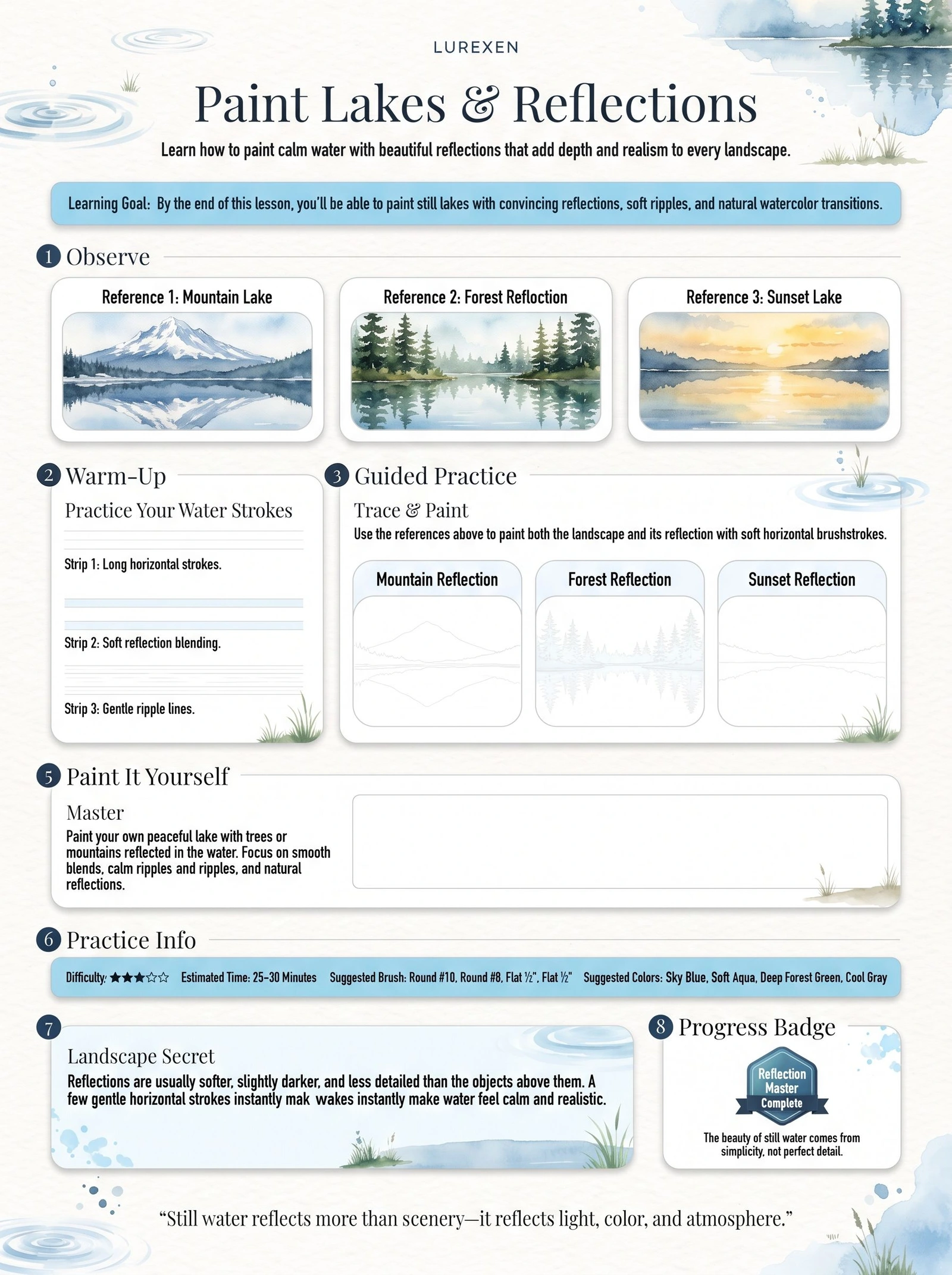
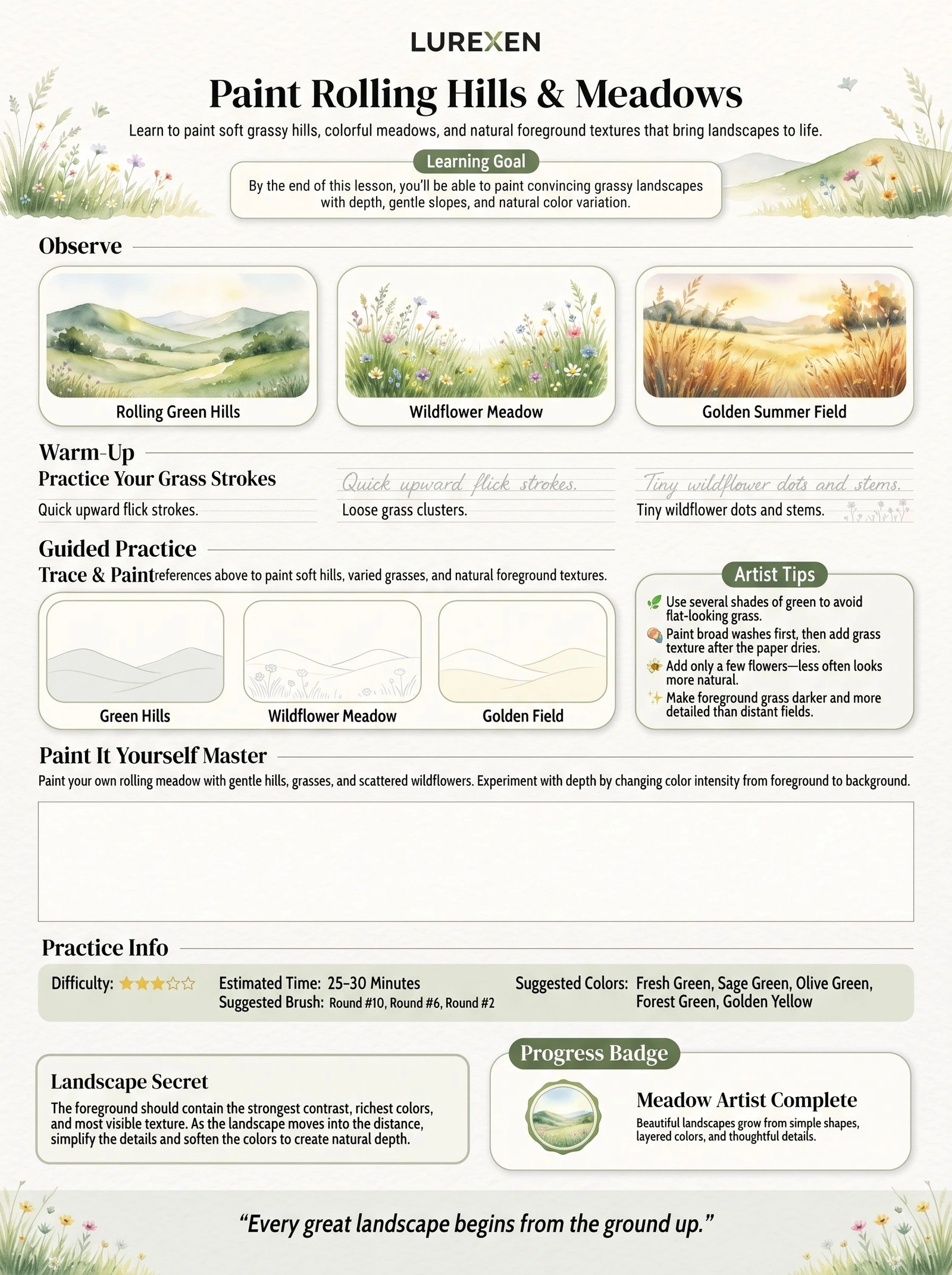
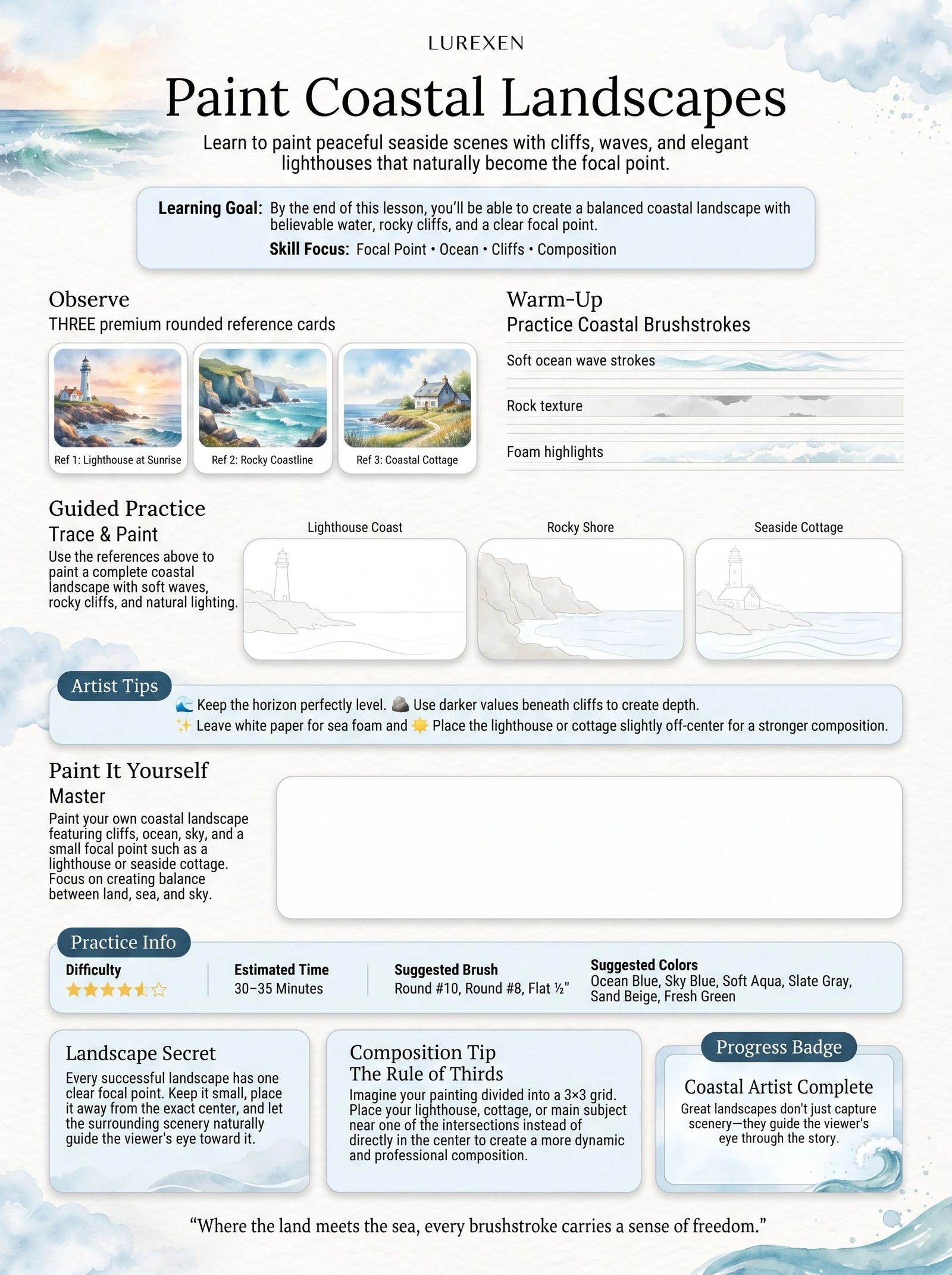
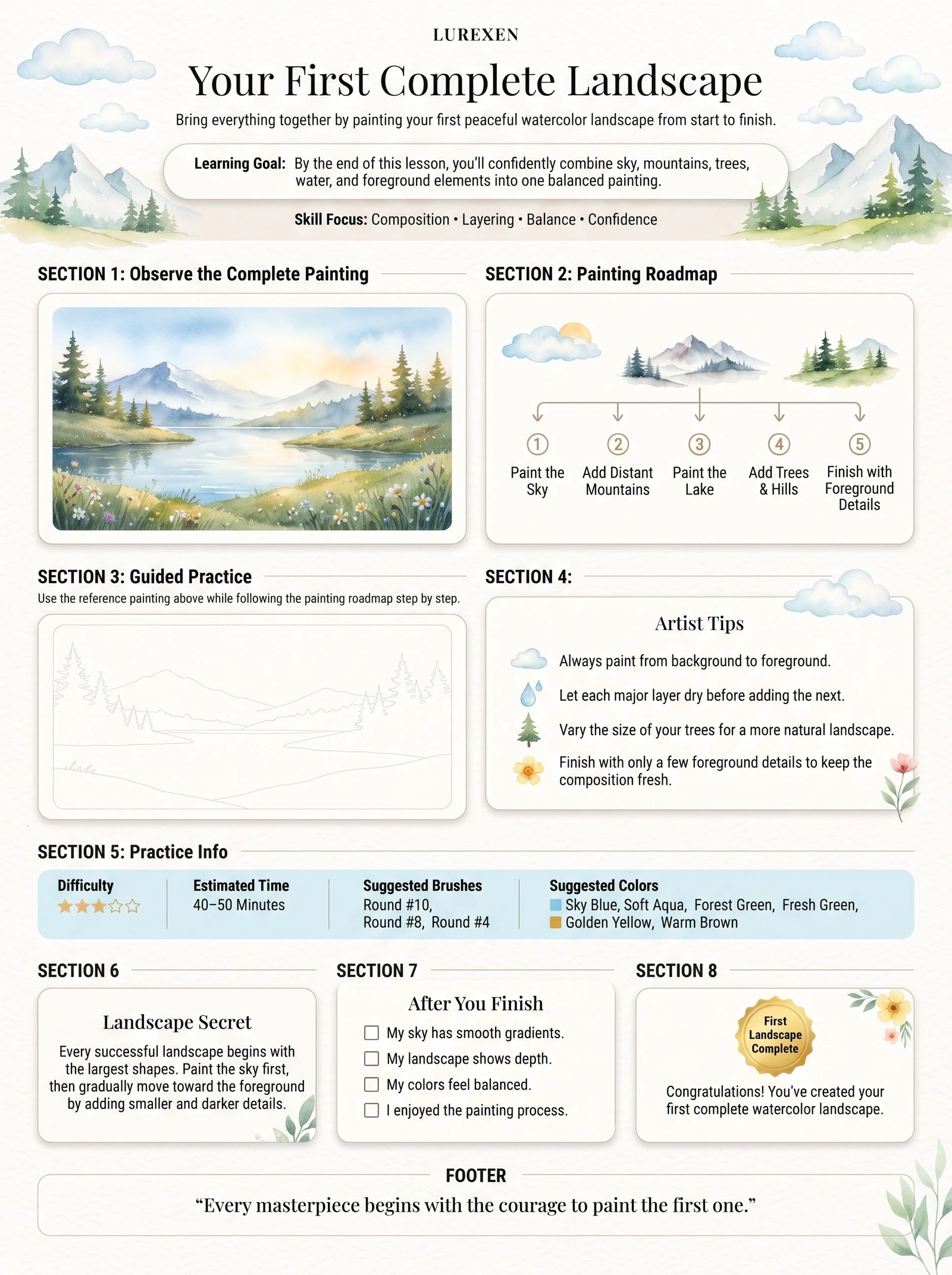
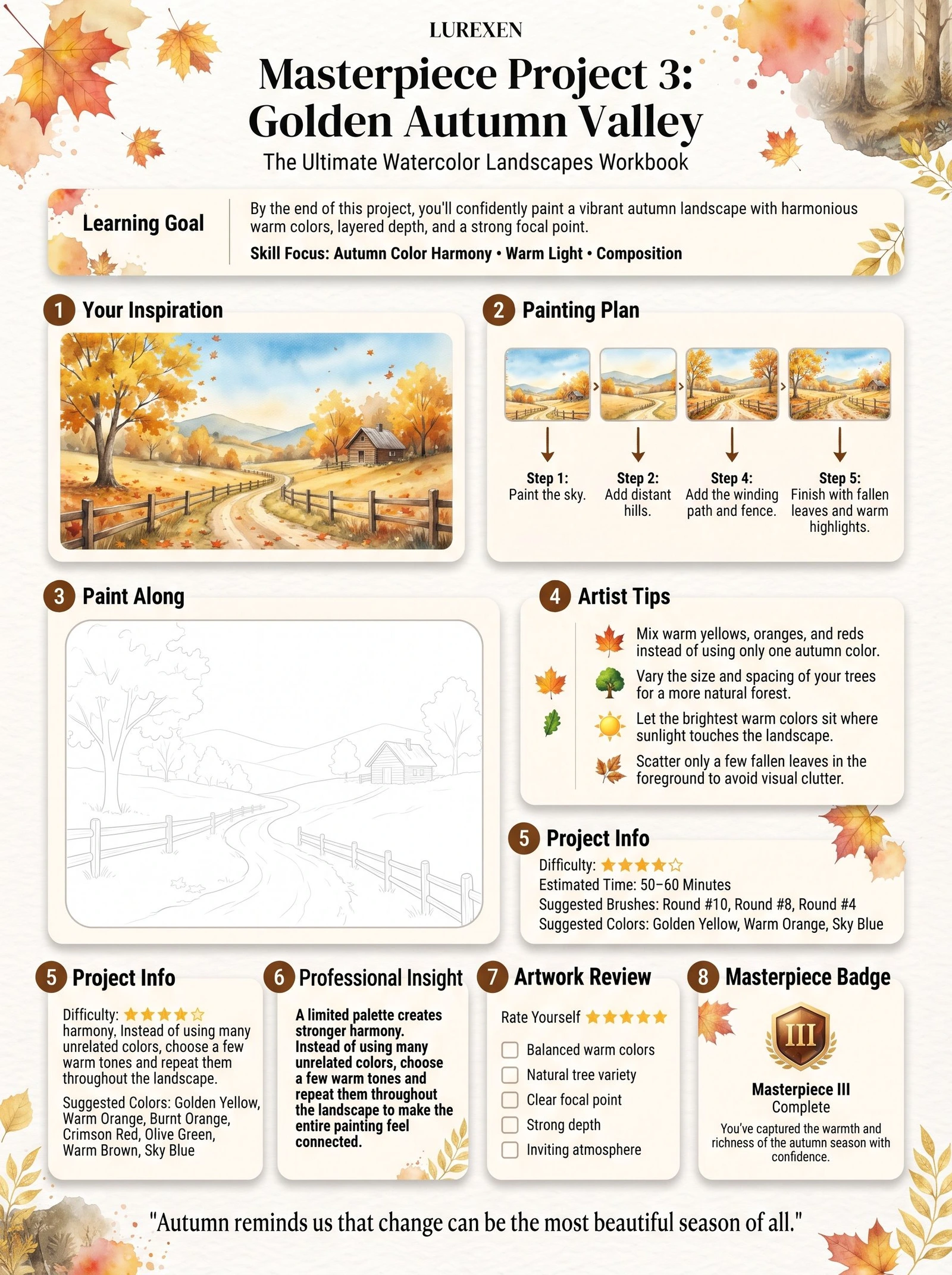
The selected pages show a sky study, evergreen trees, lake reflections, hills and meadows, and coastal landscapes. The learning sequence uses reference images, lighter outlines, and room for independent practice. Later pages bring individual subjects into complete compositions, including an autumn valley project.
Is it right for your next session?
Choose this edition if you want nature scenes and prefer a visual practice sheet to a long textbook. It can support a beginner who is already willing to experiment with water and pigment. It is not a complete course in every watercolor technique, and the illustrations are examples to study rather than a promise of your finished result.
A practical way to begin
Begin with a small sky study and make three versions: a light flat wash, a soft cloud shape, and a warmer sunset wash. Let each attempt dry before comparing it. Move to trees or hills only after you have identified one useful change for the next wash.
Study the page on screen, then paint on suitable watercolor paper. If printing, use Actual Size and paper that is compatible with your printer. Ordinary office paper is suitable for reading and notes, but it is not a reliable surface for wet watercolor practice. You can also trace a light outline onto your painting paper; tracing is optional, not a requirement.