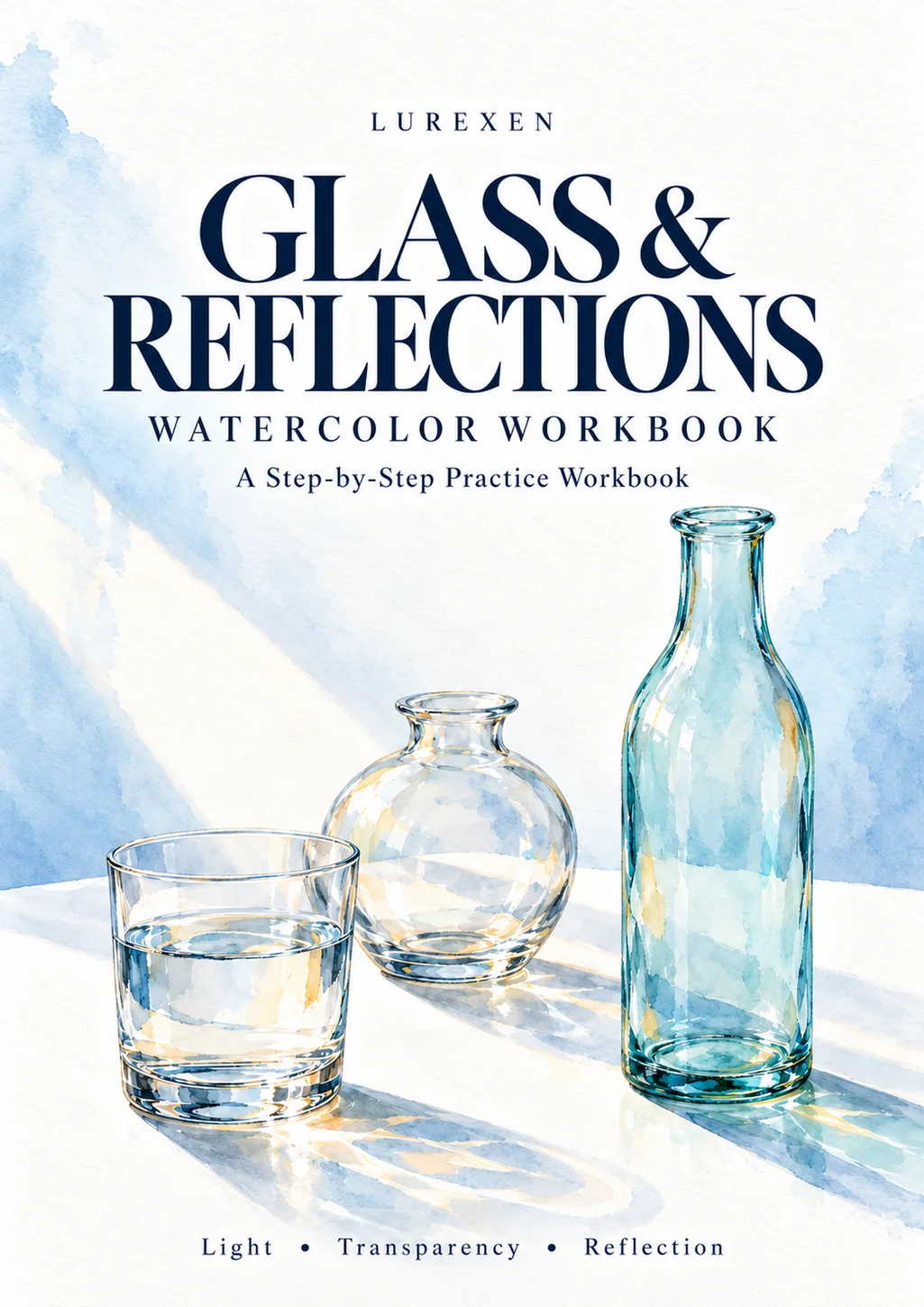
Actual workbook cover
Watercolor Glass and Reflections Workbook: Transparent Objects, Value Shapes and Guided Painting Practice
Store preview · not available to buy yet
Checkout is not available yet. You will not be charged from this page.
Refunds & digital delivery- Included format
- 43 pages · A4 + US Letter · Full-color and Ink-Saver PDFs · English
- Delivery
- Digital files. No physical item is shipped.
- Before purchase
- Check the listed file types, included editions and usage terms.
Description
Study transparent objects painted on paper in a 43-page watercolor workbook. Separate exercises explore the shapes, edges and reflections that suggest glass before moving into vessel studies.
What you can practise
- Setting up a reference and mapping light, midtone and dark
- Rims, symmetry, highlights and hard, soft and lost edges
- Quiet glass colors, reflections, refraction, waterlines and thickness
- Cast shadows and transmitted light
- Clear tumbler, water-filled glass, colored bottle and bud-vase studies
- Guided practice and an independent glass-painting project
Who it is for
Watercolor learners interested in still life, glass and reflective surfaces.
Exactly what is included
Page totals include the cover, introductory material, references, exercises and any closing pages. They are not counts of separate lessons.
4 PDFs. Each PDF contains the same 43-page workbook in a different printing edition.
- Standard color: A4, 210 × 297 mm; 43 pages.
- Ink-Saver: A4, 210 × 297 mm; 43 pages.
- Ink-Saver: US Letter, 8.5 × 11 inches; 43 pages.
- Standard color: US Letter, 8.5 × 11 inches; 43 pages.
Alternative paper sizes and color editions repeat the same workbook content. They do not add unique lessons.
Ink-Saver reduces decorative ink coverage while retaining the teaching illustrations. It is not a completely black-and-white edition.
Printing and practice
- Select the PDF matching your paper size. Print at Actual Size / 100% and check a single page for your printer’s margins.
- Use paints suitable for the workbook’s medium, brushes, water and painting paper. For wet watercolor, separate watercolor paper around 300 gsm / 140 lb is a useful starting point.
- Keep the guide beside your painting or transfer an outline to suitable painting paper. Ordinary office paper is best used for reading and notes.
The subjects are glass objects represented in watercolor on paper. This workbook does not teach painting or decorating the surface of real glass.
Before you choose
Use the actual previews to check the lesson style, text and practice areas. The lessons offer practice and guidance. Progress varies with your starting experience, materials and time spent practising; completing the book does not guarantee a particular skill level or result.
For the buyer’s personal practice. Do not resell, redistribute or upload the digital files. Contact LUREXEN before making copies for a class or paid workshop.
Digital product and AI disclosure
This is a self-paced digital workbook. The product files are the formats listed above. Website preview videos are viewing samples, not an included video course. A physical book, art supplies and scene props are not shipped. Styled mockups illustrate the product; labeled interior previews show actual pages.
AI tools were used to create workbook artwork and instructional content. Illustrations are learning references, not recordings of hand-painted demonstrations.
Checkout is not open yet. Read our refund and digital-delivery policy, or ask a product question.
You might also like
Related workbooks and a free lesson for your next creative session.
 ▶ Silent preview
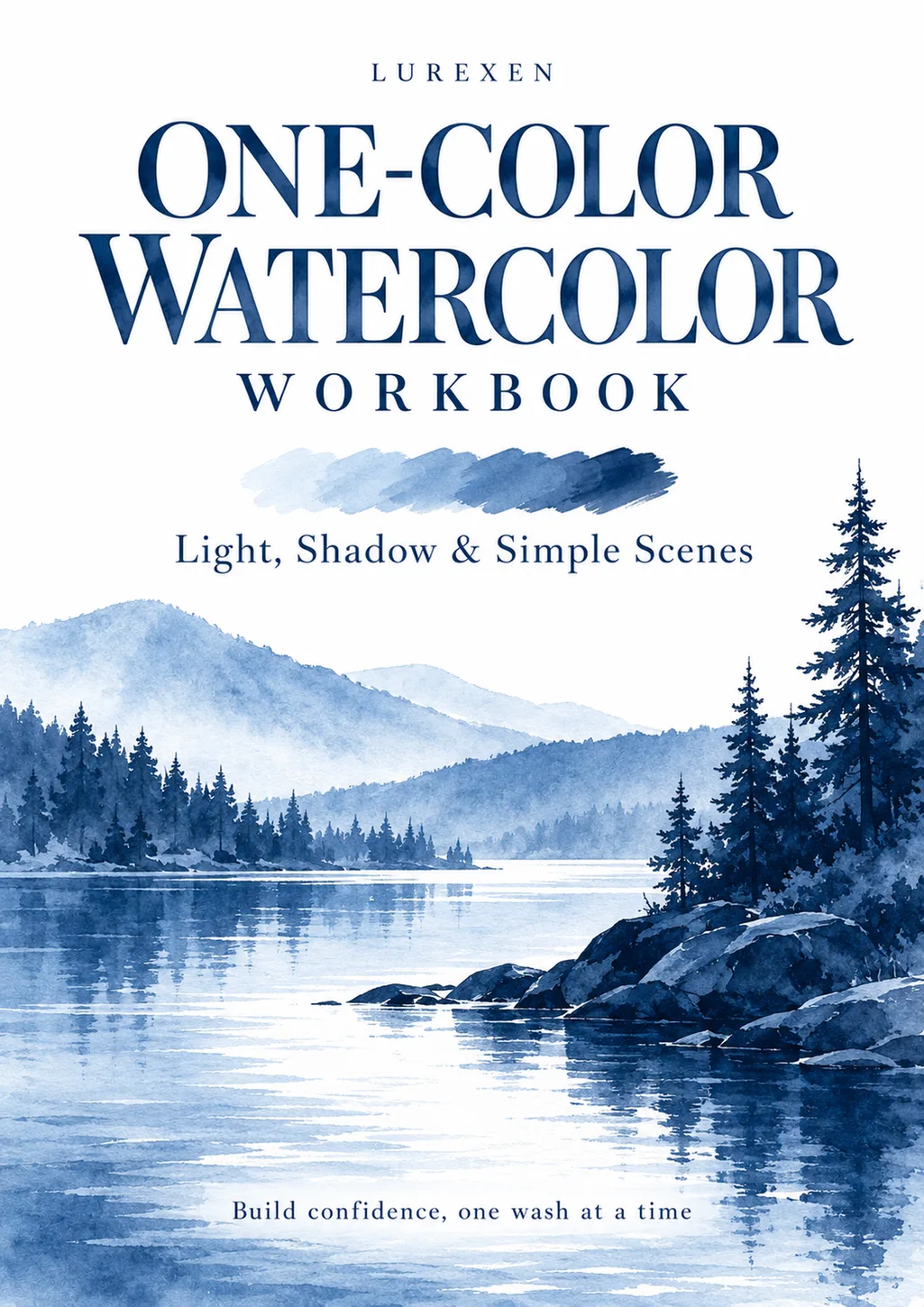
One-Color Watercolor Workbook: Value Studies, Light, Shadow and Simple Painting Scenes
Explore light and shadow using one pigment in a 31-page workbook.
See contents & real previews →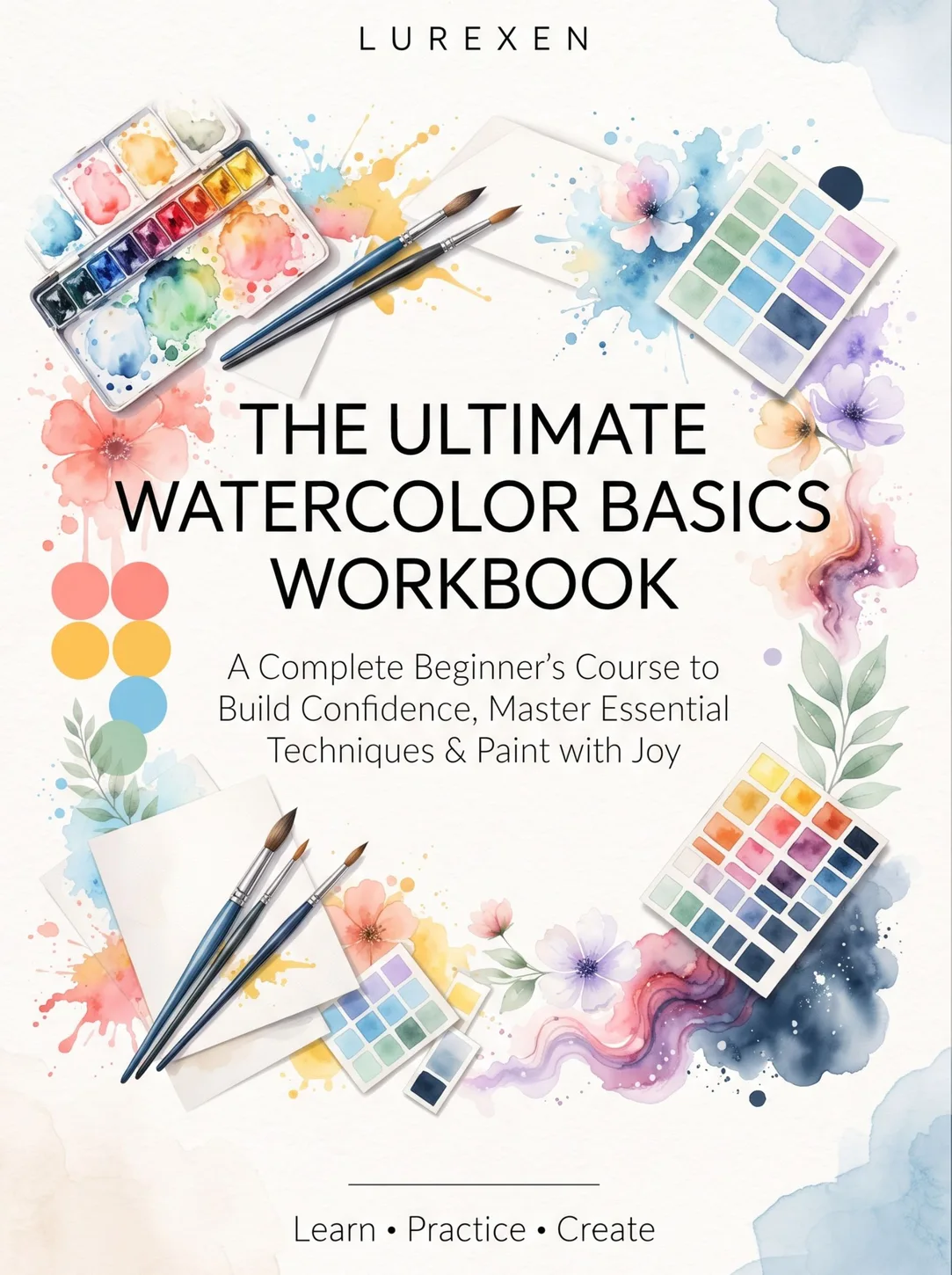 ▶ Silent preview
Watercolor Basics Workbook: Beginner Supplies, Brush Control and Essential Painting Practice
Start with supplies, paint consistency and brush control in a 24-page watercolor workbook.
See contents & real previews →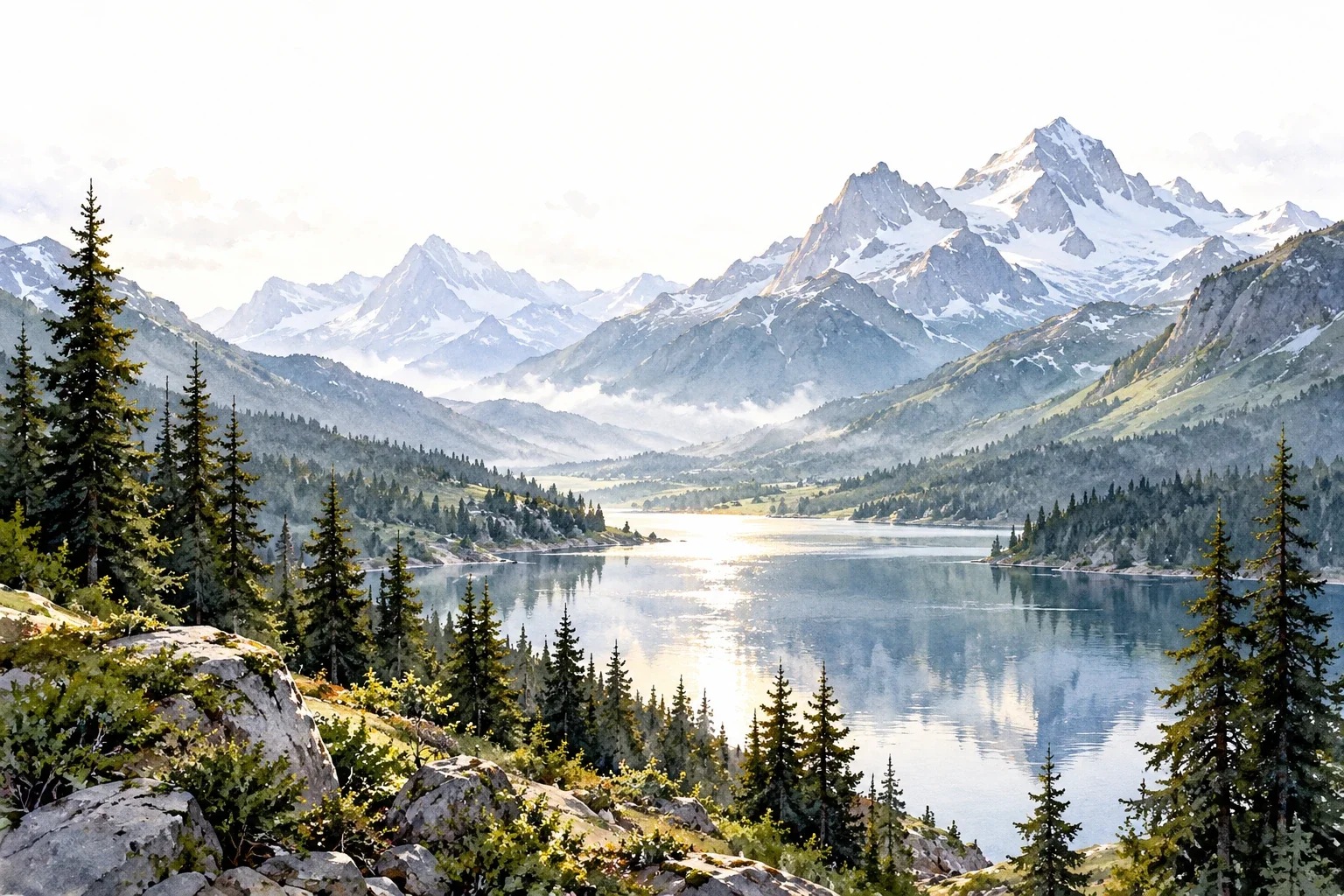
Creating Depth in Watercolor Landscapes
Create convincing depth in watercolor landscapes using overlap, value groups, edge control, scale, and a clear three-zone plan.
Read the free lesson →