
Watercolor / Beginner
Paint a Light Butterfly Wing: Keep the Highlights Before Adding Pattern
Practise one wing with a pale blue wash, reserved white marks and a few darker accents rather than outlining every cell.
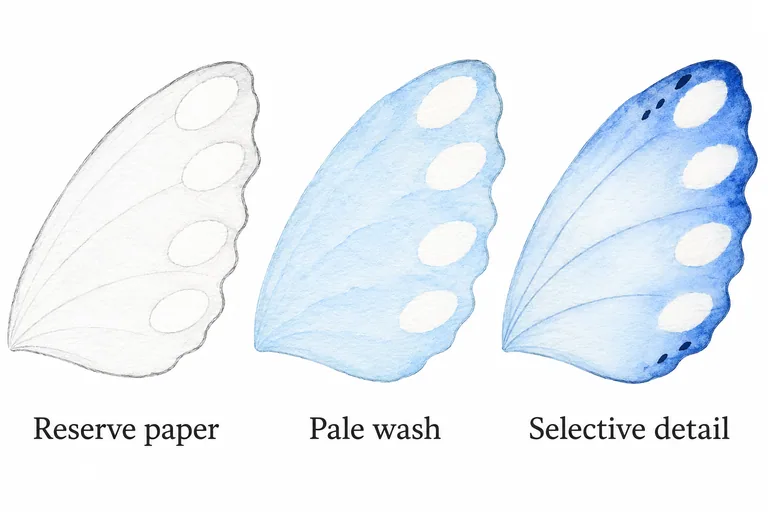
Start with one wing
A single wing lets you practise water control without having to balance an entire butterfly. Sketch a broad tapered shape on watercolor paper and choose three or four pale highlight marks. Keep those marks large enough to paint around comfortably. Use your own photograph or observation for an exact species; this lesson's AI-assisted example is an artistic study.
Carry a pale wash around the highlights
Test a diluted blue on a scrap. On dry paper, paint the wing around the reserved marks. Work in connected sections and avoid brushing back into a drying edge. You can leave the main vein as a narrow paper channel, but a perfectly even white stripe is unnecessary.
Dry before the pattern
Let the first wash dry fully. Add a little stronger blue along selected parts of the outer edge, leaving the interior lighter. Make only a few darker pattern marks. If the first wash lifts, stop and test a lighter touch with that paper and pigment rather than continuing to rub the same area.
Fine veins should help the shape turn, not divide it into a dark grid. Start with two or three lines using the brush tip. Keep them lighter than your strongest edge accent. Adding more is optional; preserving a clear light area matters more than filling every space.
Compare two attempts
Paint a second wing beside the first, leaving a wider highlight on this attempt. Let both dry and compare them at arm's length. Which looks lighter? Which pattern can you still read when the image is small? Write one change to try next, then use that decision in a full butterfly study.
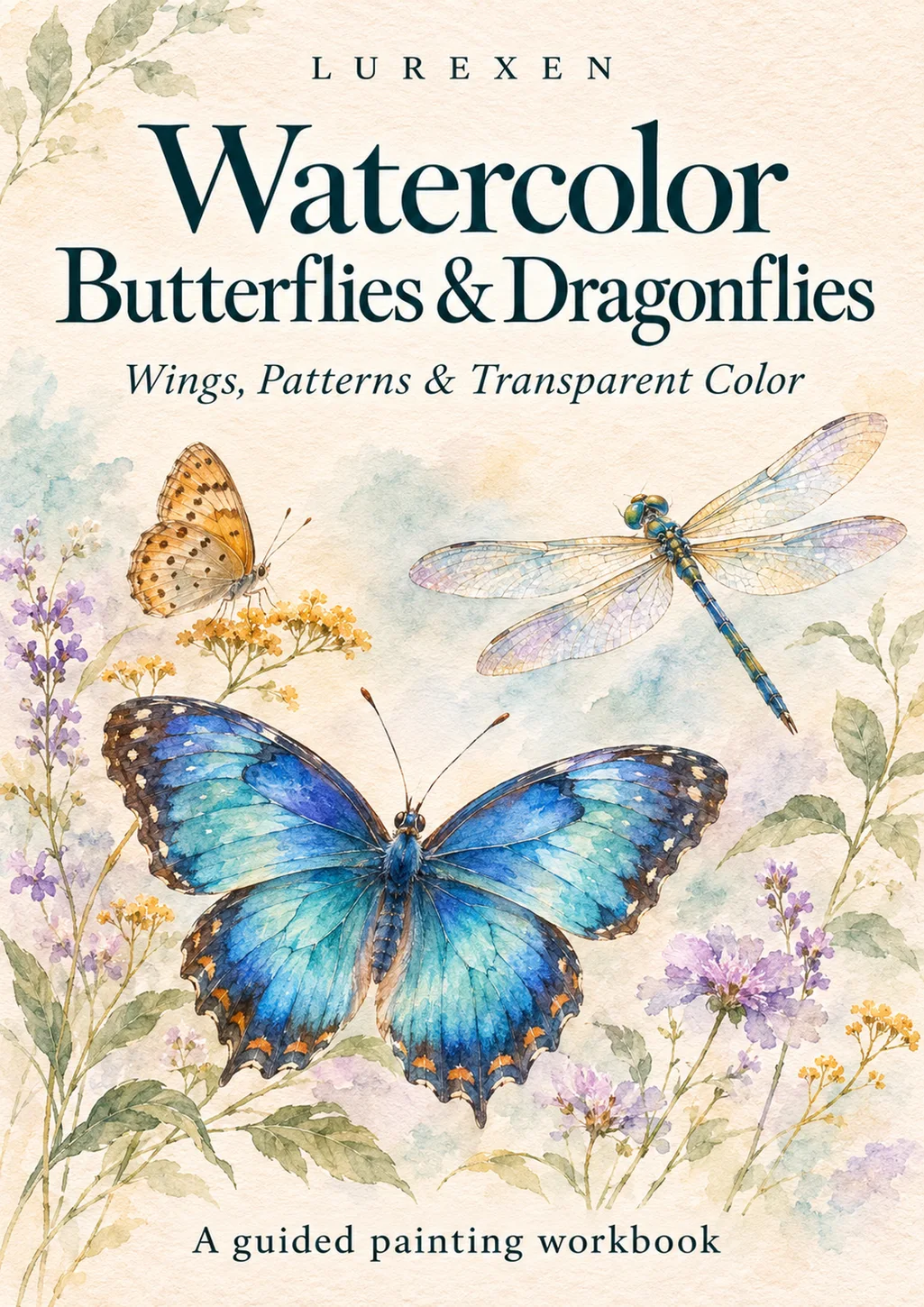
Nature-led decorative imagery appears in Pinterest's 2026 creative forecast. That is context for this topic, not proof of searches for this exact exercise. For a longer sequence, the related LUREXEN workbook contains 36 total pages in A4 and US Letter, including front matter, practice spaces and the final certificate. This free lesson works without buying it.