
Watercolor / Beginner
Paint a Croissant in Watercolor: Fold Shadows Before Flaky Texture
Build a golden pastry from a pale base, a few curved fold shadows and selected crisp accents, keeping the upper ridges light.
Choose one pastry and a steady view
A croissant is a useful small subject for a breakfast sketchbook or a handmade café card. Its curved folds can suggest volume with surprisingly few marks. This exercise separates the large structure from the small flakes so you can see which is doing the work.
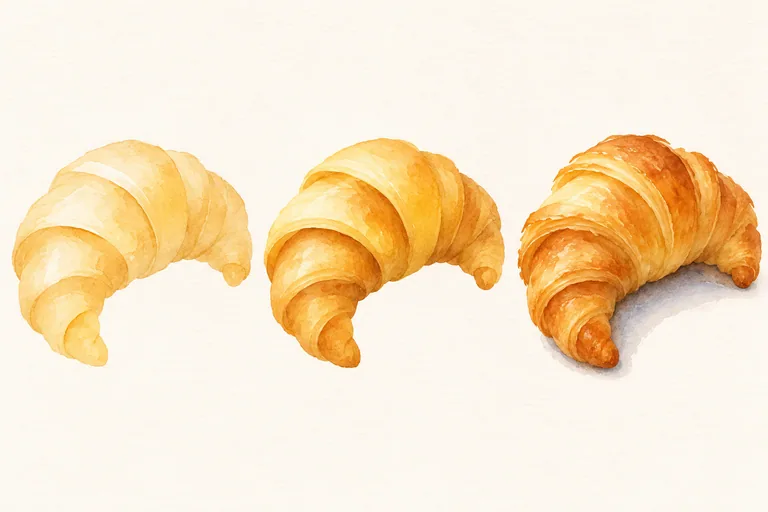
Use watercolor paper, a medium round brush, a smaller brush, water and a mixing surface. Choose a yellow-ochre or similar warm base, a warm brown and a blue for testing a subdued shadow mixture. Work from a real pastry or your own photograph. The illustration above is an AI-generated teaching reference, not a photographed painting sequence.
Find the crescent and the broad bands
Lightly sketch the plump middle and two tapering ends. Leave a clear gap beneath the curve if your reference shows one. A croissant may be fairly straight or strongly curved, so keep the actual silhouette instead of forcing it into a perfect moon shape.
Mark a few broad bands where the dough wraps around the body. Let their curves respond to the swelling center. Avoid a row of equally spaced straight stripes: those can flatten the pastry into a patterned outline before the painting has begun.
Lay down a light warm base
Test a diluted ochre mixture on spare paper. Cover the main shape with a pale wash while keeping the highest ridges lighter. A little variation in the wash is useful, but it should not divide the croissant into unrelated dark patches.
Let this layer dry before adding controlled fold shadows. Canson's watercolor guidance distinguishes soft wet-surface effects from the clearer edges possible on a dry surface. Here, a dry base helps you place the folds deliberately. Your paper and paint strength will affect how much contrast the next layer needs.
Put shadows beneath the overlaps
Mix a warmer, deeper golden brown and test it beside the base swatch. Place it beneath selected curved ridges, following where an upper layer overlaps a lower one. Keep some shadow edges firmer and soften others with a clean, lightly damp brush when that suits the reference.
Do not outline every dough band equally. A short dark section can describe a fold while the rest fades into the base color. Check the whole pastry from arm's length: you should already see a rounded form before adding any crust specks.
Add just enough flaky texture
On the dry painting, use the smaller brush for a few broken warm-brown edges and tiny irregular marks near the most interesting fold. Preserve the pale upper ridges. Texture placed everywhere competes with the larger light-and-shadow structure.
Add a small contact shadow where the pastry rests on the surface. Test a subdued cool mixture first and keep it quieter than the pastry's deepest folds. Its shape should connect to the actual contact area, rather than form a uniform dark halo around the croissant.
Compare structure with texture
Paint a second small version using the same base and fold shadows, then stop before the flakes. Compare both studies at normal viewing distance. If they read equally well, the larger bands are carrying the form; the texture is an optional finishing choice.
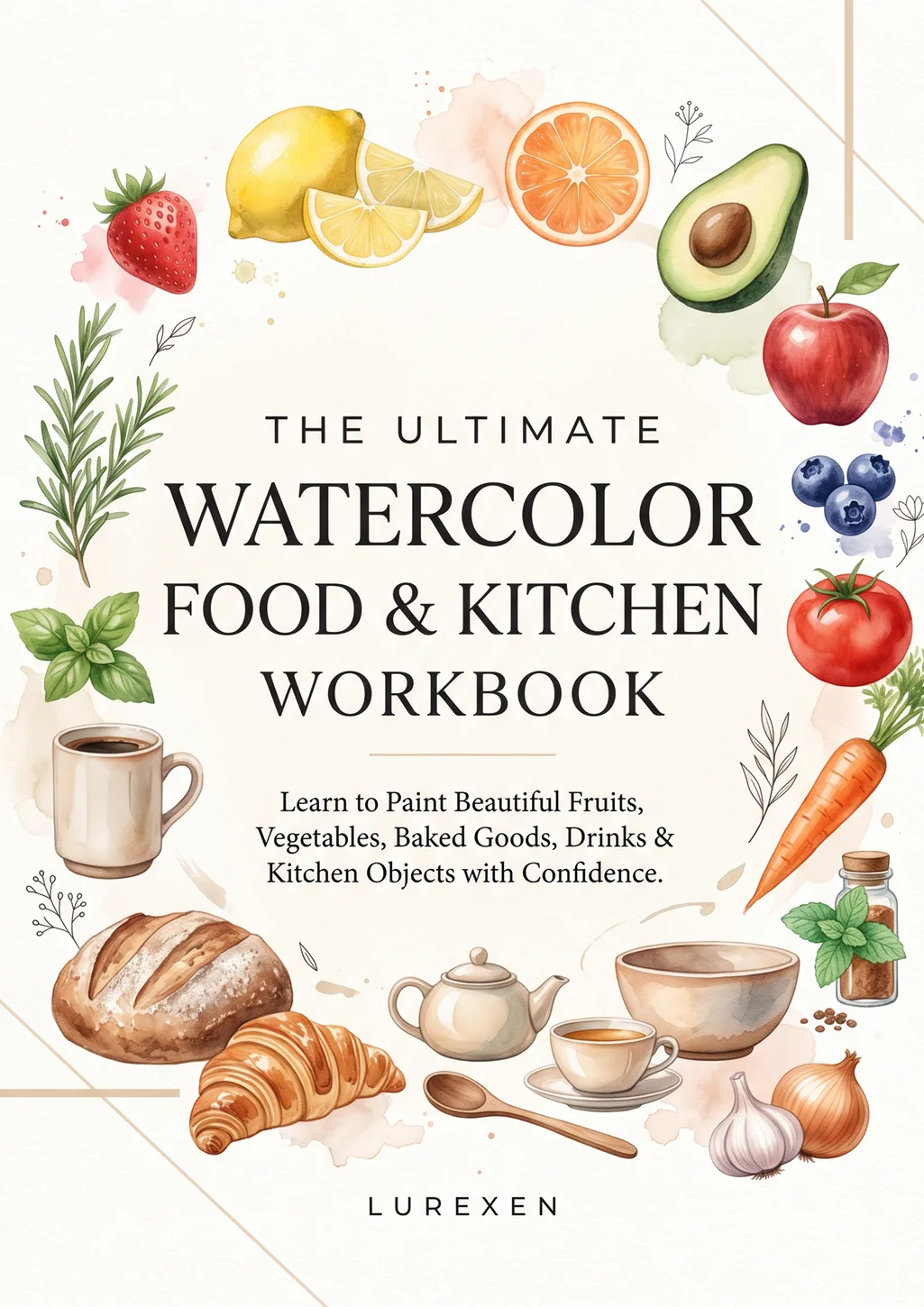
If the pastry looks striped, soften or shorten some fold shadows on the next attempt. If it looks flat, revisit the broad values before adding detail. Continue with a dry-layer glazing exercise when you want more control over a second wash. The related Food and Kitchen workbook offers broader food-painting practice; check its actual contents rather than expecting this exact croissant illustration inside.