
Beginner / Original practice lesson
How to Draw Christmas Ornaments: Glass Baubles, Reflections and Shading
Draw three Christmas ornaments in graphite and learn how ellipses, highlights, reflected shapes and controlled shading make glass and metal feel believable.
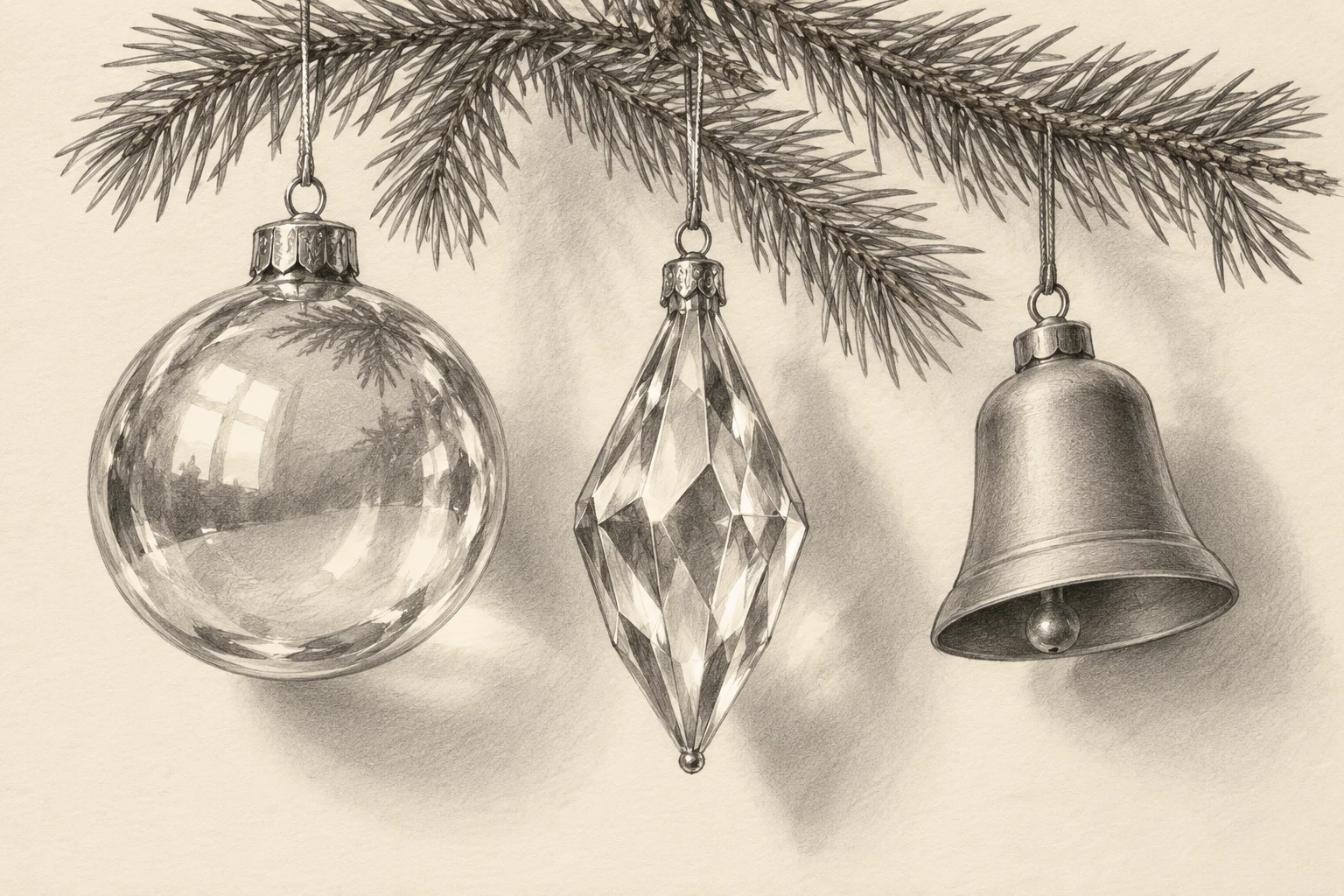
The idea to understand
A reflective Christmas ornament is not shaded like a matte sphere. Its surface contains compressed reflections, sharp highlights and sudden value changes. Start with the underlying form, then select only the reflections that explain material and curvature. The goal is clarity, not copying every visual fragment.
What you need
Drawing paper, HB and 2B pencils, a kneaded eraser, ruler, three simple ornaments or a reference photograph you own, and a small desk lamp.
Your practice sequence
Construct the hanging forms
Mark the center line and overall height of each ornament. Build the round bauble from a circle or ellipse, the drop ornament from mirrored angled sides, and the bell from a flared contour. Draw caps and hanging loops only after the main proportions are stable.
Reserve the brightest highlights
Identify two or three connected light shapes on the glass ornament and leave them as paper. On the faceted ornament, divide the form into a few large planes. Keep the bell highlight broader and softer so its material differs from glass.
Group reflections into values
Squint at the subject and simplify reflected surroundings into light, middle and dark groups. Wrap those shapes around the form rather than placing flat symbols. Use the darkest accents sparingly near cap edges, facet corners and the bell opening.
Unify with edges and shadows
Soften selected reflection boundaries with lighter pencil pressure while keeping a few crisp highlight edges. Add a small cast shadow or background tone only where it helps the silhouette. Lift excess graphite with a kneaded eraser instead of rubbing the whole surface smooth.
Check your result
Can you distinguish glass, faceted glass and matte metal without labels? Do highlights curve or change direction with each form? Are the ornaments hanging convincingly from their center lines? View the drawing from a distance before adding detail.
If the study is not working yet
If the bauble looks flat, curve the value shapes around the sphere. If the facets look random, reduce them to fewer planes. If the bell looks like glass, soften reflections and emphasize its broad light-to-dark transition.
A useful second attempt
Draw one ornament twice under different lamp positions. Keep the outline identical and compare how the highlight and darkest reflected shape move.
Further reading
Strathmore Artist Papers: Fine Art Papers Guide ↗. This is supporting reading; the exercise above is an original LUREXEN practice plan. Publisher images have not been reused.
An optional practice companion
Winter Birds Watercolor Workbook on Etsy ↗. The workbook is optional; you can complete this lesson without purchasing anything. Check the listing for its current contents and terms.
Continue with a related lesson
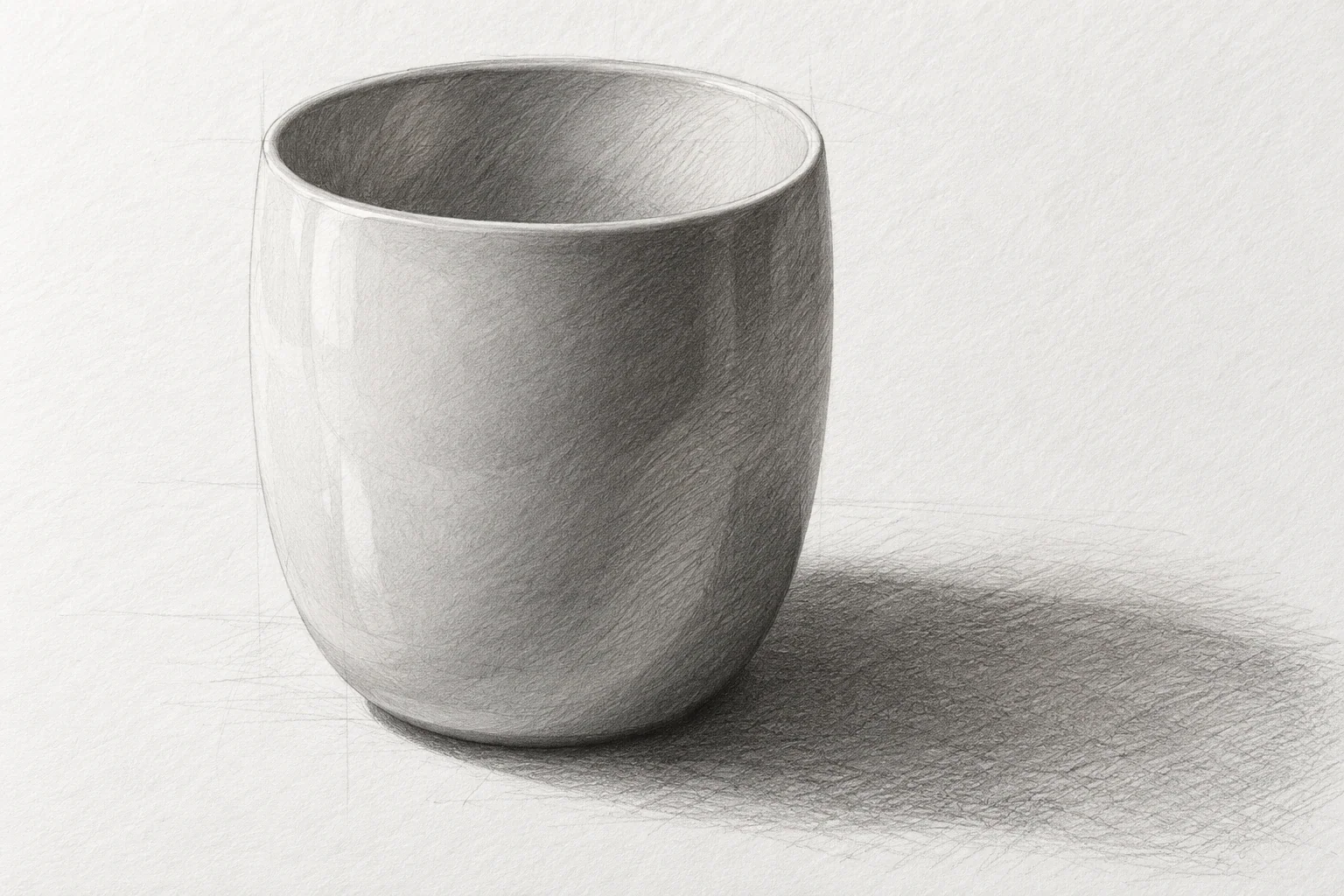
How to Draw a Cup: Proportion, Ellipses & Pencil Shading
A cup is a compact lesson in proportion, ellipses, and value. Work in an order that makes corrections inexpensive: establish the body, check the opening and handle, then add enough shading to explain the form.
3 min read Read the lesson →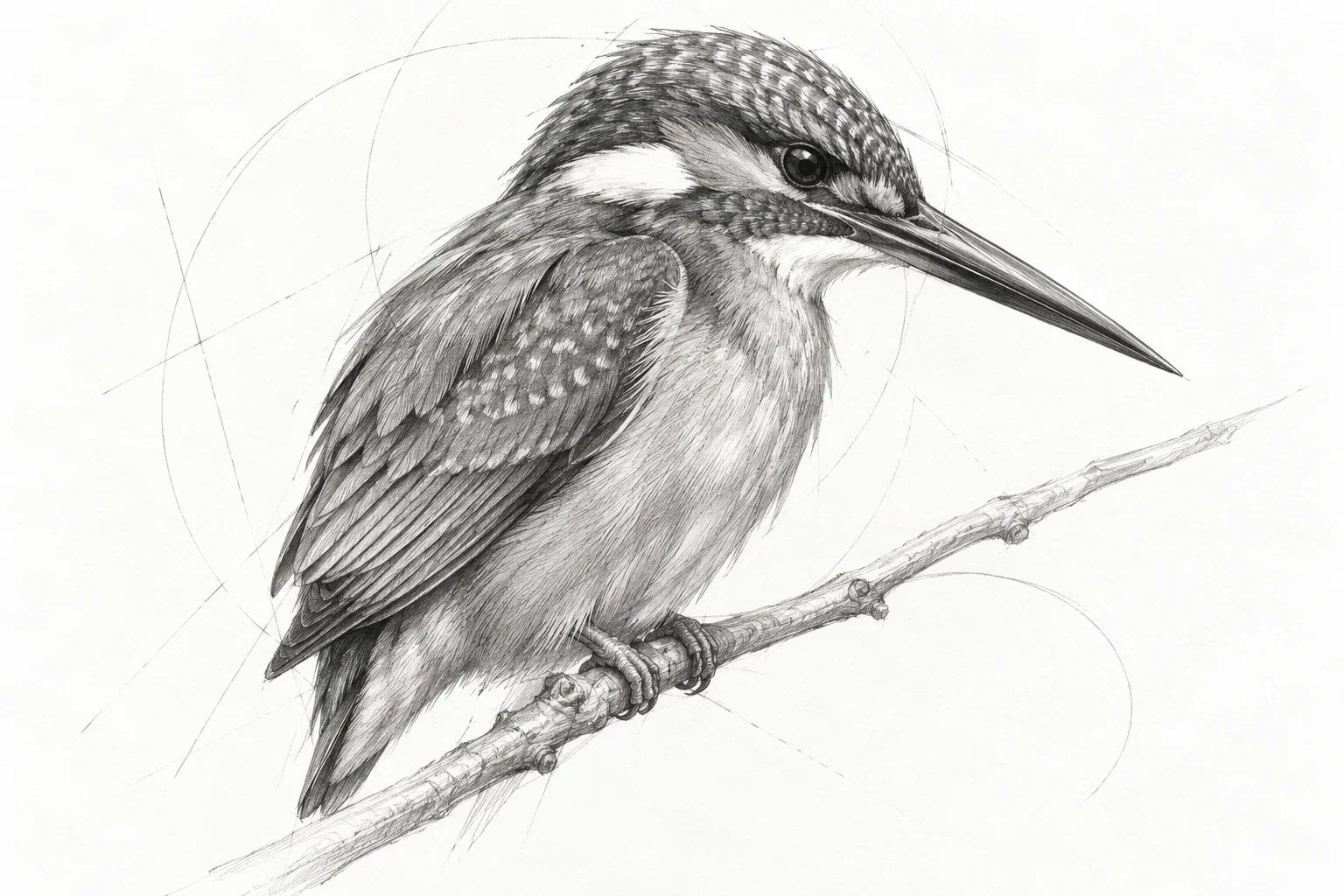
A Guide to Drawing Birds from Observation
A bird sketch becomes convincing through pose, proportion, and support long before it needs individual feathers. Use a short sequence of gesture, main masses, and landmarks to capture a readable bird without getting trapped in tiny details.
3 min read Read the lesson →