Beginner / Technique studio
Christmas Watercolor Paint Night: 3 Beginner-Friendly Projects
Plan a relaxed Christmas watercolor paint night with three small project options, a shared supply checklist and a simple session plan that allows time for drying.
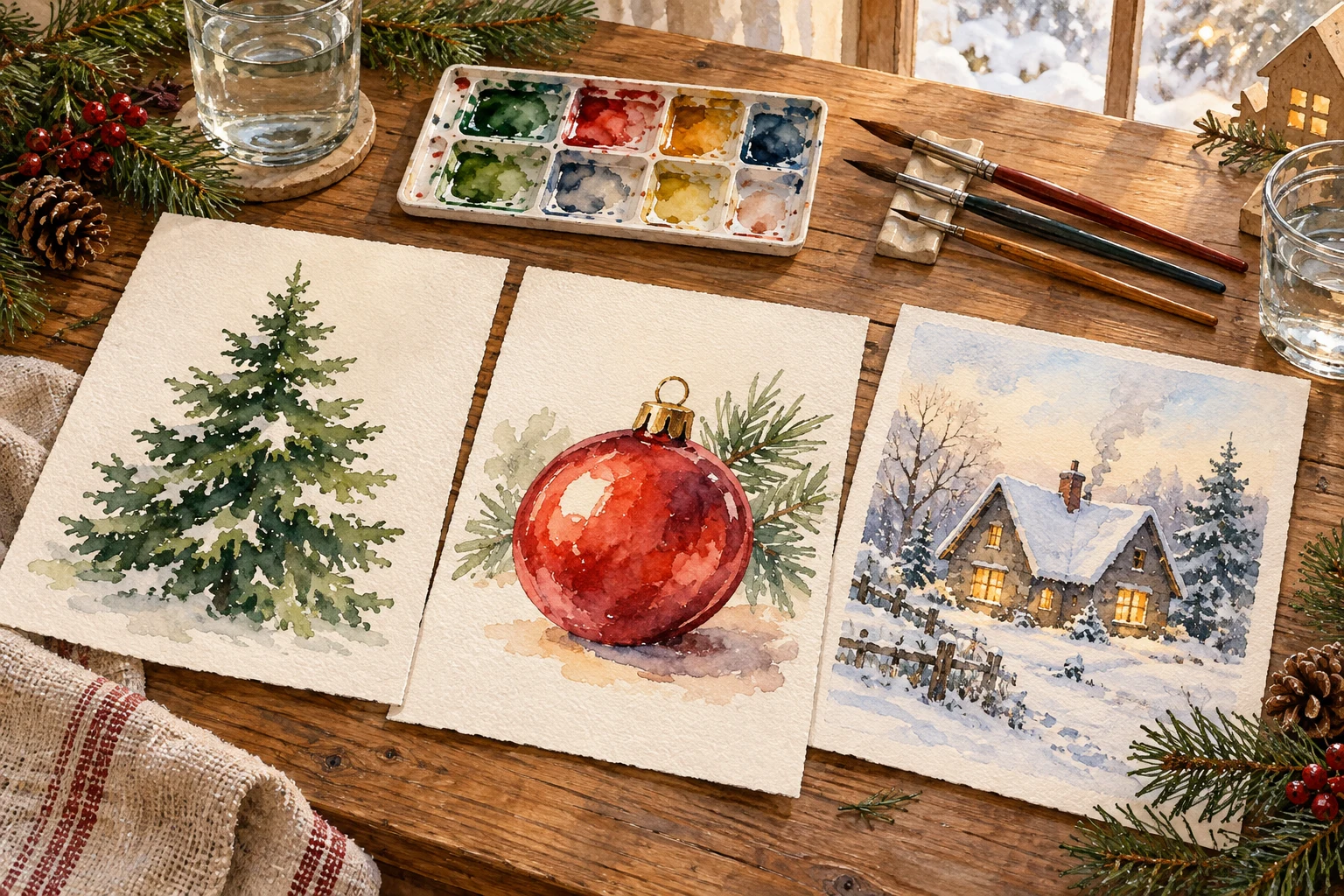
One focused technique study.
Keep the first attempt small enough to repeat. Your own subject, paper and materials are the reference.
- Level
- Beginner
- Practice time
- 60–90 minutes for a group session, with flexible drying breaks
- Skill focus
- A manageable shared activity with individual choices
- Success looks like
- Help each participant complete or meaningfully develop one small seasonal study without rushing wet layers.
Materials
- Separate watercolor paper and brushes for each participant
- Stable water containers, cloths and a protected table
- A small familiar palette for each person or clearly divided mixing areas
- Pencils and a scrap sheet for tests
- Optional card blanks for mounting fully dry paintings later
Help each participant complete or meaningfully develop one small seasonal study without rushing wet layers.
Plan one project per person
Offer three options rather than asking everyone to finish three paintings. A simple evergreen suits shape practice, a bauble introduces rounded form and a cottage offers a small composition. Let participants choose according to comfort, not a ranking of talent.
Use a flexible session plan: about ten minutes for setup and tests, fifteen for a first wash, a drying break, then another working period and a short review. Drying depends on paper, water and room conditions. Do not promise that every finished card will be dry and ready to pack by a fixed minute.
Prepare a table that makes sharing easy
Give each person a paper area, scrap for color tests and a stable water cup. Keep drinks separate from paint water. Cover a surface that could stain and leave clear space to put drying studies where they will not be touched. Choose supplies suitable for the participants and follow their labels.
If children join, provide appropriate supervision and materials rather than assuming all artist paints are child-safe. Avoid flames and hot drying equipment around a crowded craft table. If you print lesson references, check the relevant usage permission before distributing copies of any workbook.
Option one: a simple evergreen silhouette
Lightly place a top point and a broad lower envelope. Paint unequal branch groups with a pale green, leaving gaps instead of filling a solid triangle. Allow this pass to dry, then add a few darker touches beneath selected groups. A small trunk can finish the connection to the ground.
Keep decorations optional. One small accent is enough if the tree already reads clearly. Invite a second attempt on scrap if the first becomes too dense. The existing snowy-tree lesson offers a next step, but this session does not require everyone to reserve complex snow shelves.
Option two: a bauble with one clear light
Sketch a round ornament with a small cap. Reserve a light patch and place a pale color around it. After drying, add a deeper passage on the side away from the chosen light. The aim is a rounded form, not a photographically accurate glass reflection.
Use a plain or lightly colored bauble design so beginners can focus on value. Do not surround it with a heavy dark outline. A thin hanging thread and a small cap are enough. Compare how different participants preserve the light area without declaring one decorative style the correct result.
Option three: a cottage with a quiet winter setting
Draw a simple wall and roof, keeping their proportions readable. Reserve snow as light paper where you want it. Paint the wall and roof in separate passes when a crisp division is useful. Add a small window after the larger shapes are settled.
Keep the setting simple: a restrained ground shadow and one distant shape can be enough. Do not add a forest, smoke, fence and snowfall at the last minute. Anyone who finishes early can make a small color test or repeat a roof shape while others continue at their own pace.
End with a comparison, not a competition
Ask everyone to name one choice that worked and one they would change next time. Let paintings dry fully before stacking, mounting or transporting them. If mounting onto a card, check that the attachment method suits the paper and leave a clean space for a greeting.
Etsy’s October 2026 report describes a broader holiday craft-night trend, not a watercolor-specific success guarantee. This original session plan is one way to turn that interest into a useful painting activity. A paid workbook is optional; participants can practice these three simple ideas without a purchase.
Change one decision, not everything.
Common mistakes
Everyone is rushing the same timetable
Use drying breaks and allow unfinished work to continue later.
The table is cluttered
Separate water, drinks, mixing areas and drying space.
Decoration replaces the main skill
Choose one shape or value goal before adding festive detail.
Think it through
Try answering these questions in your own words, then open each answer to compare. Use the self-check below to review your actual study.
How many projects should each person attempt?
Offer three options rather than asking everyone to finish three paintings. A simple evergreen suits shape practice, a bauble introduces rounded form and a cottage offers a small composition. Let participants choose according to comfort, not a ranking of talent.
Practice step: Plan one project per person
How should the group handle drying time?
Pause between layers until each participant’s paint is dry. Use that pause for a scrap test or to compare the large shapes; avoid making everyone repaint on a fixed schedule.
Practice step: Leave drying time flexible
Review your own study
Tick what you can observe in your work. If a point is unclear, open its practice reminder. Choose one point to focus on next.
Tick a point only when you can observe it in your study.
Choose one focus for your next attempt using the circle beside a point.
This is your own reflection, not an assessment of your artwork. Choices are not saved or uploaded and reset when this page reloads.
Further learning and source context
This is an original LUREXEN exercise. These sources support general material and technique decisions or explain topic selection; they do not document the exact study pictured above. No publisher artwork was reused.
Optional structured practice
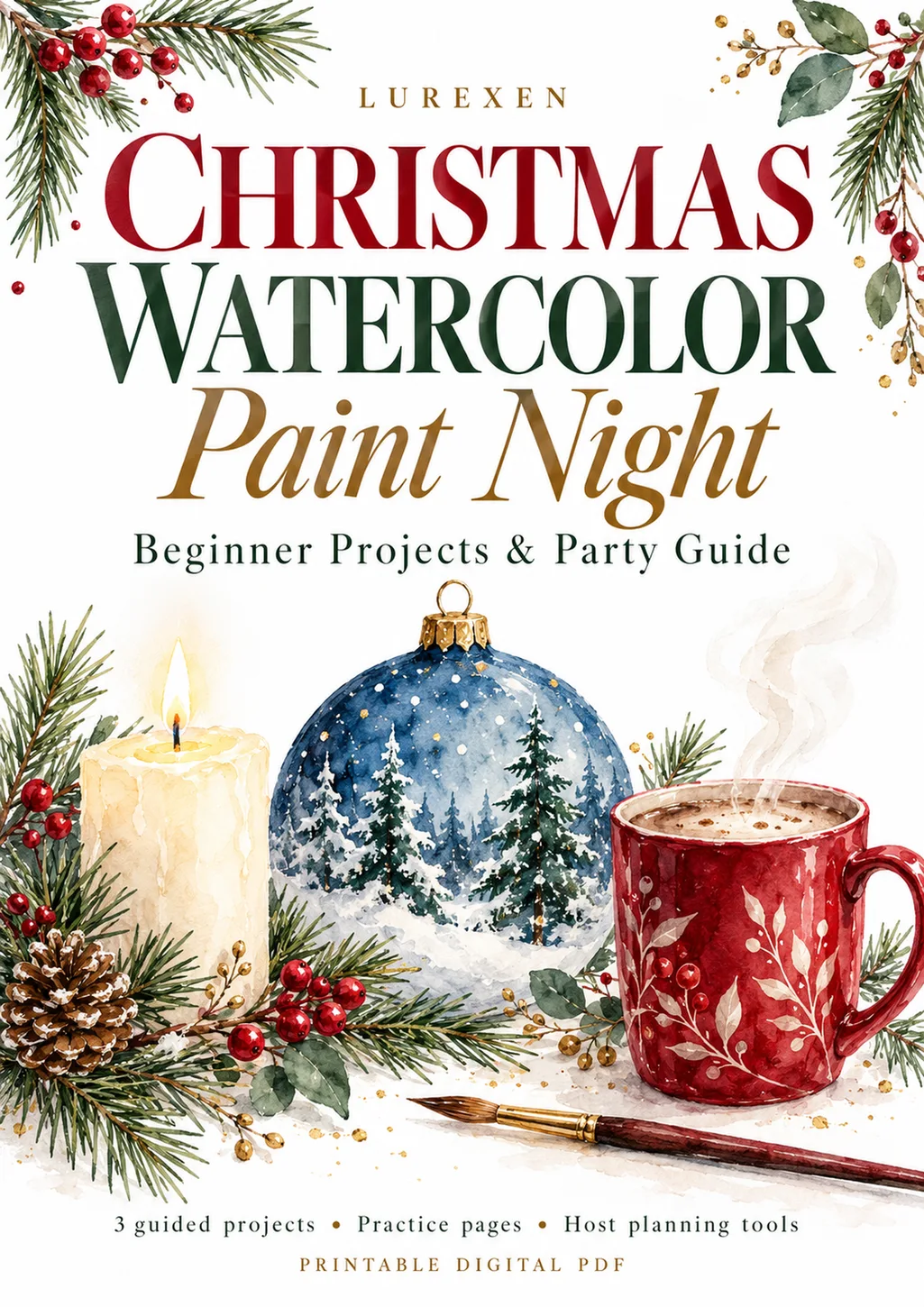
Choose a candle-and-pine, winter bauble or cozy mug project, with host preparation, flexible schedules and practice pages for a private Christmas painting evening. The lesson above remains free and useful without a purchase.
Explore Christmas Watercolor Paint Night Workbook →