
Beginner / Original practice lesson
Dry Brush Watercolor: Paint Bark, Stone and Grass Textures
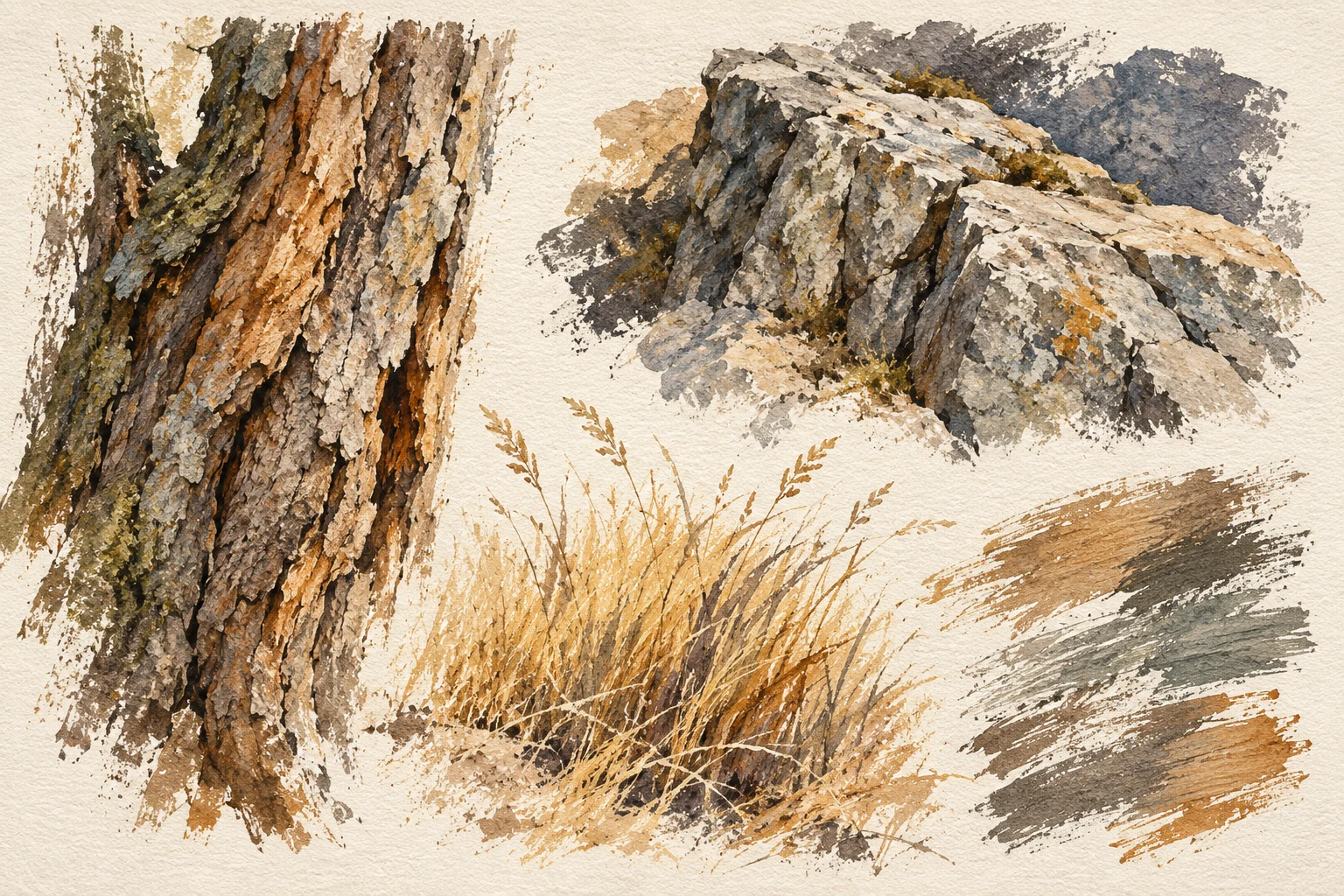
Use a lightly loaded brush and the tooth of the paper to suggest three natural surfaces while keeping their underlying forms readable.
The idea to understand
Dry brush is a controlled broken mark made with limited moisture. It works because the brush skips across the raised paper texture. It is most convincing when placed over a simple value structure. Covering an entire painting with scratchy marks makes bark, stone and grass look alike, so each study begins with a broad shape and ends with only selected texture.
What you need
Cold-pressed or rough watercolor paper, a worn round or flat brush, a pointed round brush, two earth colors, blue, tissue and scrap paper.
Your practice sequence
Find the moisture threshold
Mix a medium-strength color, load the brush, then remove excess moisture on a cloth. Drag the side of the brush lightly across scrap paper. Repeat with slightly different pressure until the mark breaks naturally without feeling chalky or damaging the paper.
Paint bark direction
Lay a pale vertical trunk wash and dry it. Add broken marks that follow the trunk length, grouping them around one darker fissure. Let some strokes curve around the cylinder. Leave a broad quiet light so texture does not flatten the trunk.
Separate stone from bark
Paint one angular stone with two large value planes. When dry, drag shorter broken strokes across selected edges and planes. Change direction at the plane break. Avoid filling the stone with evenly spaced speckles.
Suggest grass in groups
Begin with a pale ground wash. Use a few dry, upward flicks in clusters, varying height and spacing. Connect the base with a darker horizontal mass, then stop before every blade is described. The group silhouette matters more than individual lines.
Check your result
Can you identify bark, stone and grass from a distance? Do the marks follow each form? Is untouched or smooth paper still visible? Compare the three samples and cross out any mark pattern that appears in all of them.
If the study is not working yet
If the brush draws a solid stripe, remove more moisture or lighten pressure. If it scratches the surface, reload and stop forcing it. If the texture looks pasted on, restore the broad light-and-dark structure and reduce the number of accents.
A useful second attempt
Combine one stone and one grass cluster in a postcard study. Limit dry brush to the focal third and keep the remaining area soft.
Further reading
Winsor & Newton: Granulation Techniques in Watercolour ↗. This is supporting reading; the exercise above is an original LUREXEN practice plan. Publisher images have not been reused.
An optional practice companion
National Parks Watercolor Workbook on Etsy ↗. The workbook is optional; you can complete this lesson without purchasing anything. Check the listing for its current contents and terms.
Continue with a related lesson
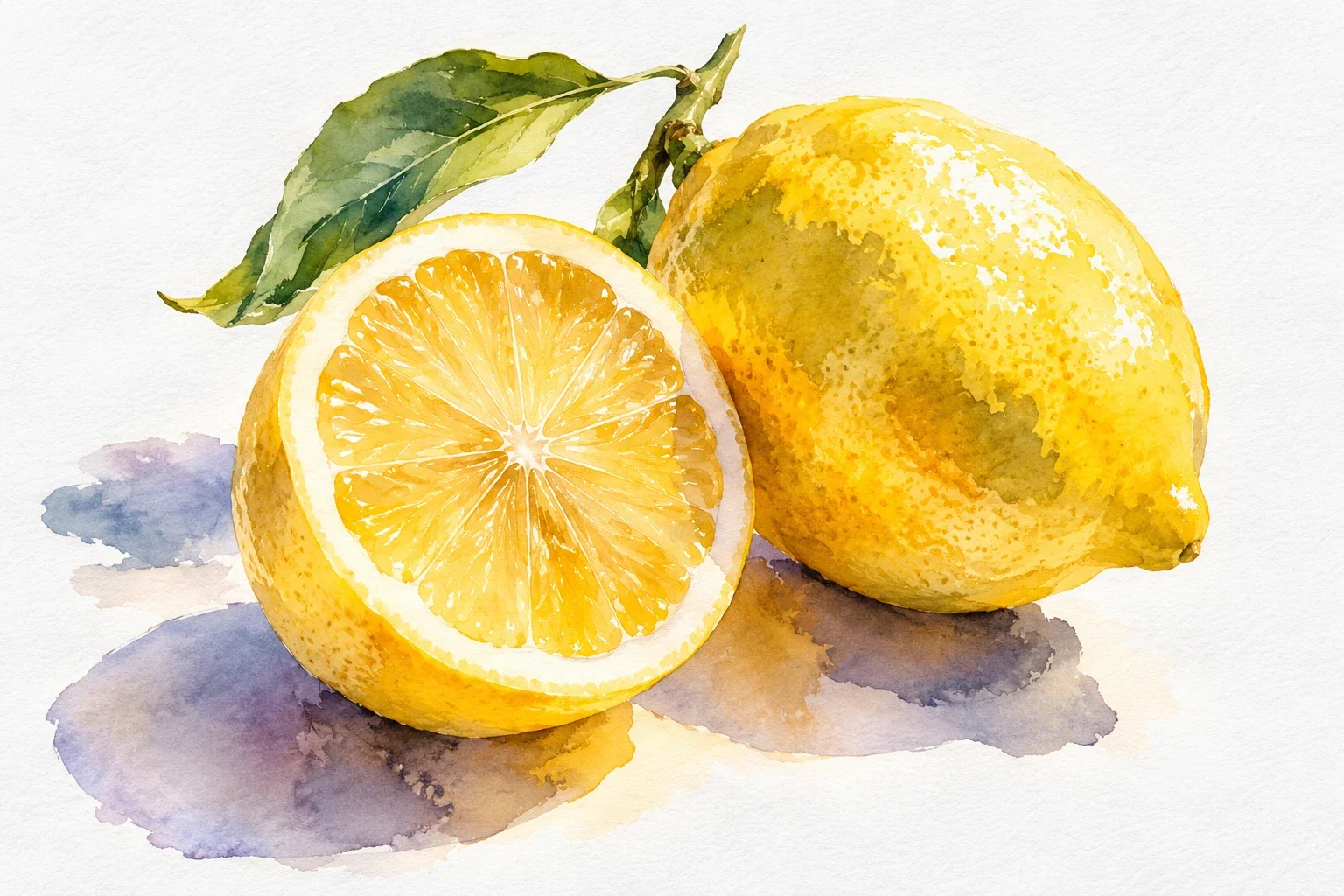
How to Paint Watercolor Lemons: Light, Layers & Shadows
Paint one small lemon to learn how light, transparent layers, and shadows work together. You will plan the highlight, build a rounded form, and avoid the two habits that often dull yellow: a crowded mixture and repeated brushing.
4 min read Read the lesson →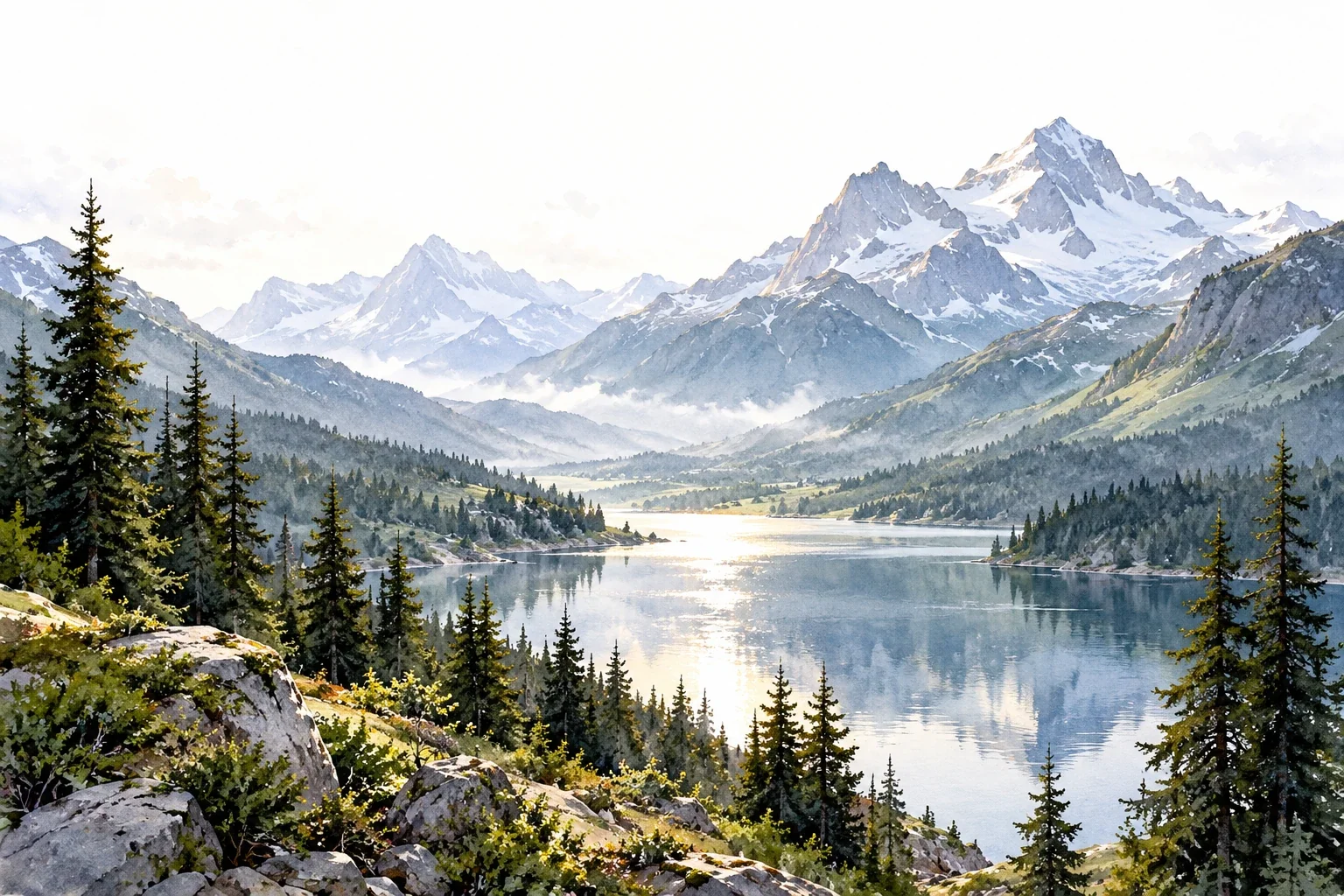
Creating Depth in Watercolor Landscapes
A landscape can look flat even when its individual trees and mountains are carefully painted. This guide shows how to organize depth through overlap, value, edges, and a focal area before investing time in detail.
3 min read Read the lesson →