
Beginner / Original practice lesson
Watercolor Color Bias: Mix Cleaner Greens With a Limited Palette
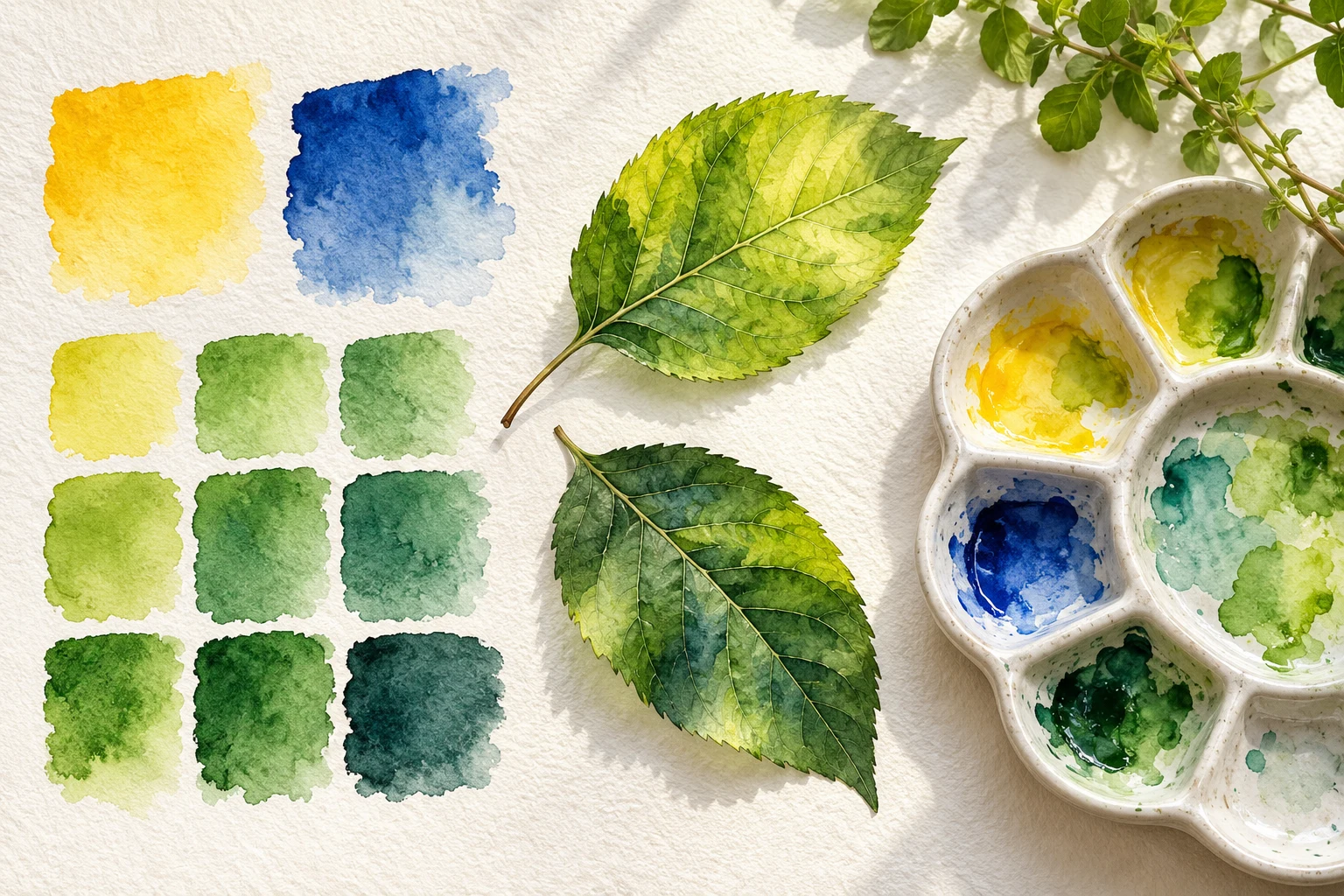
Understand warm and cool color bias by mixing a compact green chart, then choose one mixture for a clear leaf study.
The idea to understand
Paint names such as blue and yellow describe broad families. Each pigment leans toward another hue, and those biases affect the green produced when colors mix. The goal is not to memorize one perfect recipe. It is to compare your own palette, recognize why one mixture is vivid and another subdued, and repeat the result when you need it.
What you need
Watercolor paper, two yellows, two blues, a round brush, palette, pencil and clean water. Label the exact pigments you use.
Your practice sequence
Make a four-pair grid
Draw four rows and label every yellow-blue pairing. Mix each pair at a similar medium strength, keeping brushes and wells clean. Paint a single swatch first; do not keep correcting it until every square becomes equally dark.
Extend the useful pairs
Choose the brightest and most muted green. For each, make three ratios: yellow-led, balanced and blue-led. Let the chart dry before judging because watercolor often lightens and some mixtures shift as water evaporates.
Match an observed leaf
Place a real leaf or your photograph beside the chart. Pick the closest starting mixture, then adjust its value with water before adding a third pigment. Paint one broad leaf shape with a light side and a darker overlap.
Create a controlled neutral
If the shadow is too brilliant, add a very small amount of a complementary or earth color on the palette. Test it beside the original green. Use the quieter mixture only where the leaf turns away from light, preserving the clearer color elsewhere.
Check your result
Can you remake the selected green from your labels? Are the vivid and subdued mixtures visibly different after drying? Does the leaf show form without many veins? Circle the swatch you would use again and write its approximate ratio.
If the study is not working yet
If every green looks muddy, clean the palette and use fewer brush passes. If mixtures are indistinguishable, vary the ratios more strongly. If the leaf is flat, change value with water before searching for another pigment.
A useful second attempt
Build a second chart with one blue replaced. Keep the yellows and layout unchanged so you can isolate the effect of that single palette decision.
Further reading
Winsor & Newton: Colour Bias Versus Munsell Ratings ↗. This is supporting reading; the exercise above is an original LUREXEN practice plan. Publisher images have not been reused.
An optional practice companion
Watercolor Color Mixing Laboratory on Etsy ↗. The workbook is optional; you can complete this lesson without purchasing anything. Check the listing for its current contents and terms.
Continue with a related lesson
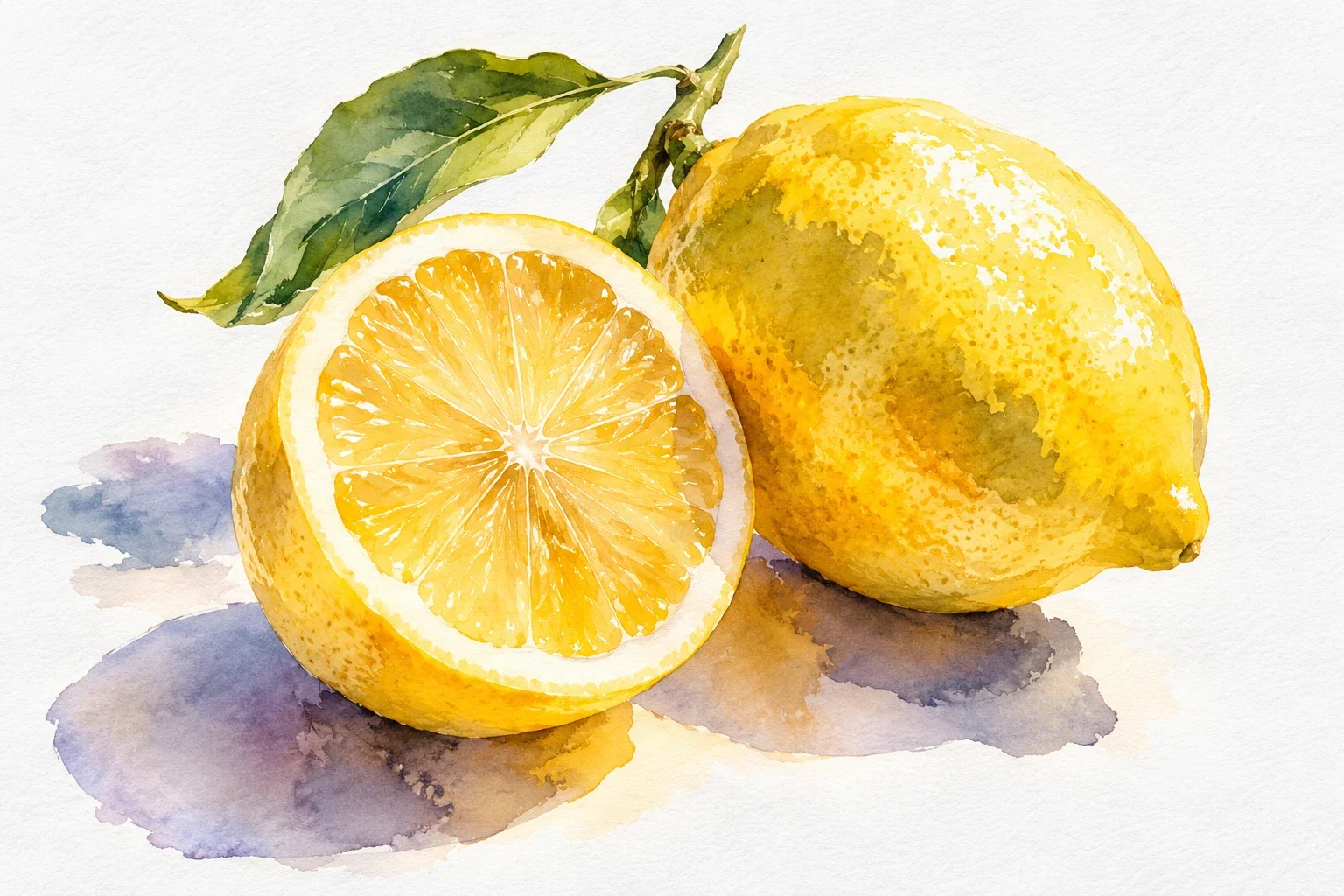
How to Paint Watercolor Lemons: Light, Layers & Shadows
Paint one small lemon to learn how light, transparent layers, and shadows work together. You will plan the highlight, build a rounded form, and avoid the two habits that often dull yellow: a crowded mixture and repeated brushing.
4 min read Read the lesson →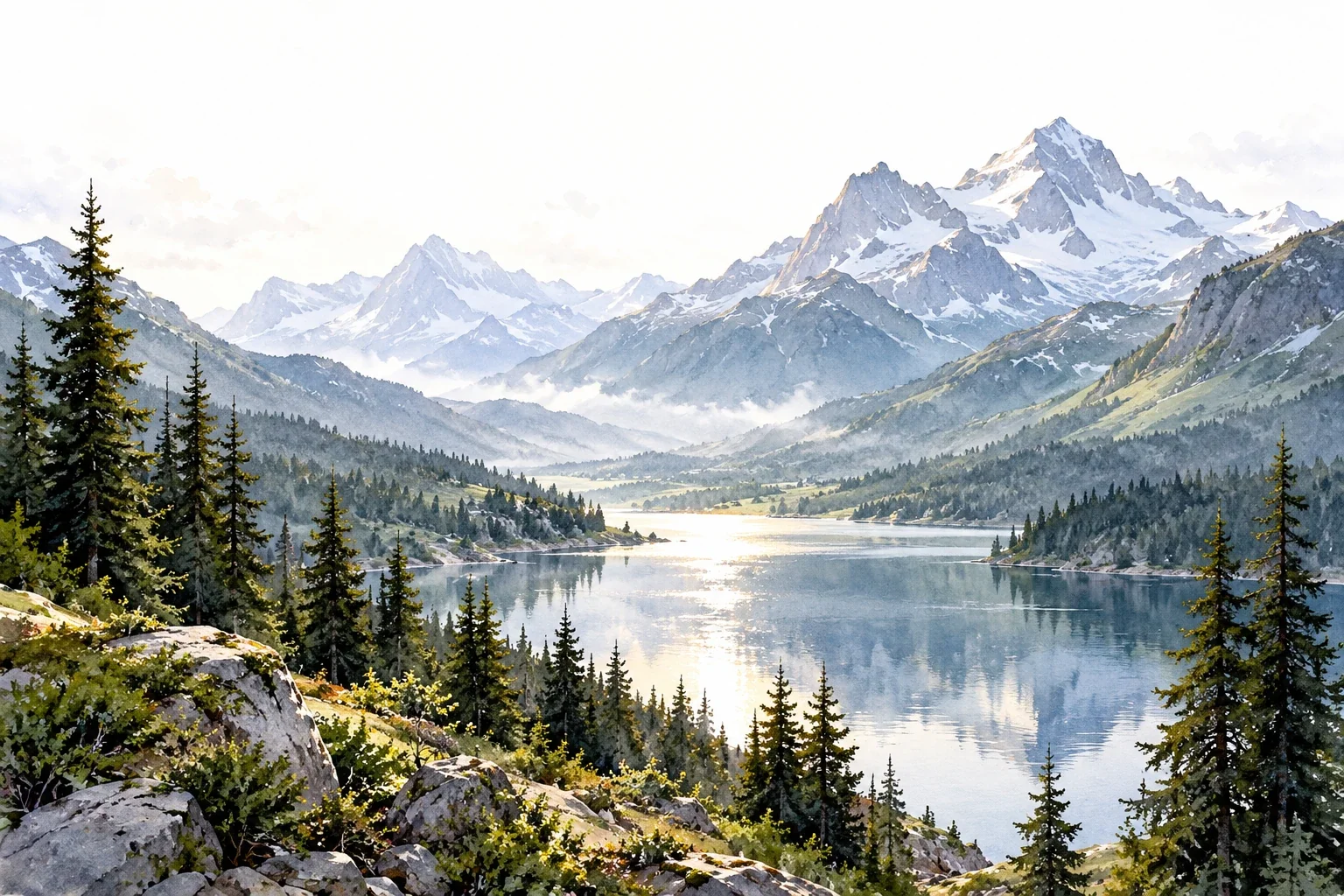
Creating Depth in Watercolor Landscapes
A landscape can look flat even when its individual trees and mountains are carefully painted. This guide shows how to organize depth through overlap, value, edges, and a focal area before investing time in detail.
3 min read Read the lesson →