
Beginner / Original practice lesson
Line Weight in Drawing: Create Depth Without Adding More Detail
Use thick, thin, dark and light edges to separate overlaps and direct attention in a simple botanical drawing.
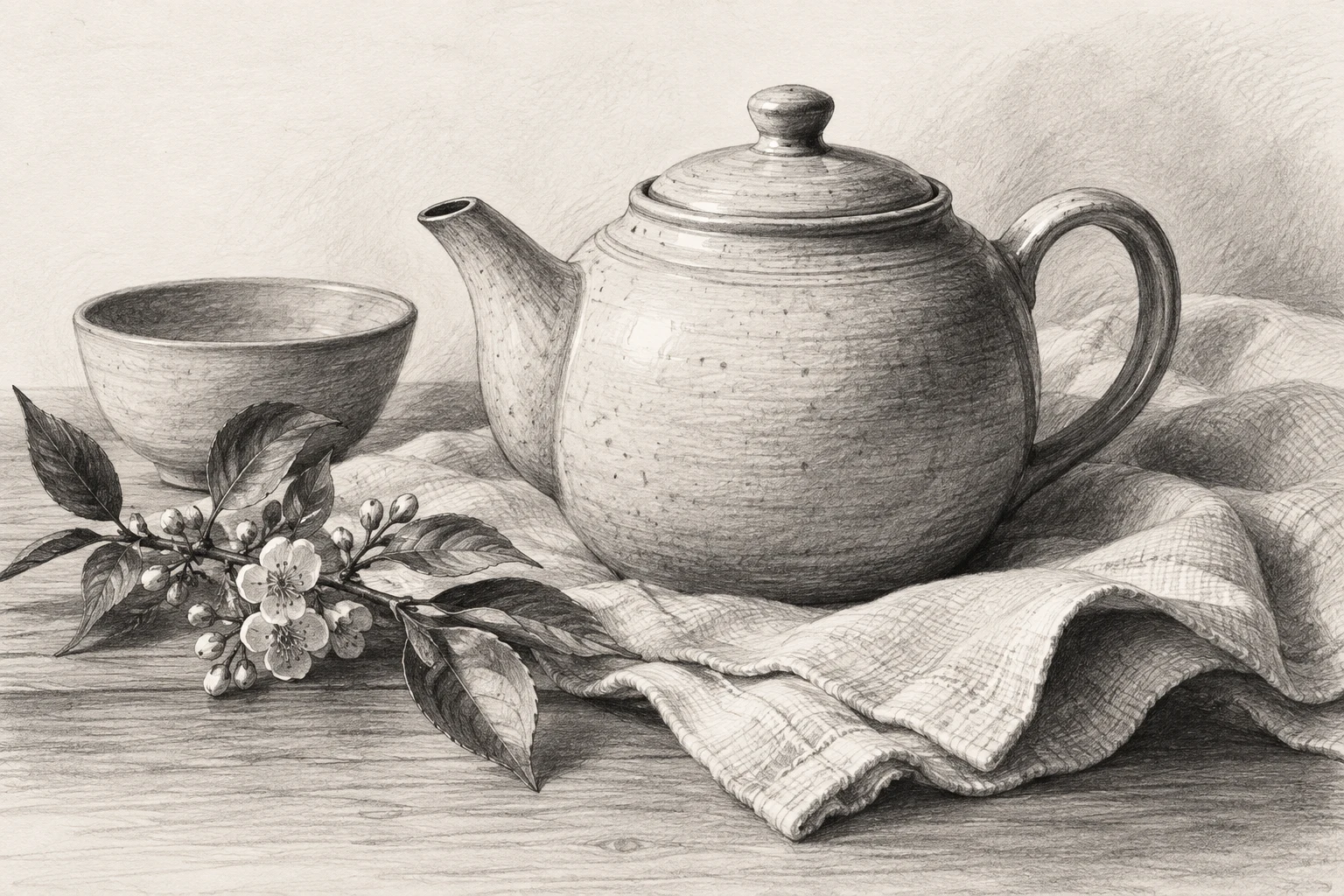
The idea to understand
Line weight is the controlled variation of a line. It can clarify an overlap, strengthen a focal edge or suggest that one form comes forward. It should respond to structure and light, not become a dark border around every object. Start with one accurate light drawing; then make selective changes that have a reason.
What you need
Smooth drawing paper, a sharp HB pencil, a softer 2B pencil, eraser and one branch, houseplant cutting or your own reference photograph.
Your practice sequence
Draw with one light pressure
Block the stem and five to seven leaves using a sharp HB pencil. Compare leaf angles, lengths and attachment points. Keep every early contour similarly pale so you can judge the drawing before visual emphasis changes it.
Mark the overlaps
Identify where one leaf crosses a stem or another leaf. Strengthen only the nearer edge for a short distance, tapering the mark as it leaves the overlap. Do not trace the entire foreground leaf at the same darkness.
Respond to light and focus
Choose a light direction and one focal cluster. Use slightly heavier lines on selected shadow-side edges and lighter or broken lines on lit edges. Keep peripheral leaves quieter so the eye returns to the focal area.
Test hierarchy at a distance
Place the drawing several steps away or view it as a small phone photograph. If every edge competes equally, lighten secondary areas with an eraser and reinforce only two or three structural accents. Add interior veins sparingly.
Check your result
Can you tell which leaf sits in front without shading? Does one cluster attract attention? Are heavier lines tapered rather than blunt? Count the darkest accents; if they surround every leaf, the hierarchy is not yet selective.
If the study is not working yet
If the drawing looks cartoon-outlined, shorten the heavy passages. If overlaps remain confusing, darken the nearer edge and lighten the edge behind it. If lines become fuzzy, sharpen the pencil and use pressure rather than repeated rubbing.
A useful second attempt
Repeat the branch in ink or a single pencil grade. Create the same hierarchy through speed, pressure and repeated passes, then compare which method gives you more control.
Further reading
Proko: How to Draw With Line Weight ↗. This is supporting reading; the exercise above is an original LUREXEN practice plan. Publisher images have not been reused.
An optional practice companion
Botanical Drawing Workbook on Etsy ↗. The workbook is optional; you can complete this lesson without purchasing anything. Check the listing for its current contents and terms.
Continue with a related lesson
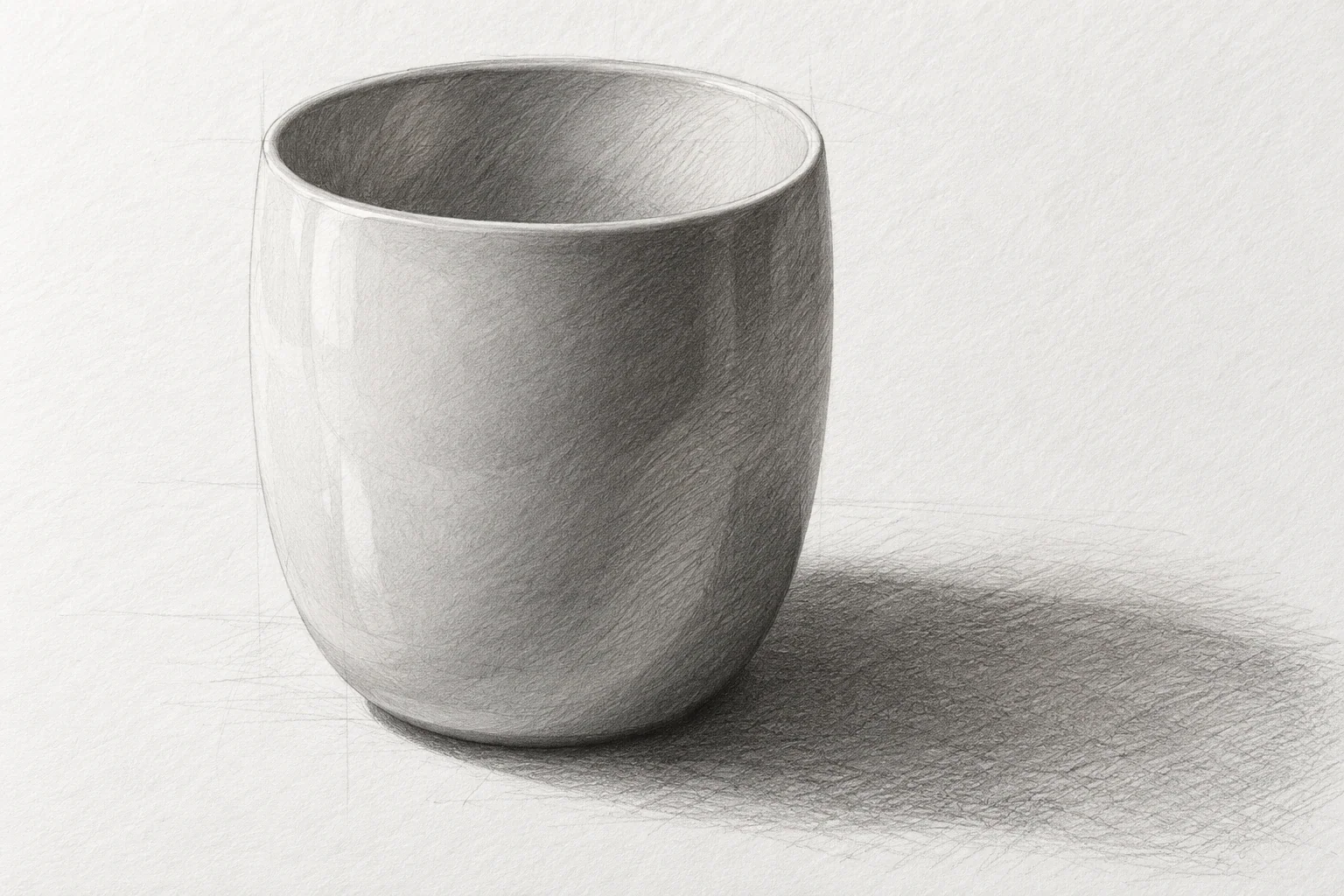
How to Draw a Cup: Proportion, Ellipses & Pencil Shading
A cup is a compact lesson in proportion, ellipses, and value. Work in an order that makes corrections inexpensive: establish the body, check the opening and handle, then add enough shading to explain the form.
3 min read Read the lesson →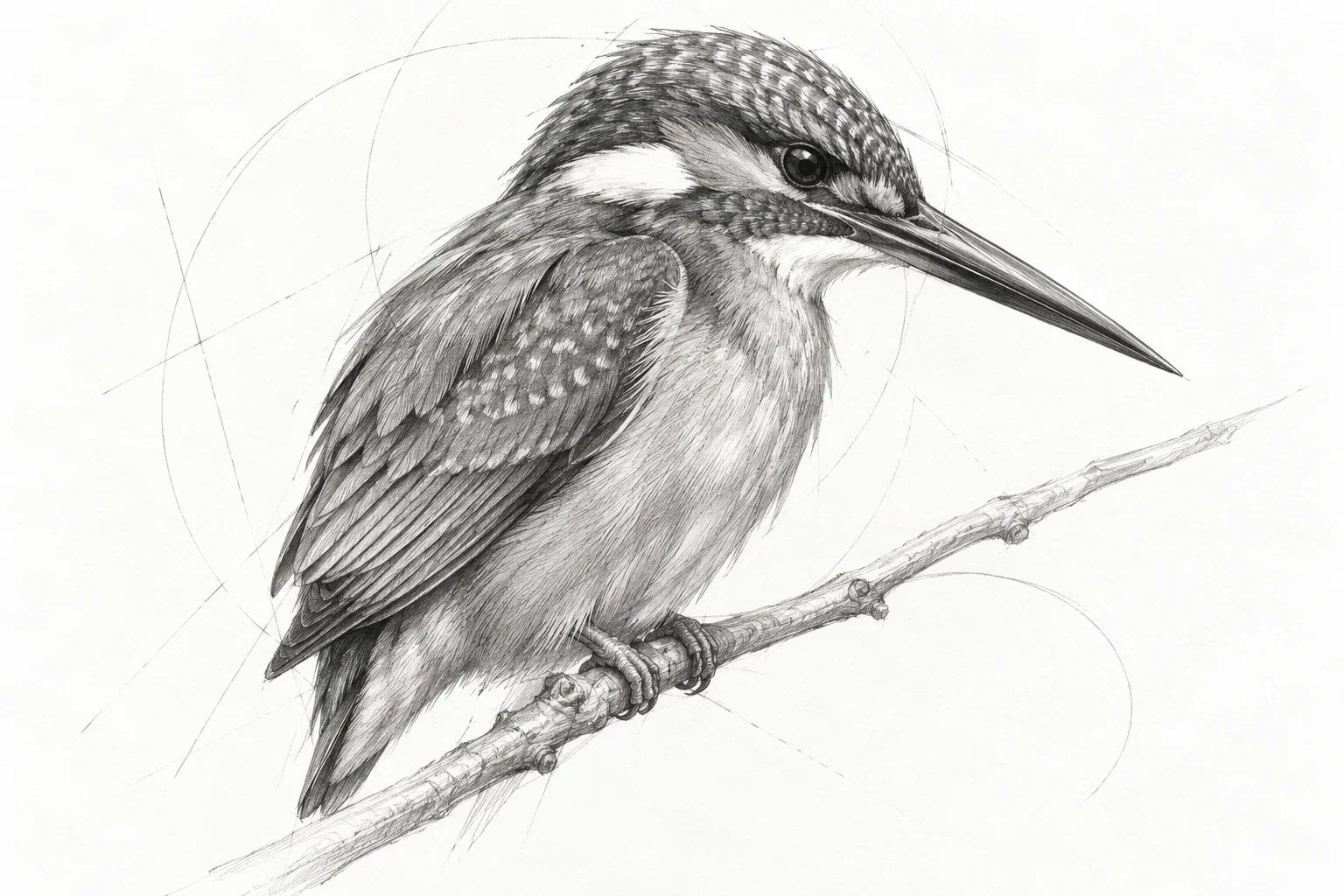
A Guide to Drawing Birds from Observation
A bird sketch becomes convincing through pose, proportion, and support long before it needs individual feathers. Use a short sequence of gesture, main masses, and landmarks to capture a readable bird without getting trapped in tiny details.
3 min read Read the lesson →